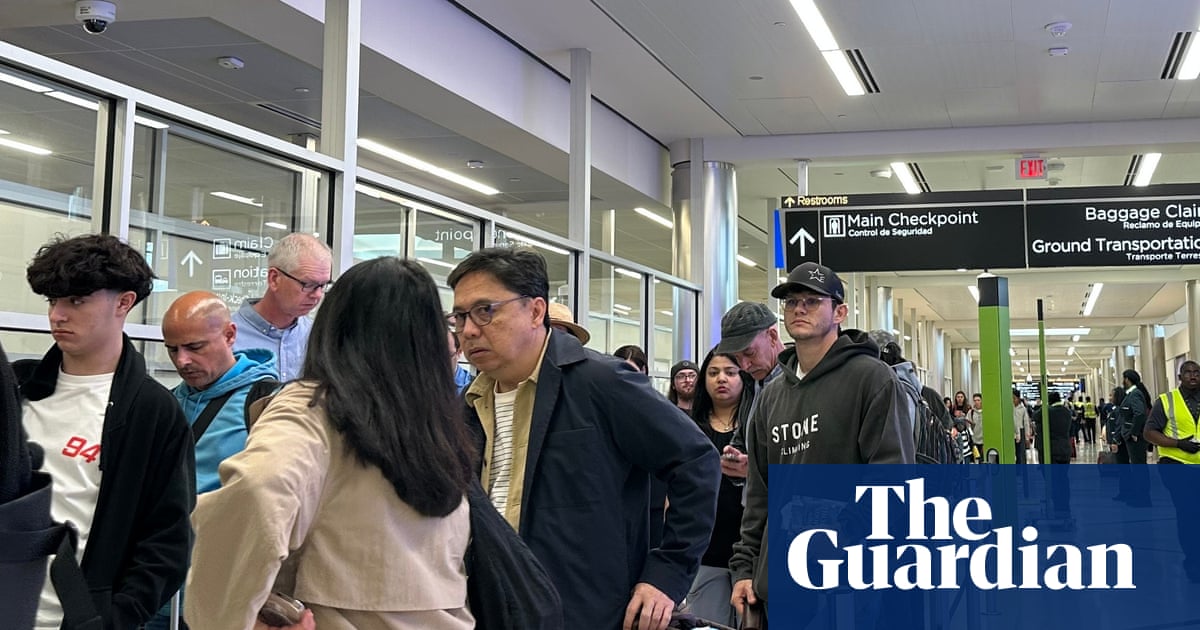
Partial government shutdown hits day 36 with TSA personnel slated to miss a second full paycheck on March 27 and more than 400 TSA workers having quit since the shutdown began on Feb 14. President Trump threatened to deploy ICE agents to airports if congressional Democrats do not immediately fund airport safety, despite ICE not being specifically trained for airport security. The move raises operational and legal uncertainty for airport security and increases the risk of further travel disruptions, though the story is unlikely to move broad markets.
Operationally-driven volatility is the immediate transmit point: payroll disruption at a frontline security agency amplifies short-term attrition, overtime and reroute costs across the travel ecosystem and raises the probability of concentrated disruption episodes (multi-hour checkpoint backups, wave cancellations) over the next 2–6 weeks. Those episodes impose measurable unit-cost shocks to airlines (rebooking, hoteling, passenger refunds) and compress near-term RASM even as capacity is sticky, creating a temporary mismatch between seats offered and sellable pax.
Second-order winners include modal substitutes and short-notice providers — rental car fleets, regional bus/rail operators and premium ground-transport brokers — which capture demand when airport throughput becomes unreliable; expect rental rates and utilization to tick up within 7–21 days of sustained checkpoint friction. Security and contingency-service vendors (private contracting, tech-driven expedited-screening vendors) gain negotiating leverage for short-term staffing and tech pilots, while hub-heavy legacy carriers and airport concessionaires absorb reputational and insurance-cost risk.
Key catalysts and timelines to watch: (1) the next TSA payroll date (days) as trigger for attrition acceleration; (2) DHS funding vote or stopgap legislation (1–4 weeks) that would reverse operational stress; and (3) legal/regulatory pushback to ad hoc redeployment of enforcement personnel (1–3 months) that could force rapid de-escalation. Tail risk is a protracted shutdown into peak spring break/summer travel — that would shift a temporary throughput shock into a structural seasonal demand hit, materially compressing Q2 revenue visibility for travel/airport-exposed equities.
AI-powered research, real-time alerts, and portfolio analytics for institutional investors.
Request DemoOverall Sentiment
mildly negative
Sentiment Score
-0.20
