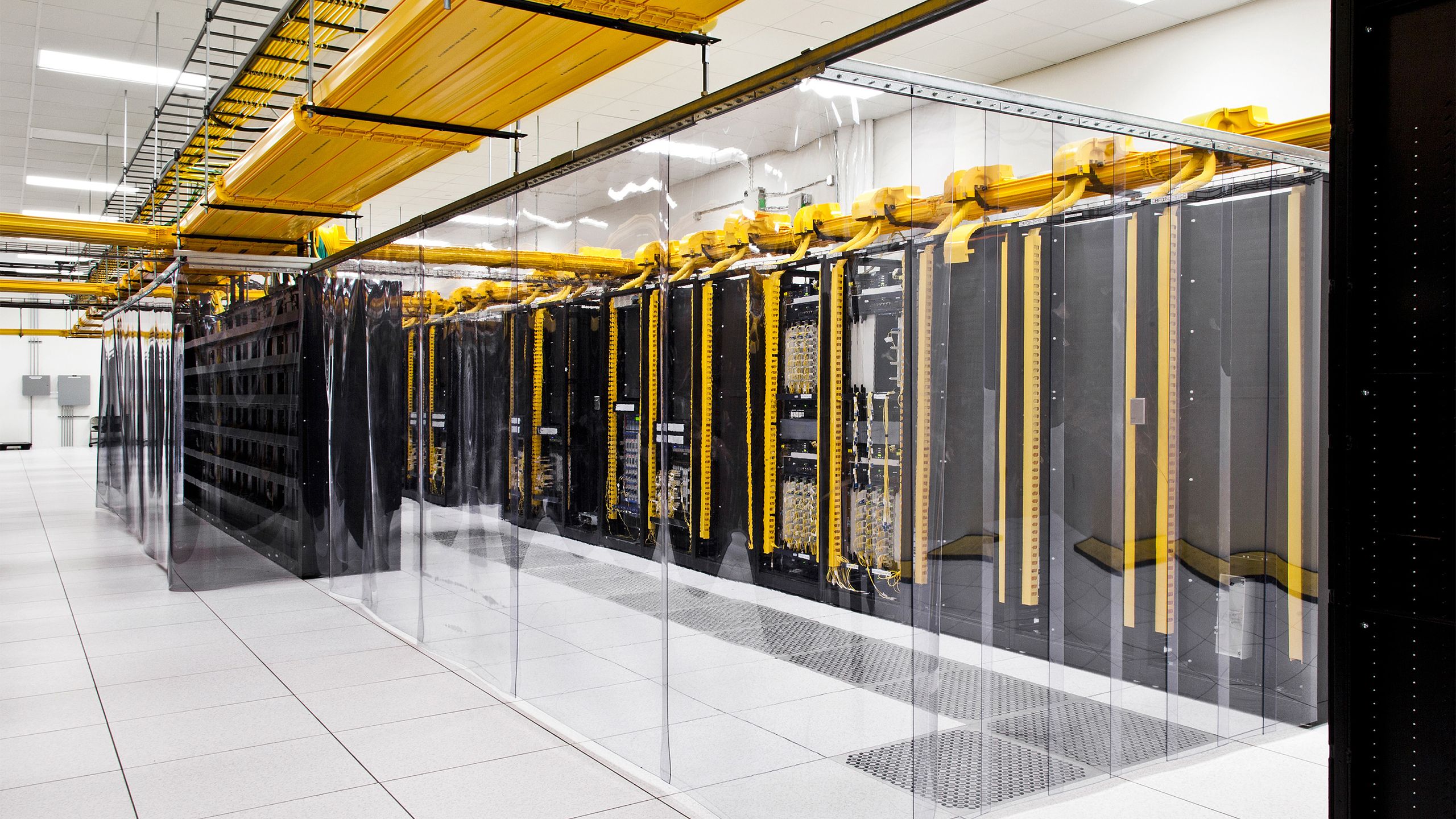
About half of planned U.S. data center builds this year are projected to be delayed or canceled as shortages of transformers, switchgear and batteries — many sourced from China — constrain deployments. Despite projected AI infrastructure spending of >$650B in 2026 and ~12 GW of data center capacity expected to come online, only ~1/3 of that capacity is under active construction due to supply-chain and grid upgrade delays; transformer lead times have stretched from 24–30 months pre-2020 to as long as five years. Imports of high-power transformers from China rose from <1,500 units in 2022 to >8,000 through Oct 2025, and China supplies >40% of U.S. battery imports, implying sustained reliance on foreign electrical equipment that could bottleneck AI capacity irrespective of available capital or compute hardware.
The binding constraint is operational (supply-chain throughput and permitting) not financing; that converts large, announced CapEx figures into execution risk where revenue growth is fungible across time but valuations are not. Expect consensus models to understate the time-to-revenue hit: every quarter of data-center delay compounds by shifting IRR, increasing effective payback periods and forcing reallocation of workloads to existing capacity providers.
Winners will be firms with spare, deployable power capacity or modular solutions that avoid long-lead gear; losers are the hyperscalers that show the highest marginal reliance on new-build capacity and therefore face the largest near-term growth risk. A second-order beneficiary is the colocator/edge market and firms that can monetize constrained existing racks — scarcity rents here can persist for multiple quarters and meaningfully raise incremental margins for those owners.
Key tail-risks are policy shocks (export controls, expedited domestic industrial policy) that can either tighten supplies further or, conversely, rapidly reprioritize manufacturing lines toward transformers and switchgear — neither of which is instantaneous and both have multi-quarter lead times. A pragmatic catalyst that would reverse the trend quickly would be a targeted government program to underwrite and fast-track electrical infrastructure manufacturing, which would compress the time horizon from years to 9–18 months if implemented at scale.
For positioning, shift from long-duration growth exposures that assume seamless capacity expansion toward firms with flexible deployment options, strong existing capacity monetization, or direct exposure to power-equipment pricing power. Hedging hyperscaler exposure with short or option protection while selectively adding industrials/colocators captures the asymmetric payoff if delays persist beyond the next two quarters.
AI-powered research, real-time alerts, and portfolio analytics for institutional investors.
Request DemoOverall Sentiment
mildly negative
Sentiment Score
-0.35
Ticker Sentiment
