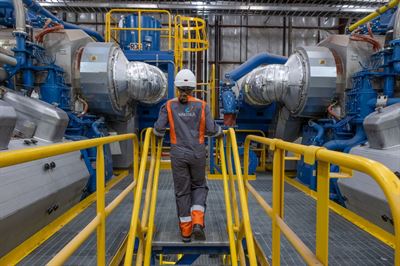
Wärtsilä has signed a ten-year optimised maintenance agreement with the Kentucky Municipal Energy Agency for the 75 MW Energy Center I (four Wärtsilä 50SG engines) due to commission in 2027; the order was booked in Q3 2025. The contract includes maintenance planning, remote expertise support, spare parts, major overhauls and onsite staff for the first three years, providing predictable service revenue and lifecycle visibility while enabling KYMEA to integrate higher shares of solar and wind. The deal modestly bolsters Wärtsilä’s service backlog and recurring revenue profile but is unlikely to be materially market-moving on its own.
Market structure: This deal reinforces winners — specialist fast-start engine OEMs and lifecycle service providers (Wärtsilä-style) and energy-storage integrators — because long-term service contracts convert one-off equipment sales into sticky, annuity-like revenue. Losers are inflexible baseload/merchant peakers and incumbent turbine vendors that lack comparable O&M networks; expect gradual pricing pressure in capacity markets as dispatchable, fast-start assets compete on response time and total cost of ownership.
Risk assessment: Tail risks include a sharp regulatory push against new combustion assets (emission bans/subsidies for firmed storage) or a fuel-price shock (gas > +50% YoY) that makes engine dispatch uneconomic; operational failure at a flagship plant or supply-chain delay could compress service margins. Immediate (days/weeks) impact is minimal market-wide; short-term (3–12 months) visibility improves as commissioning (2027) approaches; long-term (2–5 years) depends on hydrogen/battery cost trajectories and capacity-market reforms.
Trade implications: Favor equipment + services and storage exposures with 6–24 month horizons; prioritize companies with >30% installed-base service penetration and recurring-revenue growth. Use defined-risk options to lever upside around expected contract announcements and municipal RFP waves. Reduce exposure to high-heat-rate peaker operators and coal miners as dispatch economics shift.
Contrarian angles: The market underestimates the value of multiyear maintenance agreements as de facto revenue hedges — they can justify 10–15% higher EV/EBIT multiples for service-focused OEMs. Counterpoint: rapid battery cost declines or aggressive local clean-air rules could strand some engine fleets, creating asymmetric downside for bullish equipment bets.
AI-powered research, real-time alerts, and portfolio analytics for institutional investors.
Request DemoOverall Sentiment
mildly positive
Sentiment Score
0.32
