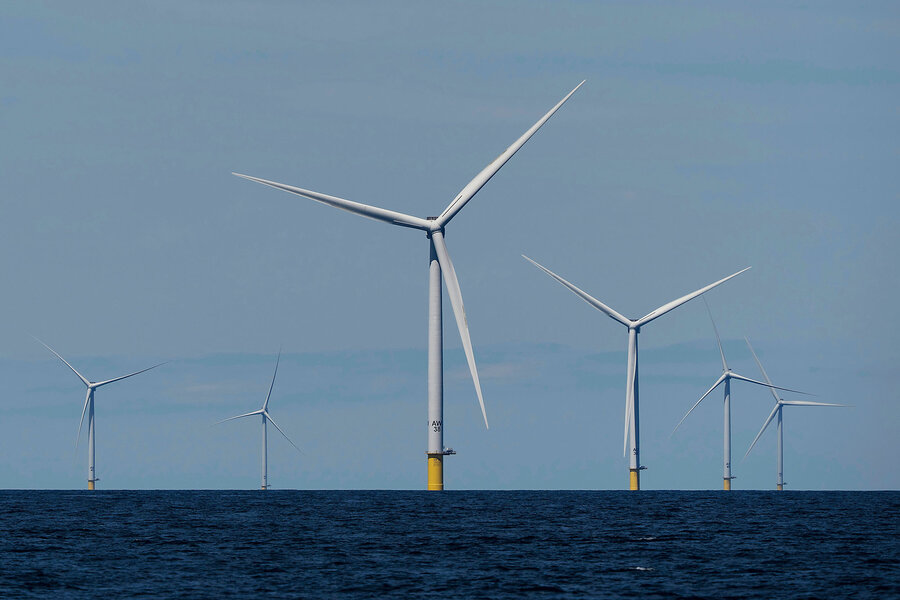
The U.S. will pay TotalEnergies $928 million to abandon two offshore wind leases (Attentive Energy $795M; Carolina Long Bay $133M) — projects that together could have powered ~1.7 million homes. TotalEnergies has agreed to redirect funds into U.S. oil and gas (including Rio Grande LNG) and pledged not to pursue U.S. offshore wind; the deal raises legal and appropriation questions and increases regulatory and capital risk for the nascent U.S. offshore wind sector.
The administration’s intervention reallocates political risk into corporate capital allocation decisions: companies willing to take refunds or concessions get near-term optionality to redeploy capital into higher-margin hydrocarbon projects, while OEMs, port integrators, and subsea-cable vendors face a concentrated demand cliff that will compress near-term revenue visibility by 12–36 months. A single cash redirection on the order of ~1% of a large supermajor’s market cap materially improves short-term FCF trajectory for specific LNG projects but does not meaningfully change the firm’s global investment capacity — the real value is the de-risking of U.S. regulatory exposure for fossil projects and the reallocation of execution risk away from nascent offshore wind builds.
The next 3–18 months are binary: legal and congressional pushback are the clearest paths to reversal (court remedies or an appropriations rider could unwind transfers quickly), while administrative entrenchment plus contractual rollbacks would lock in capital flows for multiple years. Market-sensitive catalysts to watch are: (A) a federal court ruling on the payment authority (days–weeks after filings), (B) Congressional hearings/letters seeking to claw or prohibit use of specific funds (weeks–months), and (C) permitting timelines for the redirected LNG projects (6–36 months) — each has asymmetric effect on equities and credit spreads in different sub-sectors.
Second-order market impacts favor liquid, export-facing gas infrastructure and defense/aviation suppliers over nascent wind-capex players: marginal dollar rerouted into LNG supports higher U.S. gas offtake and ship-charter demand over 2–4 years, while the “national security” rationale raises the probability of accelerated radar/upgrades procurement concentrated among large aerospace/defense primes. Conversely, regional utilities and small-cap suppliers whose growth is predicated on a steady stream of offshore tenders face multi-year backlog risk and multiple re-rating vectors if policies remain unsettled.
AI-powered research, real-time alerts, and portfolio analytics for institutional investors.
Request DemoOverall Sentiment
mildly negative
Sentiment Score
-0.35
Ticker Sentiment
