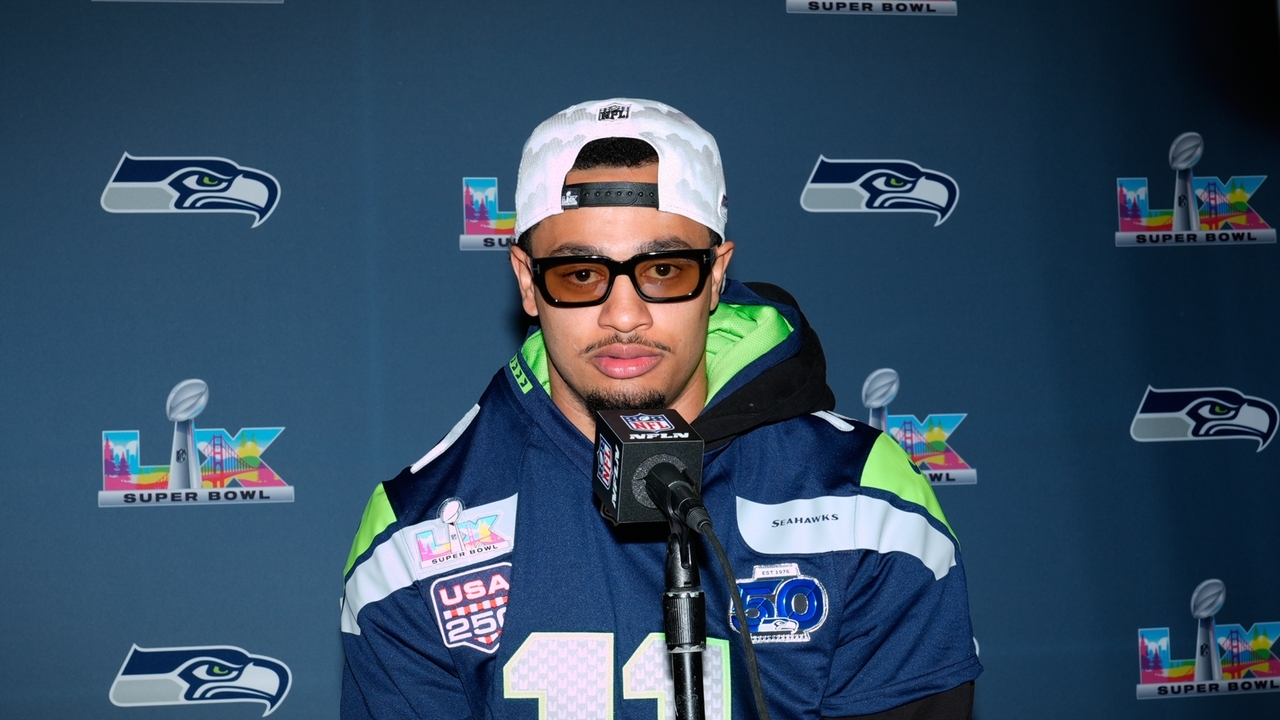
The Seattle Seahawks agreed to a four-year, $168.8 million extension for WR Jaxon Smith-Njigba with $120 million guaranteed, keeping him under contract through the 2031 season. The deal would make him the highest-paid wide receiver, surpassing Ja'Marr Chase's $161M/$112M extension; Smith-Njigba posted team single-season records (1,793 yards, 119 receptions), won AP Offensive Player of the Year, and has career totals of 282 receptions for 3,551 yards and 20 TDs.
This deal is a market-clearing signal for pass-catcher compensation that will propagate across the NFL over 6–24 months. Expect immediate merchandising and local engagement upside (jersey sales, regional sponsorships) concentrated in the next 3–9 months, and a more durable effect on league-wide salary structures that forces teams to reallocate cap dollars away from depth and defensive spending over multi-year windows.
Broadcasters and platform owners that house NFL rights are the asymmetric beneficiaries: incremental attention and subscriber stickiness from high-impact players compound across regular season + playoffs and feed higher CPMs for adjacent ad inventory. Conversely, mid-market franchises and smaller-market teams face tighter roster-building choices, which will favor front offices with analytics-driven undervalued role players and cheaper veteran rotation pieces.
Key tail risks and catalysts are clear and time-bound: short-term reversal if the player suffers a significant injury (days–months), and medium-term reversal if defensive schematics materially reduce his WPA share or if the guaranteed structure creates dead-cap headaches that force the team to trade complementary pieces (3–18 months). Market reactions around upcoming free agency (April–June) and the next media-rights renewals (12–36 months) are the windows most likely to reprice the winners and losers identified above.
AI-powered research, real-time alerts, and portfolio analytics for institutional investors.
Request DemoOverall Sentiment
mildly positive
Sentiment Score
0.35
