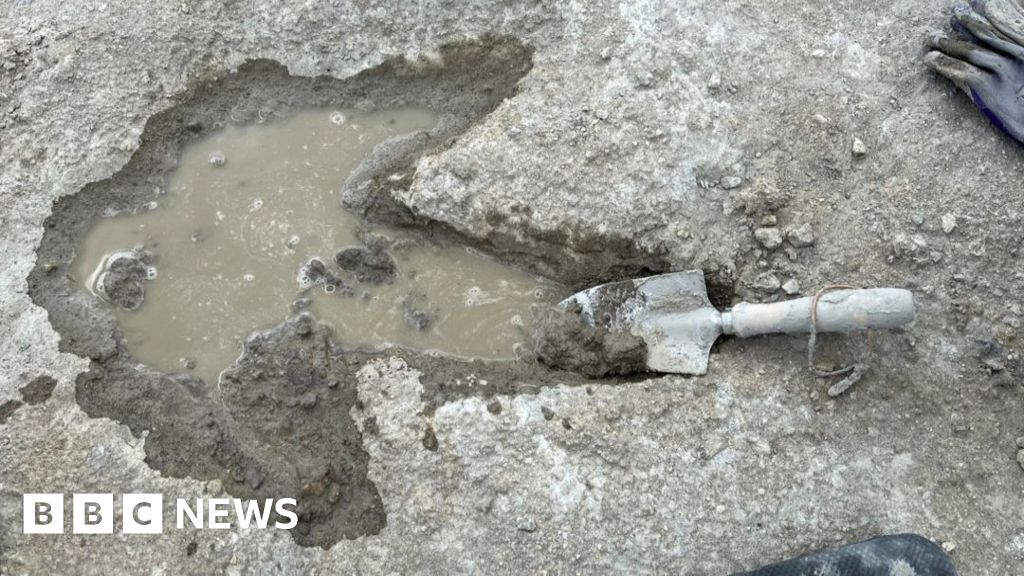
A string of high-profile scientific findings in 2025 include the discovery of roughly 200 Jurassic dinosaur footprints in an Oxfordshire quarry (dated ~166 million years), archaeological evidence of controlled fire at Barnham, Suffolk (~400,000 years old), and observations of wild chimpanzees using plants medicinally. Other notable items: a rare seven-planet evening alignment in February and lunar soil samples loaned from China now stored and under study in Milton Keynes by Prof. Mahesh Anand; an iceberg drifting toward a remote island was flagged as an environmental risk. These developments are scientifically significant but carry minimal direct implications for public markets, with limited ESG relevance from the iceberg risk and potential niche research/value effects from lunar samples.
Market structure: Scientific discoveries and climate anecdotes in the article tilt demand modestly toward specialty scientific instruments, space/satellite services and climate-risk underwriting. Expect 6–24 month revenue tailwinds for lab-capex names (increased lunar sample analysis, specialty geology) and continued pricing power for catastrophe/reinsurance franchises as climate risk awareness nudges premiums +3–7% vs. baseline over 1–3 years.
Risk assessment: Key tail-risks are geopolitical export controls or research decoupling (China/UK) that could curtail sample access or joint programs, and a sudden risk-off that compresses cyclical space equities by >30% in days. Time horizons separate signals: immediate (0–90 days) headline-driven volatility, short-term (3–12 months) grant/capex award cycles, long-term (1–5 years) structural demand for rare materials and climate reinsurance.
Trade implications: Favor high-quality, cash-generative scientific-instrument and space-adjacent names and selective rare-earth exposure, while using options to cap downside on volatile small-caps. Size positions conservatively (0.5–2% portfolio each), stagger entries over 30–90 days to avoid headline whipsaw and use 9–12 month option spreads to express upside with defined risk.
Contrarian angles: Consensus underestimates the commercial ripple of renewed lunar/sample access — historical parallels with Apollo-era tech spin-offs suggest 5–15 year alpha for niche materials and analytics firms. Conversely, the market may overprice near-term space optimism; avoid fully levered small-cap moon/space plays without options protection as geopolitical or funding shifts can wipe >50% quickly.
AI-powered research, real-time alerts, and portfolio analytics for institutional investors.
Request DemoOverall Sentiment
neutral
Sentiment Score
0.10
