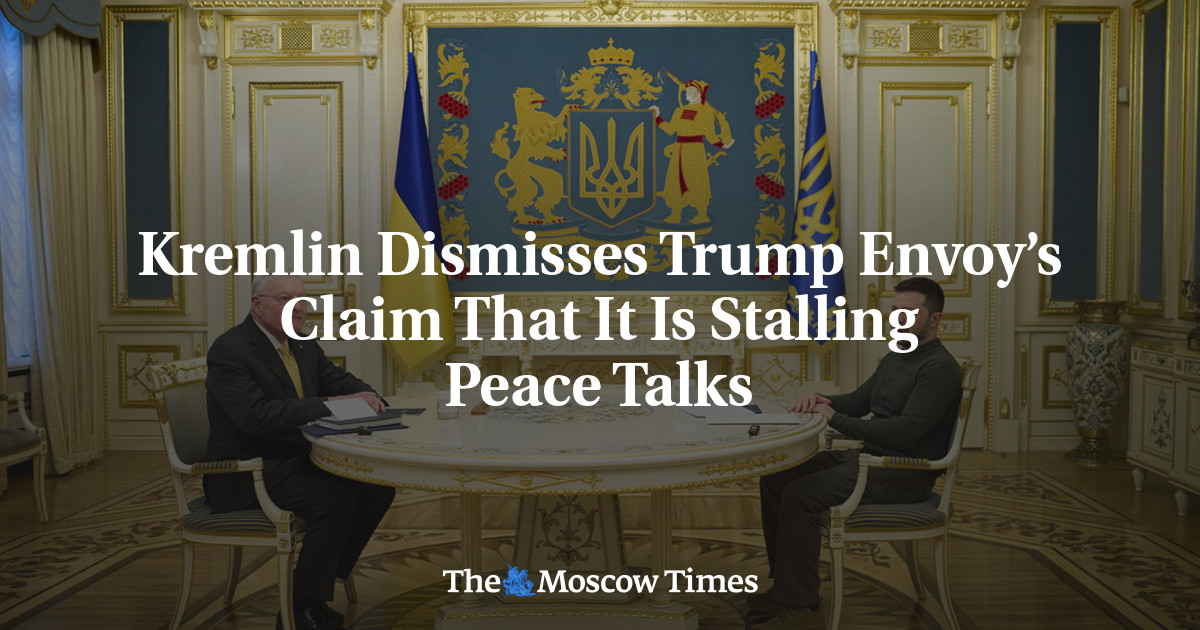
The Kremlin and U.S. special envoy Keith Kellogg are publicly clashing over the stalled Russia-Ukraine peace talks, with Kellogg accusing Moscow of delaying negotiations amid continued civilian bombing, a charge Kremlin spokesman Dmitry Peskov denies, instead attributing slow progress to Kyiv and Washington. Despite two prior rounds facilitating prisoner exchanges, a ceasefire remains elusive as President Putin has rejected an immediate truce and escalated airstrikes. This diplomatic impasse signals sustained geopolitical instability and a lack of clear de-escalation prospects, despite ongoing, yet contradictory, negotiation efforts.
The public dispute between Kremlin spokesman Dmitry Peskov and U.S. special envoy Keith Kellogg signals a significant diplomatic stalemate with low prospects for a near-term de-escalation in the Russia-Ukraine conflict. Despite prior talks in May and June facilitating prisoner exchanges, a core ceasefire remains elusive, a fact underscored by President Putin's recent rejection of an immediate truce and an escalation of airstrikes. Peskov's denial of delaying tactics, contrasted with Kellogg's accusation that Russia is stalling while bombing civilian targets, highlights the deep-seated mistrust and contradictory narratives that are impeding progress. The situation is further complicated by the domestic Russian political environment, as evidenced by The Moscow Times' designation as an "undesirable" organization, which points to a crackdown on independent information sources and increases the difficulty of obtaining unbiased intelligence on the conflict. The overall moderately negative sentiment and significant market impact score reflect that the current state of affairs points toward prolonged geopolitical instability rather than an imminent diplomatic breakthrough.
AI-powered research, real-time alerts, and portfolio analytics for institutional investors.
Request DemoOverall Sentiment
moderately negative
Sentiment Score
-0.50
