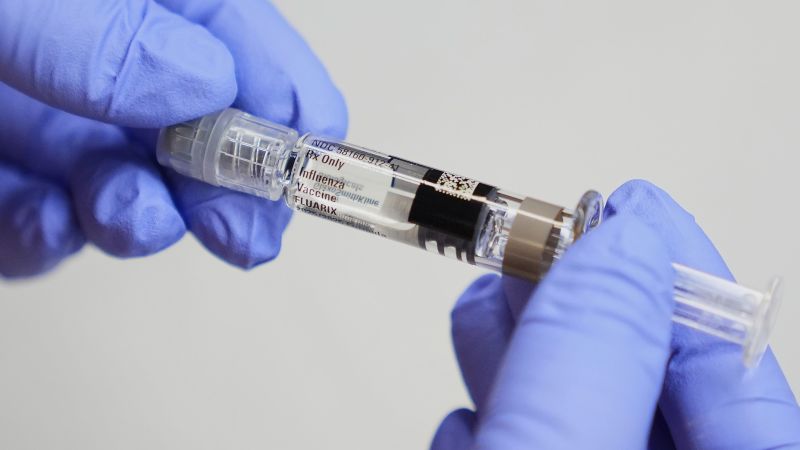
A mutated H3N2 subclade K that fueled severe seasons in the U.K., Canada, Japan and Australia is emerging in the U.S., raising the risk of a repeat of last winter’s extreme season—which produced the highest U.S. flu hospitalization rates in nearly 15 years and at least 280 pediatric deaths. Early UK analyses indicate current vaccines still cut the odds of ER visits or hospitalization by roughly 75% in children and 30–40% in adults despite a strain mismatch, but U.S. vaccination uptake is down (IQVIA: ~26.5 million retail pharmacy shots Aug–Oct versus 28.7 million previously, >2 million fewer). Surveillance data — rising lab positivity (from <1% to 2.4%), increasing wastewater detections (18% to 40% of samples), and CDC signals — suggest accelerating spread ahead of holiday travel, implying upside risk to hospitalizations and demand for vaccines, antivirals and healthcare capacity this season.
A mutated H3N2 subclade K that drove severe seasons in the U.K., Canada, Japan and Australia is now present in the U.S., where last winter produced the highest flu hospitalization rates in nearly 15 years and at least 280 pediatric deaths. Most U.S. detections this season have been H3N2 and roughly half of those are subclade K; that variant was not a major consideration when strain selection for this season's vaccine was made, creating a partial mismatch risk.
Early UK Health Security Agency analysis shows the current vaccines still reduce the odds of an ED visit or hospitalization by almost 75% in children and roughly 30%–40% in adults, but those results are preliminary, come from a preprint and predate expected waning of protection. U.S. uptake is lagging: IQVIA reports ~26.5 million retail pharmacy doses Aug–Oct versus 28.7 million in the comparable prior period, more than 2 million fewer shots.
Surveillance indicators are trending up — CDC FluView shows rising activity, lab positivity moved from <1% to 2.4%, and wastewater detections rose from 18% to 40% of samples — though only 4 of 147 monitored sites have hit season thresholds. Given rising global signals and holiday travel, investors should view higher case volumes as the primary risk driver for hospitalizations and for demand in vaccines, antivirals, diagnostics and healthcare capacity, while noting material uncertainty about severity and vaccine durability.
AI-powered research, real-time alerts, and portfolio analytics for institutional investors.
Request DemoOverall Sentiment
moderately negative
Sentiment Score
-0.45
Ticker Sentiment
