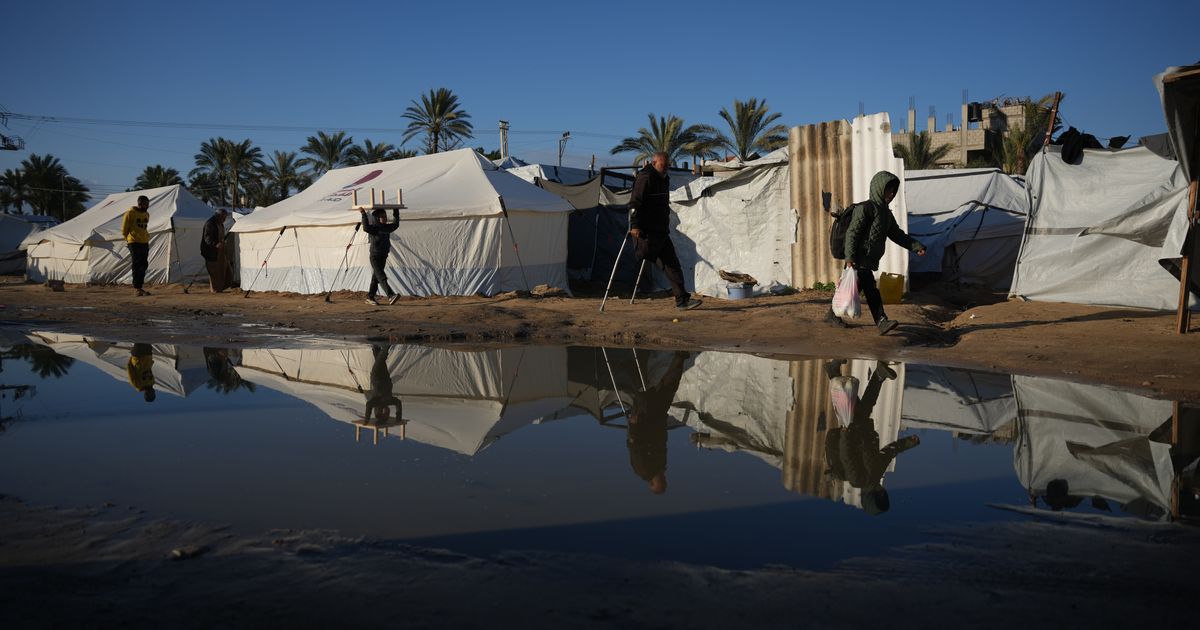
The U.S. has invited multiple countries, including Jordan, Greece, Cyprus and Pakistan (with prior invites to Canada, Turkey, Egypt, Paraguay, Argentina and Albania), to join a Trump-led "Board of Peace" to oversee Gaza's next phase; a $1 billion contribution secures permanent membership while three-year appointments require no contribution. The board and its executive committee—featuring senior U.S. figures, former leaders and international institutions—would oversee ceasefire implementation, disarmament, an international security force and Gaza reconstruction, potentially shifting aid flows and diplomatic alignments and posing a political challenge to the U.N.; Israel has publicly objected to the committee's coordination.
Market structure: The Board of Peace signals a potential re-routing of large-scale reconstruction dollars away from U.N. channels toward U.S.-led coalitions; that favors defense primes, global EPC/engineering firms and private security contractors who capture reconstruction/security contracts. Expect a multi-quarter procurement cycle: initial assessments and security contracts in 0–6 months, major construction awards over 6–36 months. Pricing power will rise for specialized suppliers (defense electronics, armored vehicles, heavy construction equipment) while multilateral aid-adjacent NGOs and UN-linked contractors could see reduced share and fee pressure.
Risk assessment: Tail risks include renewed large-scale hostilities (weeks) which would spike defense stocks and safe-haven flows, or political backlash/ legal challenges to an extraneous U.S.-led body that could stall funding (months). Hidden dependencies: delivery timelines hinge on on-the-ground security guarantees and donor coordination—if Turkey/Qatar mediate poorly, contractor access and insurance costs will spike. Catalysts to watch are Davos announcements (days–weeks), first tranche of pledged funds (threshold: >$5–10bn within 60 days), and any Israeli objections escalating into operational constraints.
Trade implications: Direct plays are long defense primes (LMT, RTX) and reconstruction/engineers (CAT, KBR, J) with 6–36 month horizons; hedge systemic risk with short-dated tail protection. Cross-asset impacts: bid for USD and U.S. Treasuries on risk-off; commodities (steel, copper) up if reconstruction scales >$10bn. Options strategies should prioritize capped-cost upside (call spreads) and cheap tail hedges (put/vol spreads).
Contrarian: Consensus will overweight short-term political risk and underprice multi-year reconstruction revenue streams; if the Board secures >$20bn of commitments in 6–12 months expect 20–40% re-rating in small/ mid-cap contractors exposed to Middle East reconstruction. Beware reputational and contract-certainty risks—many reconstruction winners are not the largest stocks but mid-cap specialty engineers insulated by security clearances and local JV access.
AI-powered research, real-time alerts, and portfolio analytics for institutional investors.
Request DemoOverall Sentiment
mildly negative
Sentiment Score
-0.25
