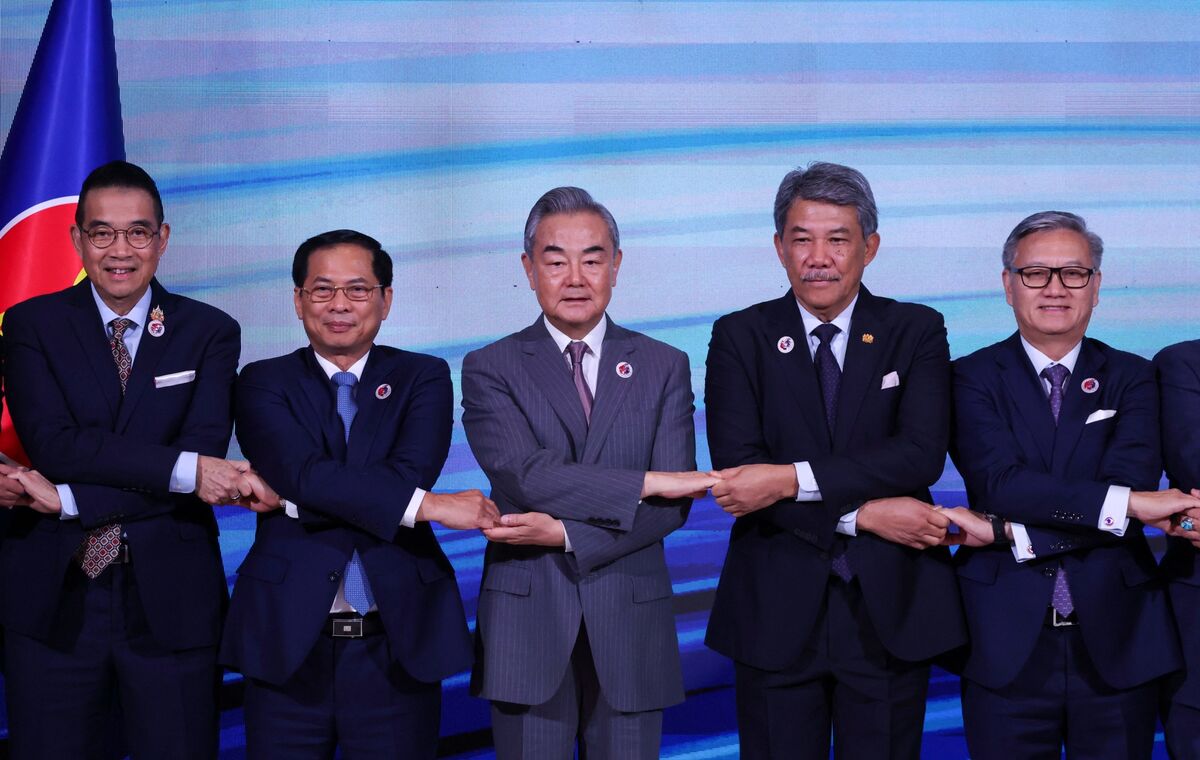
Chinese Foreign Minister Wang Yi urged Southeast Asian nations to uphold openness and cooperation during a meeting with ASEAN in Kuala Lumpur. This message, delivered amidst President Trump's looming tariff threats across the region, strategically positions China as a champion of free trade and regional solidarity, aiming to counter rising protectionism by emphasizing shared Asian values of inclusiveness.
China is strategically positioning itself as a champion of free trade and regional stability in Southeast Asia, directly contrasting its message with the looming threat of broad US tariffs. Chinese Foreign Minister Wang Yi's call for ASEAN nations to embrace 'openness' and 'inclusiveness' during a meeting in Kuala Lumpur is a clear diplomatic maneuver to strengthen its influence and economic ties within the region. By framing this as a promotion of shared 'Asian values,' China is attempting to create a unified economic bloc that could serve as a bulwark against US protectionism. The situation's 'mixed' sentiment and 'uncertain' tone, coupled with a moderate market impact score of 0.55, reflect the significant geopolitical tension underlying this diplomatic outreach. While China's message is cooperative, it highlights the escalating trade conflict that poses a material risk to regional supply chains and economic growth.
AI-powered research, real-time alerts, and portfolio analytics for institutional investors.
Request DemoOverall Sentiment
mixed
Sentiment Score
0.10
