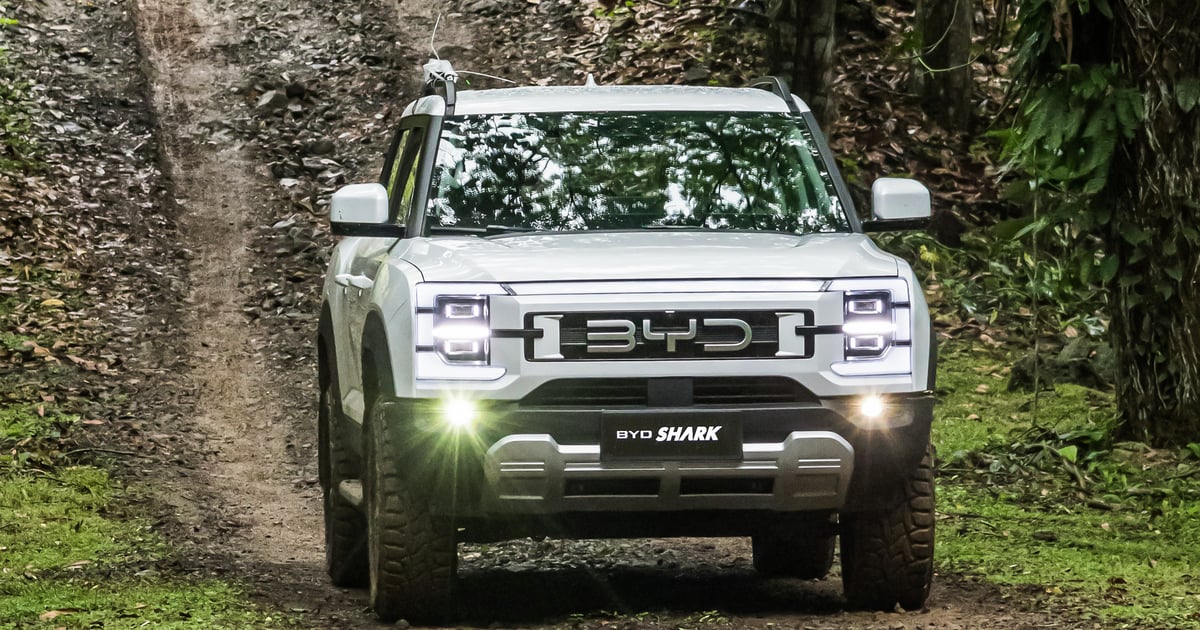
China's auto industry, while experiencing a 4.5% production increase in 2024 driven by a 35.5% surge in EV sales, faces growing headwinds from international tariffs, particularly from the U.S. and subsequently other nations, impacting export prospects; CAAM's Xu Haidong emphasizes the need for Chinese manufacturers to adapt by establishing overseas facilities and focusing on domestic sales amid a slowing economy and increased competition, despite government subsidies aimed at boosting local demand, while also noting the increasing domestic market share of Chinese brands over foreign automakers.
China's automotive industry demonstrated robust production in 2024, with a record 31.4 million vehicles manufactured, a 4.5% year-on-year increase, primarily propelled by a significant 35.5% surge in the electrified-vehicle sector to 12.8 million units. However, this growth is overshadowed by considerable export headwinds, as a substantial portion of these vehicles were sold overseas, exposing the industry to escalating international trade tensions and protectionist measures. The U.S. imposition of tariffs, followed by similar actions from countries like Russia, Brazil, and within the European Union (with tariffs up to 45.3% on Chinese BEVs), is compelling Chinese manufacturers to re-evaluate their export-reliant strategies. Consequently, the China Association of Automobile Manufacturers (CAAM) projects a stark deceleration in overseas vehicle sales growth to just 5.8% for 2025, down from 19.3% in the preceding year. In response, industry leaders advocate for establishing overseas manufacturing facilities and intensifying focus on the domestic market. This domestic pivot faces its own challenges, including stagnant new-vehicle sales (averaging 25 million units annually since 2019) and a weaker macroeconomic outlook, with forecasted GDP growth of 4.7% in 2025 and 4.3% in 2026. Government subsidies, such as the RMB20,000 for alternative energy cars, which spurred 3.7 million purchases from July to December 2024 and continue through 2025, aim to stimulate domestic demand, with CAAM forecasting a 4.7% rise in domestic sales to 32.9 million units in 2025, driven by a 24.4% growth in alternative-energy car sales. Amidst this, Chinese brands are gaining domestic market share, surpassing foreign brands in August 2024, and are increasingly competitive in both EV and CEPV sectors, though a price war, exemplified by BYD's up to 30% price cuts, raises concerns about long-term profitability. Foreign automakers like Honda are adapting by localizing production, such as its new EV facility in Guangzhou, while the technological lead in areas like autonomous driving, currently held by firms like Tesla due to chip access, remains a competitive dynamic, though Chinese firms are actively working to close this gap.
AI-powered research, real-time alerts, and portfolio analytics for institutional investors.
Request DemoOverall Sentiment
mixed
Sentiment Score
-0.10
Ticker Sentiment
