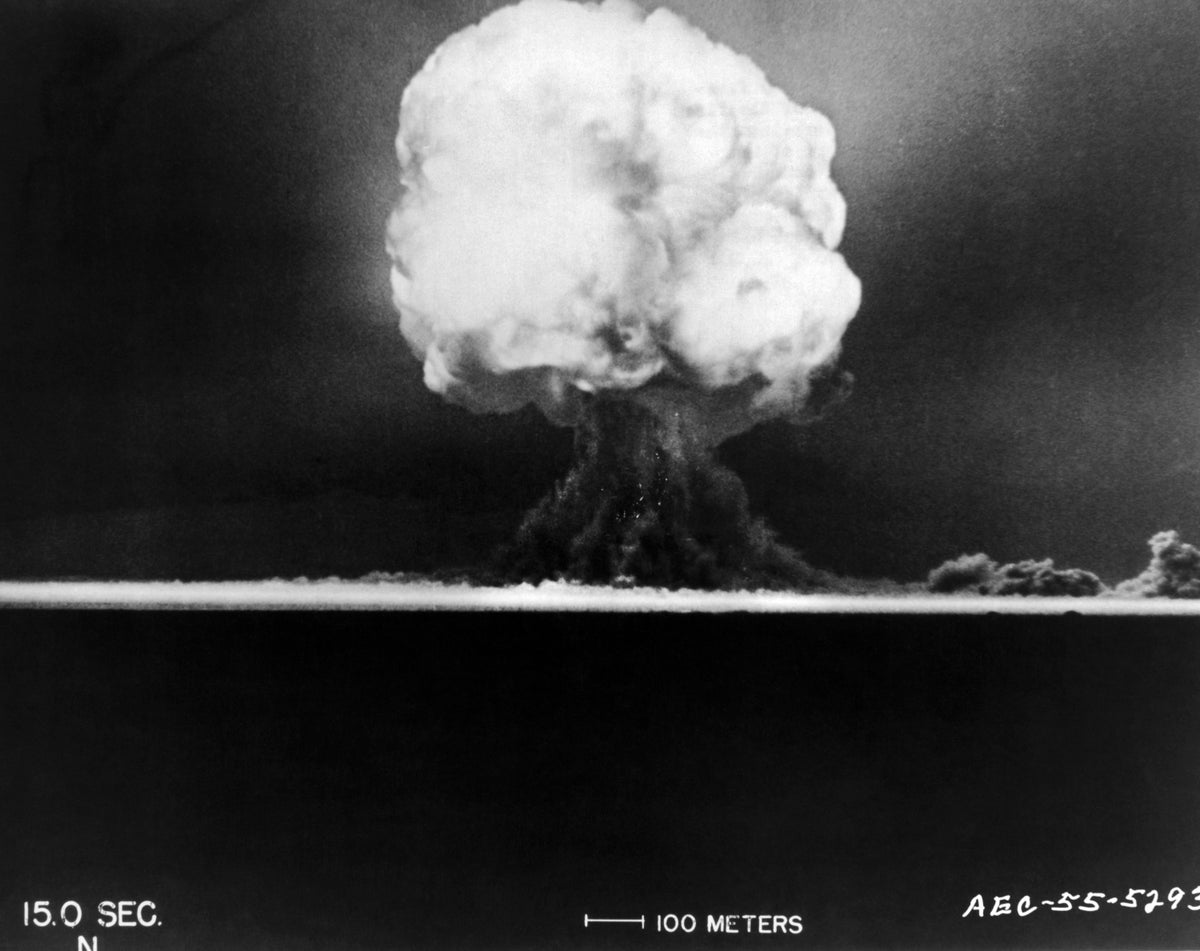
Researchers identified a previously unknown clathrate crystal inside trinitite, the glasslike material formed by the 1945 Trinity nuclear test. The discovery adds to rare high-energy nonequilibrium minerals previously found in the sample, alongside a quasicrystal reported in 2021. The article is scientific in nature and has little direct market relevance.
This is not a direct earnings event, but it is a reminder that extreme-energy processing can create value-dense, hard-to-replicate materials. The investable angle is the broadening of the “advanced materials” opportunity set: separation, characterization, and synthesis tools become more strategically important whenever new metastable phases are discovered, because the bottleneck shifts from discovery to reproducibility. That tends to favor the enabling layer—analytical instrumentation, high-purity feedstocks, and specialty ceramics—over the academic novelty itself.
Second-order, the article reinforces a key asymmetry in materials innovation: nature can occasionally outperform lab protocols when conditions are non-equilibrium and ultra-short duration. That is bullish for companies with capabilities in ultrafast modeling, high-temperature materials, and microstructure analytics, because the commercial moat comes from being able to identify and then scale weird phases into manufacturable products. The longer-term takeaway is that “nuclear-adjacent” materials science can spill into non-defense markets such as radiation shielding, extreme-environment electronics, and nuclear fuel cladding, where even small property improvements can command premium pricing.
Contrarian view: the market may overestimate the near-term monetization of scientific novelty. Most such discoveries stay at the proof-of-concept stage for years because reproducibility, impurity control, and cost curves are brutal; the real upside is usually in tools and process IP, not the exotic crystal itself. The catalyst horizon is months to years, not days: watch for patents, DoD funding, DOE lab collaborations, and any corporate partnerships that indicate a path from “found in debris” to “engineered at scale.”
AI-powered research, real-time alerts, and portfolio analytics for institutional investors.
Request DemoOverall Sentiment
neutral
Sentiment Score
0.05
