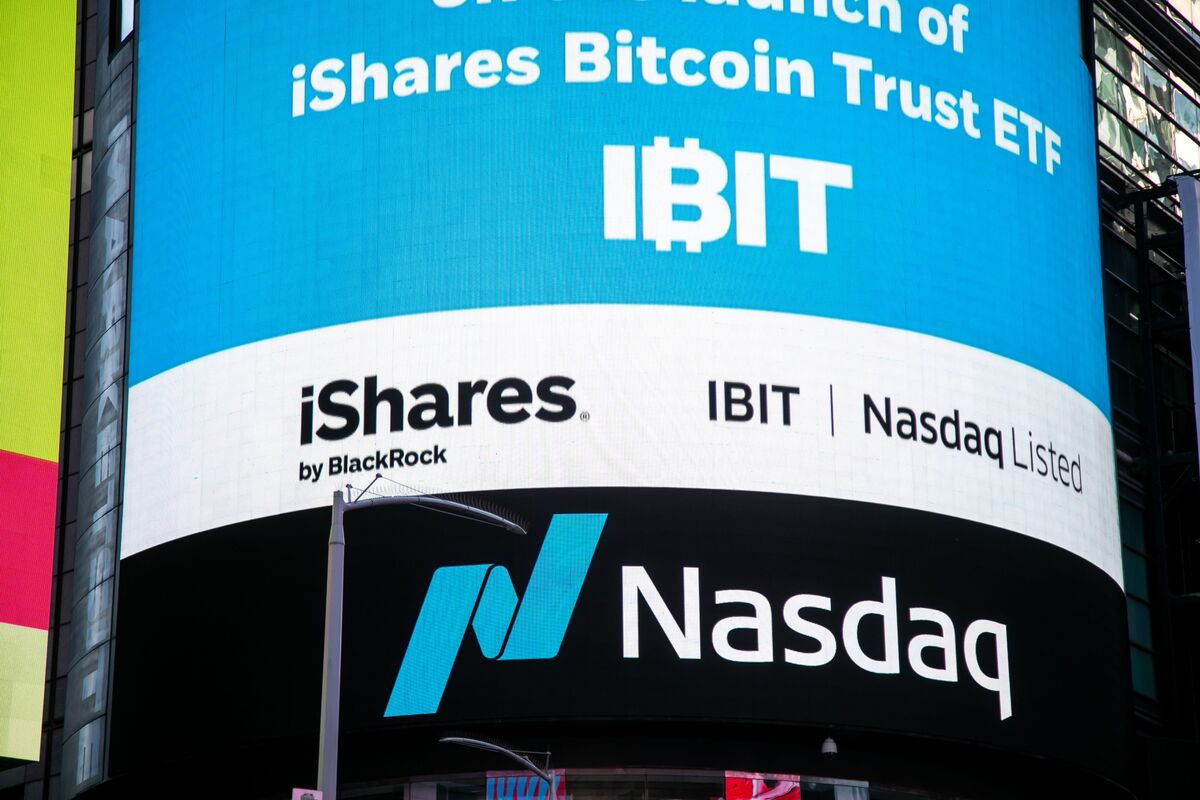
Nasdaq’s International Securities Exchange has filed with the SEC to raise the daily trading cap for options on BlackRock’s iShares Bitcoin Trust (IBIT) from 250,000 contracts to 1,000,000, citing increased investor demand. Approval would quadruple capacity for IBIT options, likely improving liquidity and facilitating larger derivatives flows around the top bitcoin ETF, signalling heightened market interest in crypto‑linked options trading.
Market structure: Nasdaq (NDAQ) is the primary beneficiary — higher daily cap (250k -> 1M) directly increases addressable options volume, fee capture and order flow control; BlackRock (via IBIT) benefits indirectly through greater hedging depth that should support ETF AUM growth. Competitors (CME, ICE) face margin pressure on crypto-derivatives market share as concentrated liquidity on Nasdaq can compress spreads and raise execution probability for retail/institutional flow. The move signals investor demand for crypto hedging/speculation is rising materially — if utilization approaches the new cap, expect per-day contract volumes to rise up to 4x from current peaks over months, boosting implied vol and turnover.
Risk assessment: Tail risks include a regulatory reversal (SEC/OCC restrictions) or a major options blow-up that forces emergency margin hikes and trade halts; probability low-medium but impact high. Near-term (days-weeks) expect episodic vol and liquidity stress around large BTC moves; medium-term (3–12 months) is fee and share gains for exchanges; long-term (1–3 years) depends on sustained ETF AUM growth and clearing capacity upgrades. Hidden dependencies: OCC clearing limits, broker-dealer prime broker capacity, and competition from other listings — a single large default or capacity constraint could propagate across derivatives markets.
Trade implications: Tactical direct plays — take a modest long in NDAQ (1–2% portfolio) to capture fee tailwind over 3–12 months and size IBIT option strategies to play elevated crypto vol. Relative-value: long NDAQ vs short CME (CME) 0.5% pair to play concentrated options flow favoring Nasdaq; options strategies: buy 3-month IBIT ATM straddle sized 0.25% portfolio if expecting >30% move in IBIT in 90 days, otherwise employ long-dated NDAQ calls (6–12 months) to capture structural upside. Rotate overweight into exchanges/fintech and underweight legacy fee-reliant sectors if ETF market share shifts materially.
Contrarian angles: Consensus underestimates operational risk — higher caps can centralize toxic flow and amplify outage/regulatory scrutiny risk that could depress exchange multiple if realized. The upside from volume is not linear: if spreads tighten 20–40% per contract, net fee revenue may rise less than volume multiples suggest; historically (SPY options growth) exchanges captured share but average revenue per contract fell. Don't assume perpetual linear flow — set AUM/volume triggers (e.g., IBIT AUM > $10bn or sustained average daily options >500k) before scaling positions.
AI-powered research, real-time alerts, and portfolio analytics for institutional investors.
Request DemoOverall Sentiment
mildly positive
Sentiment Score
0.25
Ticker Sentiment
