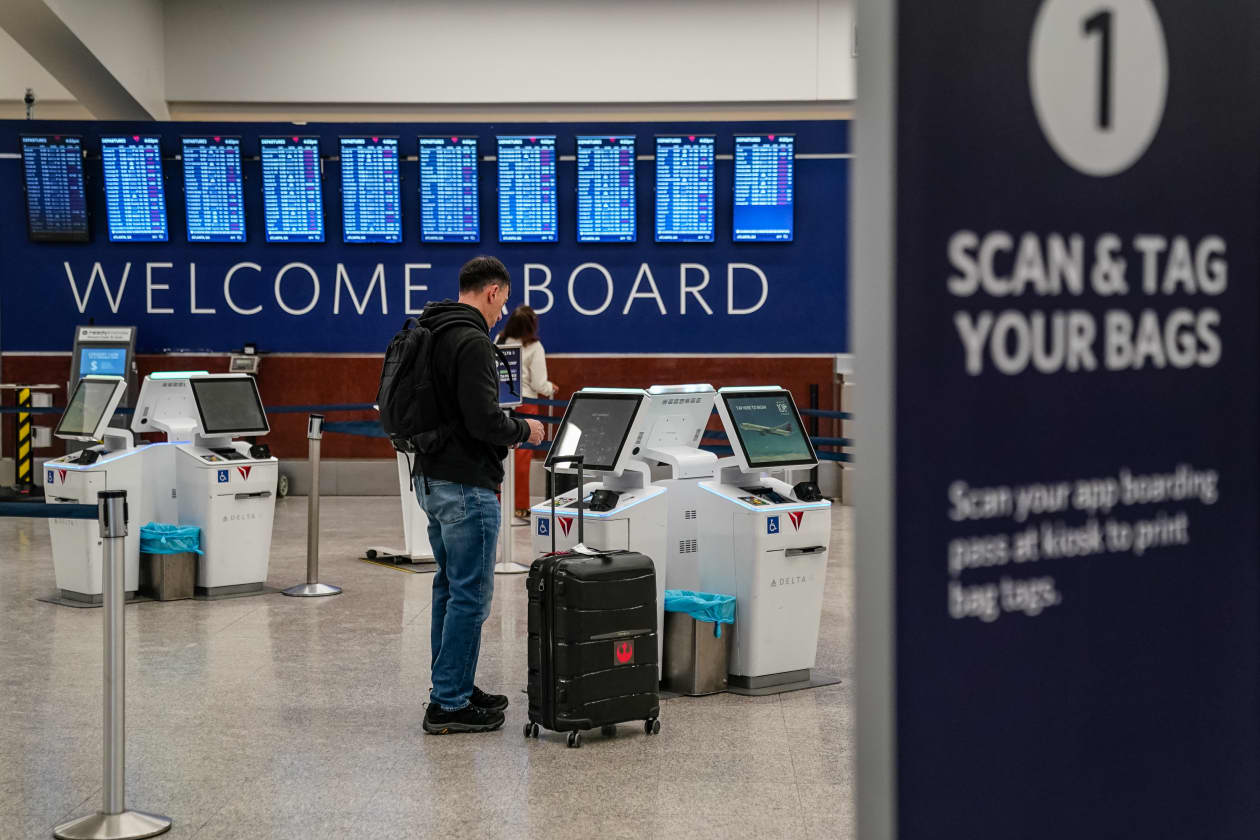
Three major U.S. carriers (Delta, United and JetBlue) raised checked-bag fees by $10 for first and second bags, a direct price increase that will lift ancillary revenue per passenger. Airlines say the hikes help avoid a federal tax and strengthen their branded credit-card businesses, implying incremental revenue and loyalty-card economics upside. Impact is modest — likely a small boost to airline unit revenue and co-branded card economics but with limited market-moving consequences and potential consumer backlash.
Ancillary-fee repricing generates outsized margin lift because the incremental cost of a checked bag is tiny relative to the price paid; every dollar of uplift largely falls to the operating margin and FCF after distribution to regional partners. Simple sensitivity: a $10 change multiplied by each 50m paying passengers equates to ~$500m of topline before elasticity — even modest take-rates convert quickly into meaningful EPS leverage for large network carriers over 6–12 months.
The competitive edge is not uniform. Carriers with deep co‑brand card relationships and higher corporate/corporate‑adjacent yield capture a larger share of ancillary windfalls (both via direct margin and through card‑linked sign‑on economics), widening ROIC dispersion vs lower‑margin LCCs and hybrid carriers. Second‑order winners include co‑brand card issuers and loyalty‑driven premium segments; losers are price‑sensitive leisure feeders and regional partners that absorb fixed cost while seeing little ancillary upside.
Key catalysts that will determine how permanent this uplift is: regulatory scrutiny and congressional attention (3–12 months), macro downturn that compresses corporate travel (0–9 months), and competitive undercutting in markets with low switching costs (days–weeks). Tail risks include coordinated regulatory action or litigation that could force revenue recognition changes or caps on ancillary pricing, and a consumer‑led migration to bundled fare products if perceived gouging accelerates demand elasticity beyond current models.
AI-powered research, real-time alerts, and portfolio analytics for institutional investors.
Overall Sentiment
mildly positive
Sentiment Score
0.20
Ticker Sentiment
