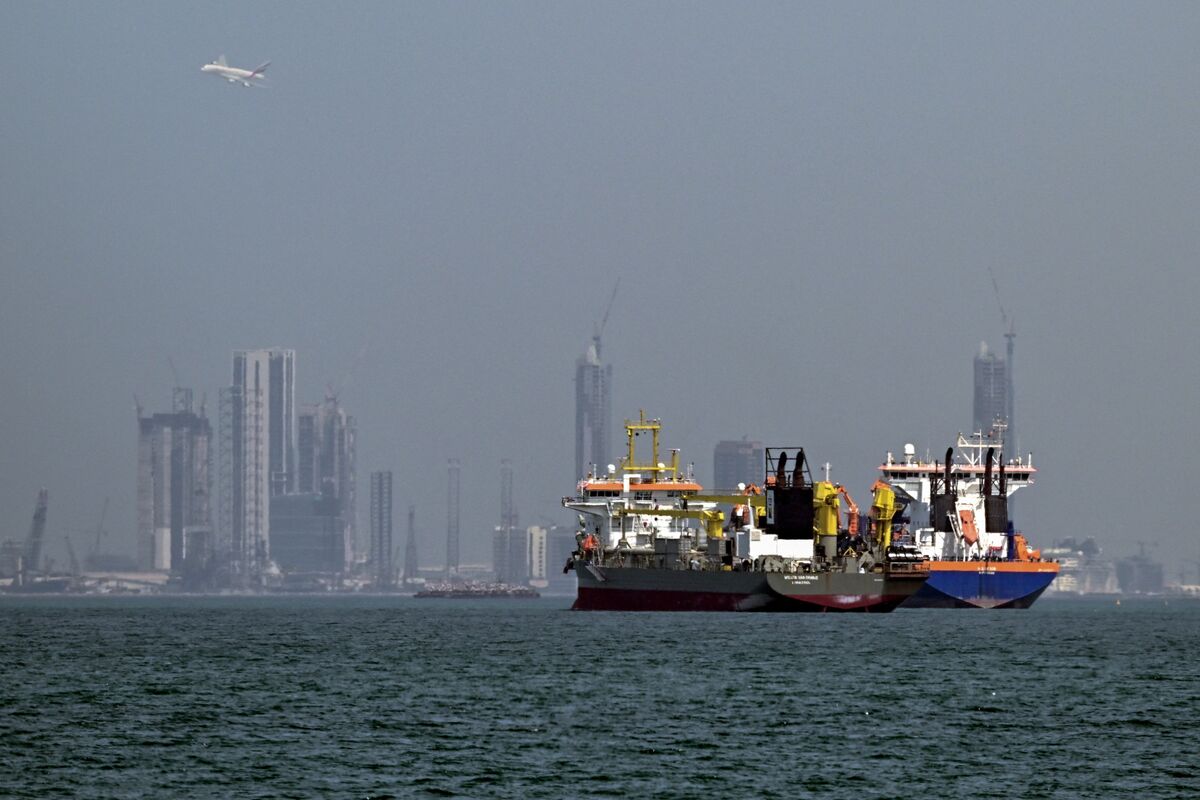
Hundreds of vessels are clustering near Dubai as ships move away from the Strait of Hormuz amid Iran’s widening control of the waterway. The ceasefire between the US and Iran appears increasingly fragile, with renewed exchanges of fire reported even as the US said it opened a passage through the strait. The situation raises acute disruption risk for global oil flows and shipping routes, making this a high-impact geopolitical shock.
The market is repricing from a simple headline risk into a logistics-and-inventory problem. Even if physical supply disruption remains limited, the behavior change around the chokepoint raises effective transit times, insurance costs, and working capital needs across crude, refined products, LNG, and containerized freight; that tends to hit transportation and industrial supply chains before it shows up in outright volume losses. The first-order beneficiaries are not just upstream energy producers, but also defense, marine security, and any asset tied to rerouting, while the losers are refiners and carriers exposed to fuel-cost spikes and voyage inefficiency. The more important second-order effect is optionality destruction: when ships bunch outside a transit lane, the system loses the ability to clear quickly after a truce headline. That means a fragile ceasefire can still produce a prolonged risk premium because operators will not instantly unwind protective routing, especially if there are intermittent exchanges of fire. In practice, that keeps spot volatility elevated for days, but the more durable risk is over weeks as charterers bake in higher contingent costs and shippers pre-position inventory, tightening delivered supply even if headline flows look "normal." Consensus is likely underestimating how asymmetric this is for shippers versus producers. A modest disruption premium can be absorbed by producers with low lifting costs, but it can be multiples larger for refiners, airlines, truckers, and import-dependent manufacturers whose margins are levered to fuel and freight. The contrarian view is that the move could be overdone if the passage remains open and escorts stabilize traffic; however, even then, the market typically does not re-rate risk assets back to pre-event levels until several days of uninterrupted throughput are observed, so fading the move too early is usually premature.
AI-powered research, real-time alerts, and portfolio analytics for institutional investors.
Request DemoOverall Sentiment
strongly negative
Sentiment Score
-0.65
