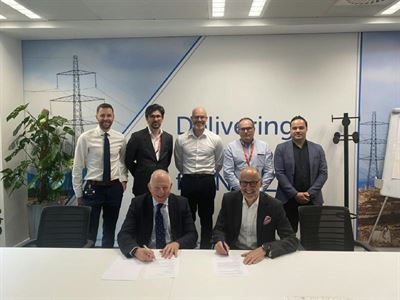
Linxon has been appointed to deliver detailed design and long‑lead equipment procurement for 400/132 kV SF6‑free EconiQ GIS substations and associated systems for SSEN Transmission’s Western Isles project, which will connect 1.8 GW of renewable generation to the GB grid via a new Hitachi Energy HVDC bipole. The award extends Linxon’s December 2023 Pathway to Net Zero Framework partnership with SSEN Transmission and emphasizes deployment of SF6‑free technology and early contractor involvement to accelerate delivery, cost certainty and regulatory compatibility — supporting Britain’s transmission reinforcement and net‑zero transition objectives.
Market structure: The award cleary favors grid‑equipment and EPC players with SF6‑free portfolios — most directly Hitachi Energy (leading EconiQ), SSEN/SSE (LSE:SSE) as the offtaker, and specialist EPCs (Linxon-type). Expect low‑hundreds‑of‑millions GBP in multi‑year procurement/EPC revenue per major substation cluster (1.8GW HVDC gateway implies equipment + civil works demand concentrated 2025–2030), improving secular visibility for winners and pressuring legacy SF6 incumbents on pricing and tender win rates.
Risk assessment: Key tail risks are project delays (HVDC/substation interface risking +12–24 month slippage), Ofgem/regulatory cost recovery disputes that could compress regulated returns, and supply‑chain shortages (transformers/cables) that can push cost overruns 10–30%. Near term (days–weeks) market impact is muted; medium term (3–12 months) watch tenders and Ofgem signals; long term (2025–2030) this accelerates electrification and increases capex in transmission equipment.
Trade implications: Direct plays are long Hitachi Energy (HTEC.ST) and regulated utility exposure via SSE (LSE:SSE); pair trades favor HTEC vs legacy SF6‑reliant peers (e.g., Siemens Energy ENR.DE) over 6–18 months. Options: use 9–15 month call spreads on HTEC to control premium; size exposures 1–4% of portfolio and implement 15–25% stop losses tied to project delay or negative Ofgem rulings.
Contrarian angles: Consensus underestimates execution risk—EconiQ scale‑up could reveal reliability or interoperability issues that delay adoption, creating temporary demand shock for incumbents. Historical HVDC/substation projects have seen >20% cost/timing overruns; price in a 12–18 month delay scenario and cap positions accordingly rather than assuming linear rollout.
AI-powered research, real-time alerts, and portfolio analytics for institutional investors.
Request DemoOverall Sentiment
mildly positive
Sentiment Score
0.35
