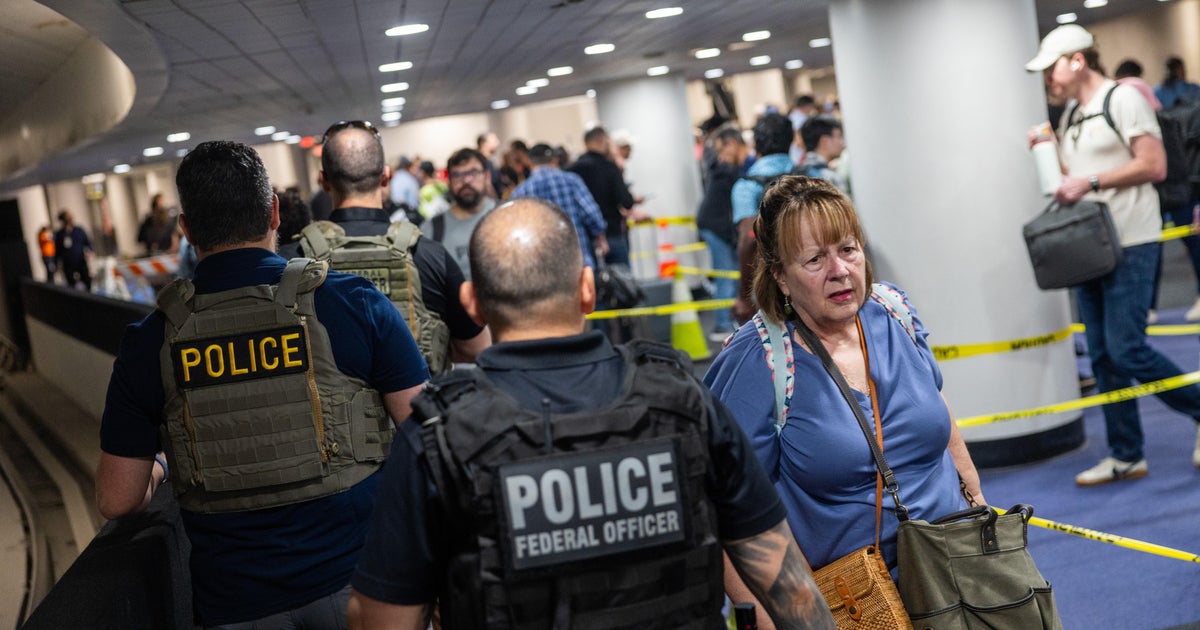
36% of TSA officers called out at Houston's George Bush Intercontinental Airport amid a partial government shutdown, producing multi-hour security lines and major traveler disruptions. The Department of Homeland Security funding deadlock prompted deployment of ICE and DHS agents to 14 airports; travelers and carriers are blaming stalled appropriations. United warns higher oil prices tied to the Iran war are forcing ~5% summer flight cuts and says airfares have risen ~15–20% in the last month, adding operational and pricing pressure on the airline sector.
Operational shock to checkpoint staffing cascades nonlinearly into airline ops: closed lanes and lumped processing create outsized increases in passenger dwell time because throughput scales with staffed lanes, not passenger volume. That amplifies aircraft turn-time risk — longer TATs force either buffer aircraft and crew (raising unit costs) or schedule compression and cancellations (destroying short-term revenue and customer goodwill).
The cost/revenue mix shifts in the near term: airlines can extract higher fares from constrained capacity but only until fuel-driven CASM erosion overwhelms incremental yield — a two-headed squeeze that favors carriers with stronger hedges, lower unit costs, and flexible balance sheets. Airport operators and concessionaires see mixed effects: transient traffic spikes boost per-visitor spend, but reputational damage and increased voluntary modal substitution (driving vs flying) can lower high-margin business travel over quarters.
Policy is the key catalyst on a days-to-weeks horizon; a funding fix materially restores throughput, while protracted negotiations create elevated volatility into peak summer demand and increase the probability of structural reforms (e.g., staffing mandates, privatized screening pilots). Tail risks include cascading cancellations that kill forward corporate travel budgets for 6–12 months and force long-term modal shifts for frequent flyers.
Second-order beneficiaries are operators able to monetize friction (paid expedited lanes, airport retail, and pre-cleared security platforms) and commodity producers if sustained fuel pressure persists; losers are highly levered legacy carriers with large hub exposure and weak hedges that cannot pass through rising CASM without eroding load factors.
AI-powered research, real-time alerts, and portfolio analytics for institutional investors.
Request DemoOverall Sentiment
mildly negative
Sentiment Score
-0.35
