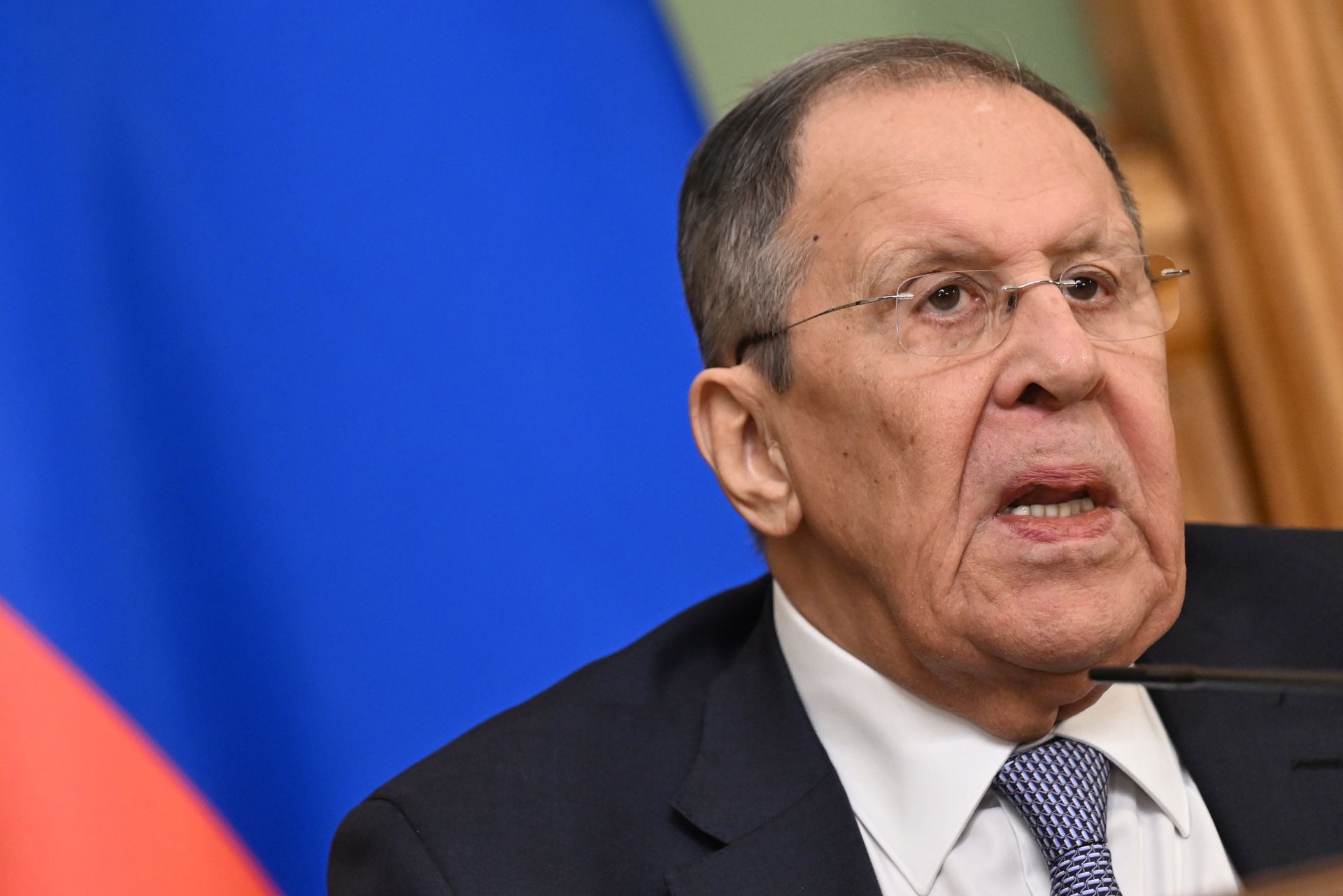
Russia's Foreign Minister Sergey Lavrov has been sidelined from the Kremlin's main Ukraine negotiation channel, with Yuri Ushakov and Kirill Dmitriev now appearing to drive outreach to Washington. Lavrov's hardline messaging reportedly contributed to the collapse of a planned Trump-Putin summit in Budapest, and U.S. officials say diplomatic engagement is proceeding beyond him. The article is geopolitically significant but likely has limited direct market impact outside sanctions and Russia-Ukraine risk sentiment.
The market implication is not that diplomacy is improving; it is that Moscow is formalizing a bifurcated negotiating stack where hard-line signaling is separated from deal-making. That usually reduces headline volatility in the short run because the “bad cop” can be ignored, but it raises the probability of a negotiated outcome driven by a narrower set of economic and sanctions-linked concessions. The second-order effect is that sanctions policy becomes more tradable than battlefield headlines: if the real channel is tied to finance and trade access, incremental waivers or enforcement relaxation can appear before any substantive ceasefire progress.
For commodities, the biggest beneficiary is not necessarily Russian oil itself but the ecosystem that arbitrages policy ambiguity. A more centralized, less diplomatic process increases the odds of selective export relief, shadow-fleet adaptation, and routing shifts rather than a clean volume recovery. That argues for continued support to non-Russia seaborne transport and oil-service beneficiaries outside the sanctioned universe, while keeping a lid on the idea that immediate Russian supply normalization is imminent.
The contrarian read is that Lavrov’s sidelining may be a sign of negotiating flexibility rather than weakness: when a regime wants optionality, it removes high-visibility ideologues from the public stage. If so, the next 1-3 months could bring more credible back-channel signaling than the market expects, especially around export waivers, banking access, and prisoner/ceasefire sequencing. The key risk is that a failed outreach cycle reintroduces escalation premiums abruptly, but that would likely show up first in sanctions-sensitive assets rather than broad risk.
AI-powered research, real-time alerts, and portfolio analytics for institutional investors.
Request DemoOverall Sentiment
mildly negative
Sentiment Score
-0.15
