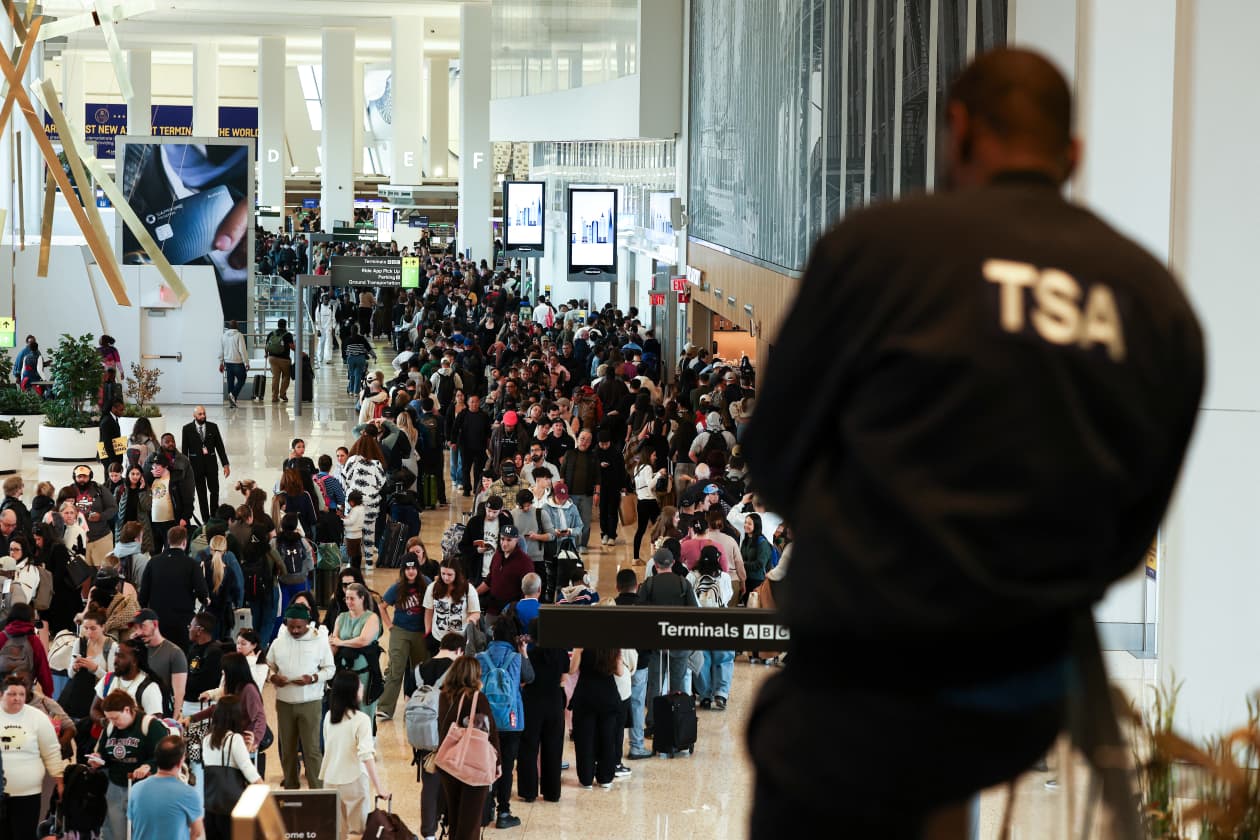
A jump in crude-oil prices amid fears the Iran conflict could escalate prompted early trading declines in airline stocks as investors fret rising fuel costs will pressure airline profits. U.S. travel demand has not yet softened, and airport disruptions from a partial government shutdown add stress, but consumers haven’t felt the full impact of higher fuel costs so far.
The immediate transmission mechanism is slow: crude → jet-fuel cracks → airline pump price → fares/ancillaries, with ~3–9 month lag before passengers feel it in ticket pricing. Fuel is still ~20–30% of airlines' opex, so a sustained $10/barrel move can meaningfully widen or compress carrier free cash flow; crude moves that persist for a quarter reprice quarterly hedging rolls and change forward CASM trajectories in a measurable way.
Winners are not just refiners and midstream (who capture higher crack spreads and tolling fees) but airport owners and contractors that see fewer flight cancellations and sustained passenger volumes while airlines cut capacity growth. Losers are carriers with limited hedges, thin ancillary mixes, and older fleets—these players face both higher cash burn and a narrower ability to pass costs through, creating a bifurcation between low-cost carriers running on scale/efficiency and legacy carriers with pricing power and diversified revenue.
Second-order effects: higher fuel accelerates the relative value of newer, fuel-efficient narrowbodies (raising lease/used-aircraft prices) and compresses near-term fleet growth plans, tightening supply and supporting fares 6–12 months out. Catalysts that could reverse the move include a coordinated SPR release or signs of demand erosion in forward bookings (2–8 week read), whereas a geopolitical escalation or OPEC+ output discipline would cement higher-for-longer energy and force re-hedging pain into the next 1–3 quarters.
Trade framing should therefore separate a near-term volatility play from a medium-term structural reweighting: short-duration, event-driven hedges to protect portfolio airline exposure now, and selective longs in refiners/midstream or legacy carriers with strong hedges if oil stays elevated beyond 90 days.
AI-powered research, real-time alerts, and portfolio analytics for institutional investors.
Overall Sentiment
mildly negative
Sentiment Score
-0.25
