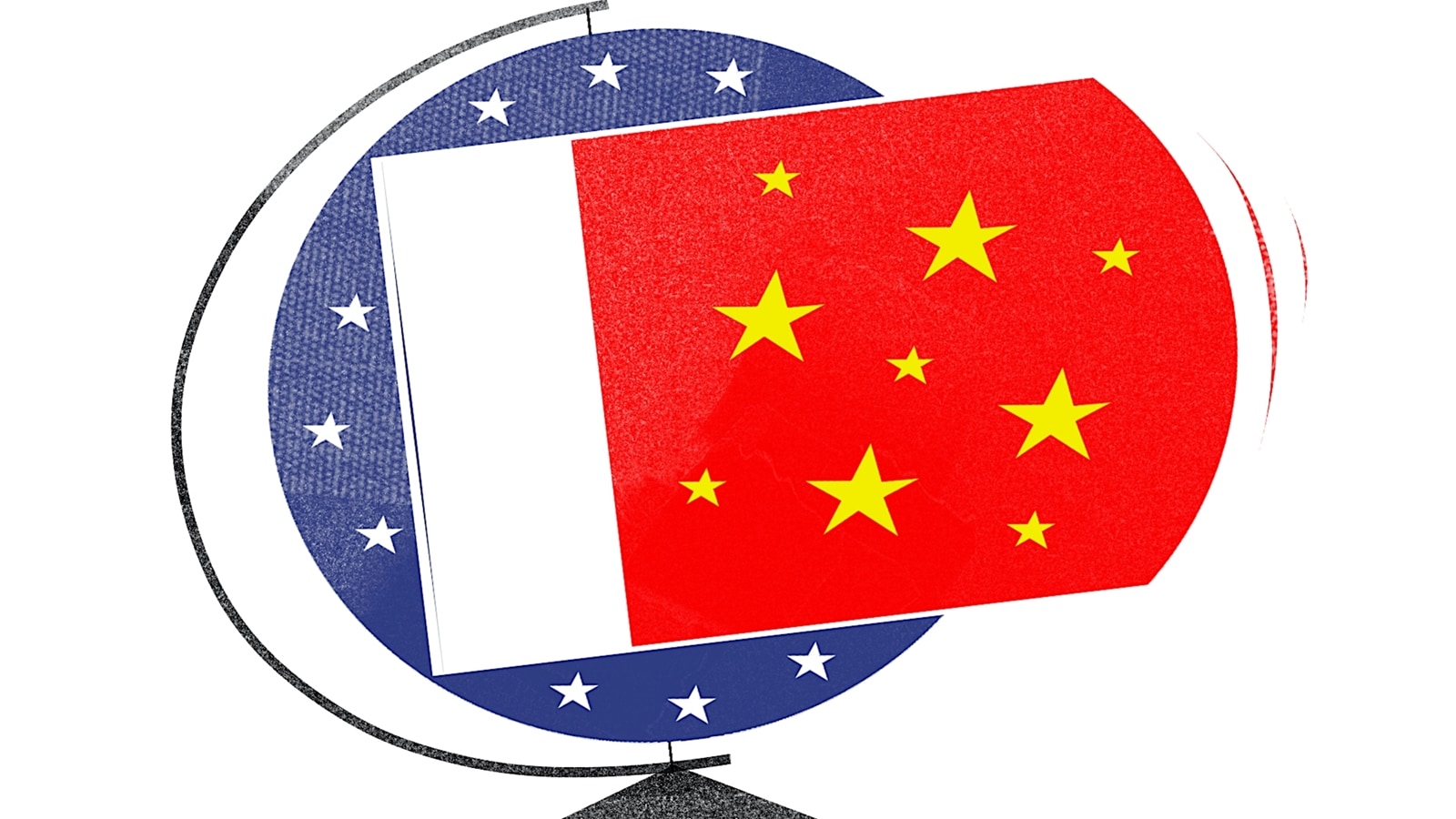
Thousands of US troops remain in the region as the Iran war continues; the author argues the campaign degrades Iranian military capacity but risks diverting US military and financial resources away from the Asia-Pacific, effectively advantaging China without Beijing firing a shot. Iran (population ~90 million) has deep geographic and institutional resilience, and a prolonged conflict could weaponize the Strait of Hormuz, disrupt global energy and trade flows, and signal limits to US power with direct implications for energy and defense sector risk premia.
The real strategic effect isn't a one-off shock to prices; it's a reallocation of attention, platforms, and industrial tempo that compounds over quarters into years. Expect a multi-year drift of naval and ISR assets into the Gulf theatre that reduces U.S. carrier and submarine presence in the Western Pacific by meaningful percentages versus peacetime baselines, creating a durable window for Beijing to consolidate economic and diplomatic gains without kinetic escalation.
Markets will reflect two overlapping dynamics on different cadences: a near-term risk-premium in oil, shipping insurance, and EM FX that spikes within days-weeks around incidents, and a medium-term structural re-price of defence, shipbuilding, and semiconductor “friend-shoring” budgets over 12–36 months. That means higher incremental margin capture for liquid hydrocarbon producers in the 3–9 month horizon, steeper sovereign funding needs that risk flattening or steepening the U.S. curve depending on fiscal response, and an acceleration in capital allocation to defence suppliers focused on munitions, logistics and ISR.
Second-order winners include miners and commodity exporters who gain from Asia’s strategic pivot toward resource security, and mid-tier defence contractors with flexible build pipelines; losers are cyclical transport and leisure names with outsized fuel exposure and pure-play China tech names vulnerable to geopolitically driven onshoring. The reversals that would unwind these moves are clear: a rapid negotiated de-escalation within 60–90 days or a bipartisan U.S. fiscal reorientation back toward Indo-Pacific deterrence within a single budget cycle would remove much of the tail premium priced into these sectors.
The appropriate investor posture is targeted, time-boxed exposure with explicit event hedges rather than outright thematic extrapolation — favor liquid, hedgable instruments and pair trades that monetize dispersion between energy/defence and consumer/transport cyclicals.
AI-powered research, real-time alerts, and portfolio analytics for institutional investors.
Request DemoOverall Sentiment
strongly negative
Sentiment Score
-0.60
