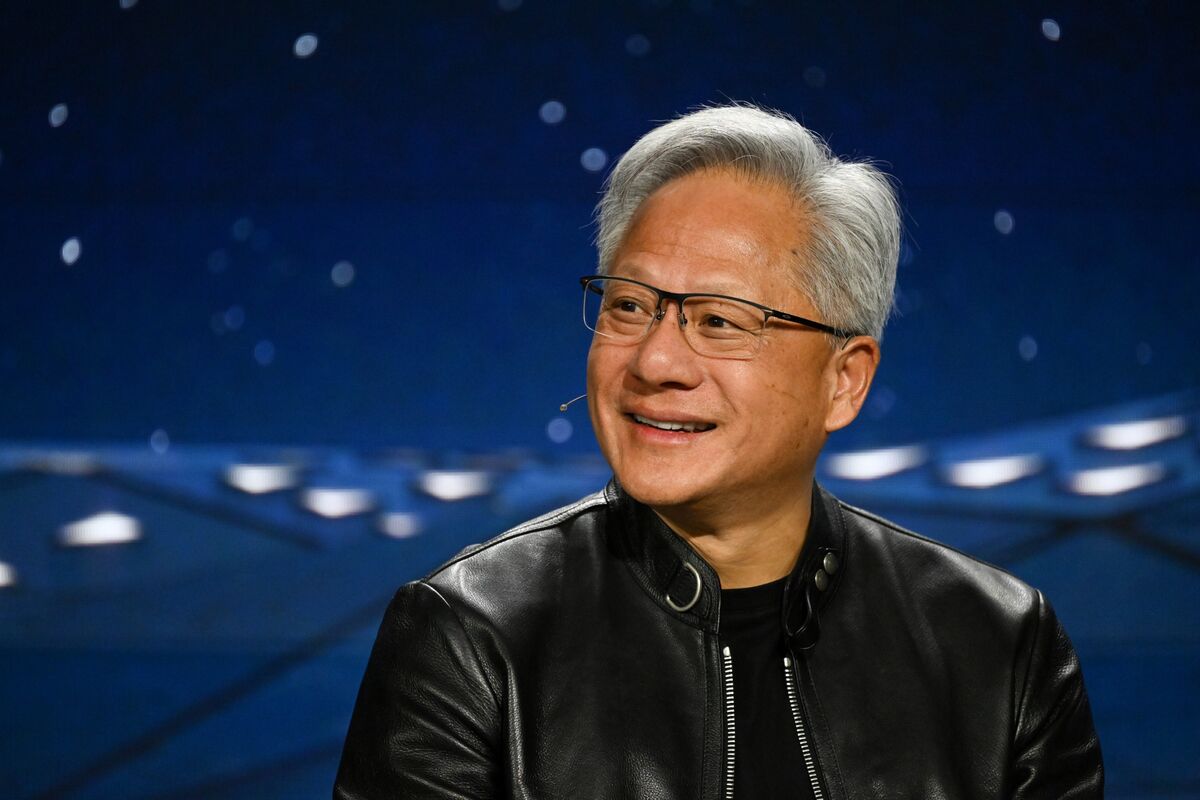
Nvidia CEO Jensen Huang said he would be willing to join President Trump on a China trip if invited, but noted no invitation has been extended yet. The comments are mainly diplomatic and signal Nvidia’s sensitivity to U.S.-China relations, export controls, and broader tech trade policy. The article contains no operational or financial update for Nvidia, so immediate market impact is likely limited.
The market read-through is less about optics and more about optionality: any thaw in US-China industrial policy lowers the probability of an outright demand shock to the AI supply chain. NVDA’s near-term earnings are not the issue; the risk premium is tied to how much of its China-derived growth can remain monetizable under evolving export rules and whether a political trip creates room for narrower, more stable licensing paths. In that sense, this is a sentiment catalyst with asymmetric impact on supplier confidence rather than a direct revenue event.
The bigger second-order effect is on the ecosystem that has levered itself to an unconstrained China AI buildout. Foundry, memory, advanced packaging, and networking names with China exposure could outperform on any perception that policy volatility is easing, while domestic China hardware substitutes lose urgency if access to frontier chips looks less uncertain. The flip side is that if headlines raise hopes without policy follow-through, the market may re-rate nothing—creating a classic “diplomacy beta” fade opportunity after the initial pop.
Time horizon matters: over days, this can support multiple expansion in AI semis; over months, the only durable driver is whether the administration tolerates broader export stability. The key tail risk is the opposite scenario: a high-profile trip that produces tougher rhetoric or new restrictions would be read as a signal that negotiation bandwidth is tightening, which would hit the China-sensitive AI basket hardest. Consensus is probably underpricing how little actual policy change is needed to move these stocks—narrative alone can matter for a few sessions, but not for a quarter.
AI-powered research, real-time alerts, and portfolio analytics for institutional investors.
Overall Sentiment
neutral
Sentiment Score
0.05
Ticker Sentiment
