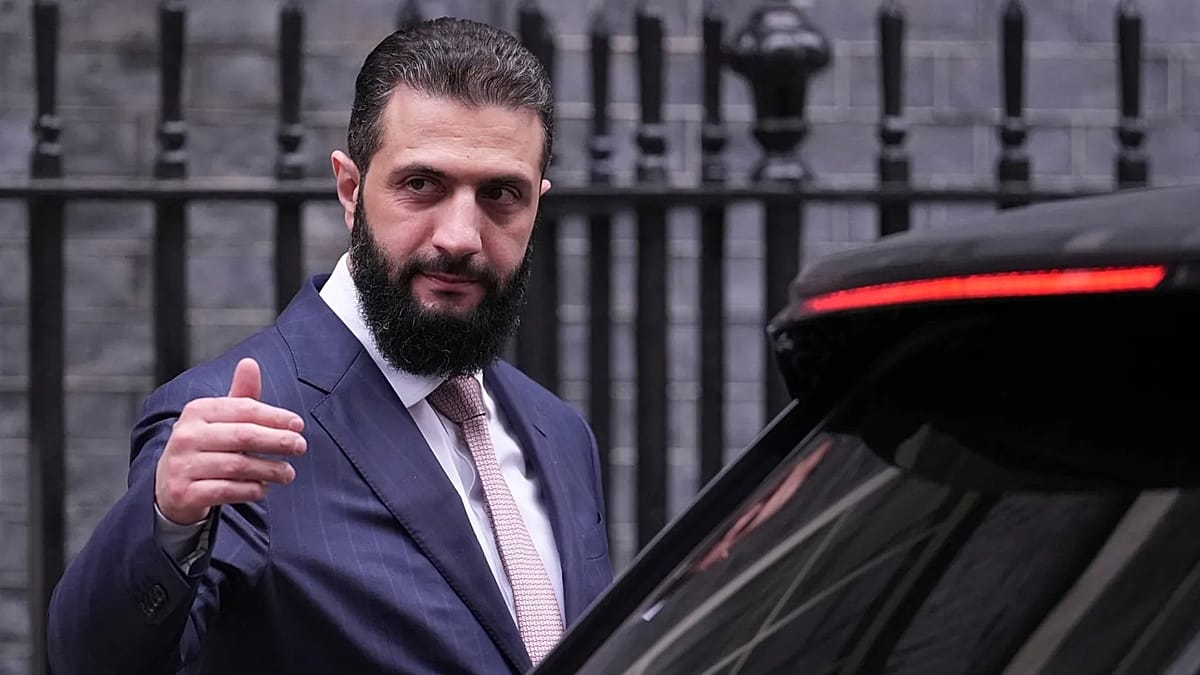
Ahmed al-Sharaa, Syria's interim President, conducted high-profile outreach to Western leaders (UK, Germany, US, France) following London’s July 2025 resumption of diplomatic ties and reported loosening of many international sanctions. Key near-term policy points: Downing Street and Sharaa agreed to work to reopen the Strait of Hormuz to restore freedom of navigation (material for energy/shipping flows), and Germany signalled an intent to return roughly 80% of Syrians in Germany “over the next three years”; the UK reported ~31,000 Syrians granted asylum to 2021. Diplomatic normalization and sanction relief raise the prospect of increased reconstruction flows to Syria, but persistent sectarian violence and IS activity keep political and security risks elevated.
Diplomatic thawing materially lowers the political risk premium that has frozen private capital flows into Syria; that unlocks two buckets of real economic activity over different horizons. Near term (3–12 months) expect a modest normalization of trade finance and reinsurance access that enables chartering and logistics providers to take incremental market share on MENA routes; medium term (1–3 years) expect targeted reconstruction projects (urban, power, ports) to generate tens of billions of contracted spend, concentrated in heavy materials, earthmoving and regional EPC firms.
A strategically critical variable is freedom of navigation through the Strait of Hormuz: a repeat or sustained closure would not only spike seaborne crude freight but also force longer routing via the Cape, adding ~10–14 days and materially increasing voyage costs for VLCCs and product tankers — a structural boon to owners of larger tanker fleets and a corresponding squeeze for refiners and shipping-dependent supply chains. Insurance and P&I capacity will be the choke point that determines whether nominal route openings translate into real trade flows; reinsurer appetite and Lloyd’s/MA market decisions will move faster than sovereign pronouncements.
Policy commitments around migrant returns create a two-way risk for European politics and FX/sovereign flows: successful, rapid returns could reduce EU public spending on asylum and increase repatriated remittances, but legal and logistical frictions make the announced timelines optimistic and politically explosive. Key catalysts that will reprice risk are: a major terror event or chemical-weapons allegation (reinstates sanctions quickly), re-entry of Western banks into correspondent banking with Syria, and formal multilateral conditional financing — each with distinct timing from weeks to multiple years.
AI-powered research, real-time alerts, and portfolio analytics for institutional investors.
Request DemoOverall Sentiment
mixed
Sentiment Score
0.05
