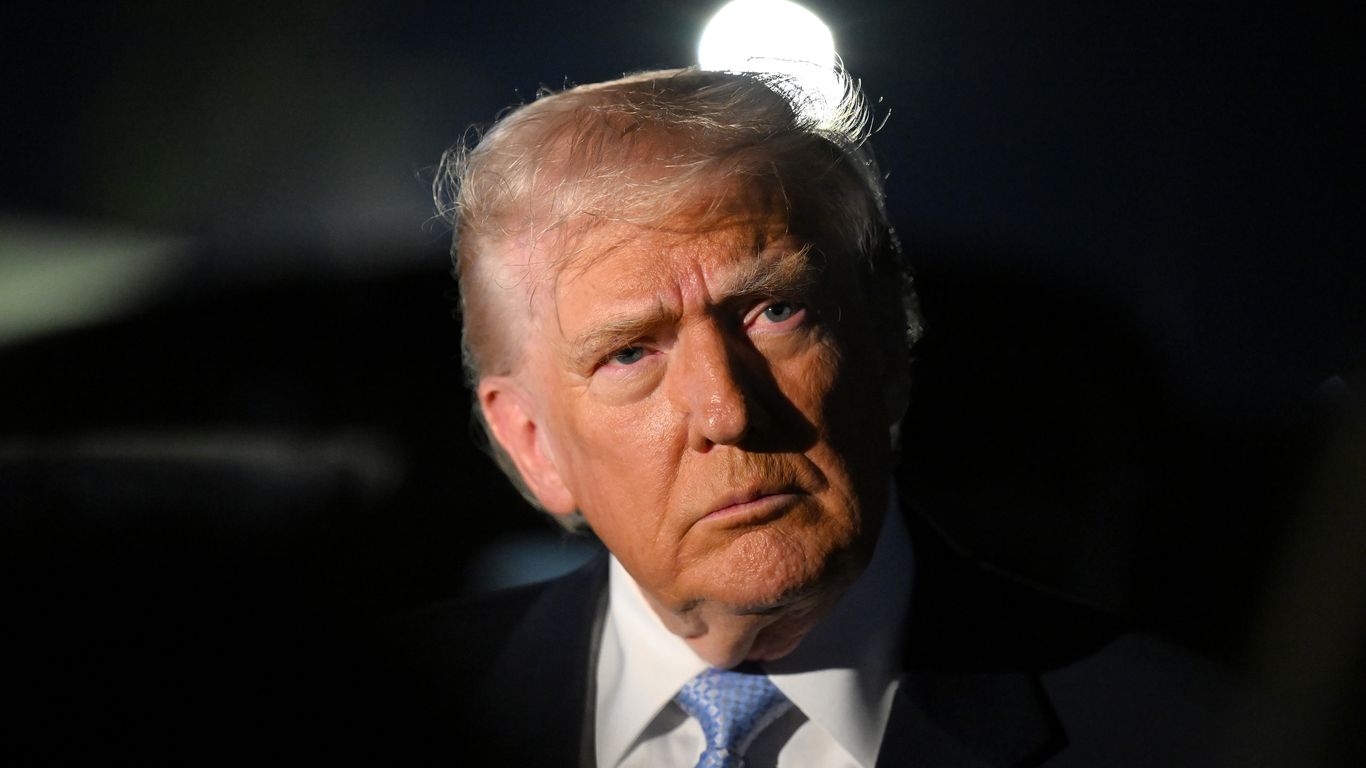
President Trump confirmed that the suspect in a near-White House shooting that critically injured two National Guard members is an Afghan national who arrived under the Biden administration’s Operation Allies Welcome in September 2021 and whose status was extended under legislation signed by President Biden. Trump framed the attack as a major national-security failure, directed the Defense Department to send an additional 500 troops to Washington, D.C., and pledged a review of Afghans resettled to the U.S. and removal of those deemed not to belong, signaling potential policy and enforcement shifts with implications for political risk and domestic security posture.
Market structure: The immediate winners are defense and homeland-security contractors (large primes) and niche security tech firms as markets price a higher probability of emergency DoD/DHS spending; expect a 5–15% re-rating over 3–6 months if Congress greenlights supplemental funding. Losers in the near term are consumer discretionary travel/hospitality and border-dependent labor-intensive sectors where headline-driven risk-off and potential policy tightening can compress revenues by an estimated 3–8% over the next 1–3 quarters. Cross-asset flows will be risk-off: T-bill demand should push 2–10bp lower in yields day-to-day, gold may outperform (+2–5% near-term), USD a modest safe-haven bid (+0.5–1%), and oil only reacts materially if wider geopolitical escalation occurs.
Risk assessment: Tail risks include a sustained domestic-terror escalation or a large-scale legislative crackdown that meaningfully reduces immigrant labor supply — both could trigger multi-month market dislocations and sectoral inflation (wage pressure) risk. Time horizons: immediate (days) = volatility spike and flight-to-quality; short-term (weeks/months) = rotation into defense/security and selective safe-havens; long-term (quarters/years) = fiscal/legislative outcomes determine structural winners. Hidden dependencies: actual defense/counterterror budget increases require bipartisan appropriations; market prices may front-run policy that never materializes. Catalysts to watch (0–90 days): DHS/DoD emergency requests, Congressional supplemental bills, CPI/Wage prints that show labor tightening in affected sectors.
Trade implications: Favor tactical longs in large-cap defense primes (LMT, RTX, GD) and security-tech names with government revenue; hedge macro exposure with short-dated equity protection or VIX exposure. Relative trades: long defense vs short airlines/travel (AAL, UAL) as discretionary demand and headline sensitivity diverge. Options: use 1–3 month call spreads on defense primes to limit premium spend and buy 1-month SPX or put spreads for cheap immediate hedges if volatility spikes.
Contrarian angles: The consensus risk-off response can be overdone — absent sustained legislative action, the defense re-rating may be 2–6 weeks of repricing followed by mean reversion; history shows single domestic incidents often cause short-lived equity drawdowns but persistent policy changes take months. Unintended consequence: aggressive immigration enforcement could raise wage inflation in seasonal labor markets, creating upside risk to services CPI and pressuring margins in low-margin consumer sectors. Tactical approach: hedge first, add selectively on policy-confirmation (30–90 days), fade overshoots within 7–21 days if no follow-through.
AI-powered research, real-time alerts, and portfolio analytics for institutional investors.
Request DemoOverall Sentiment
moderately negative
Sentiment Score
-0.35
