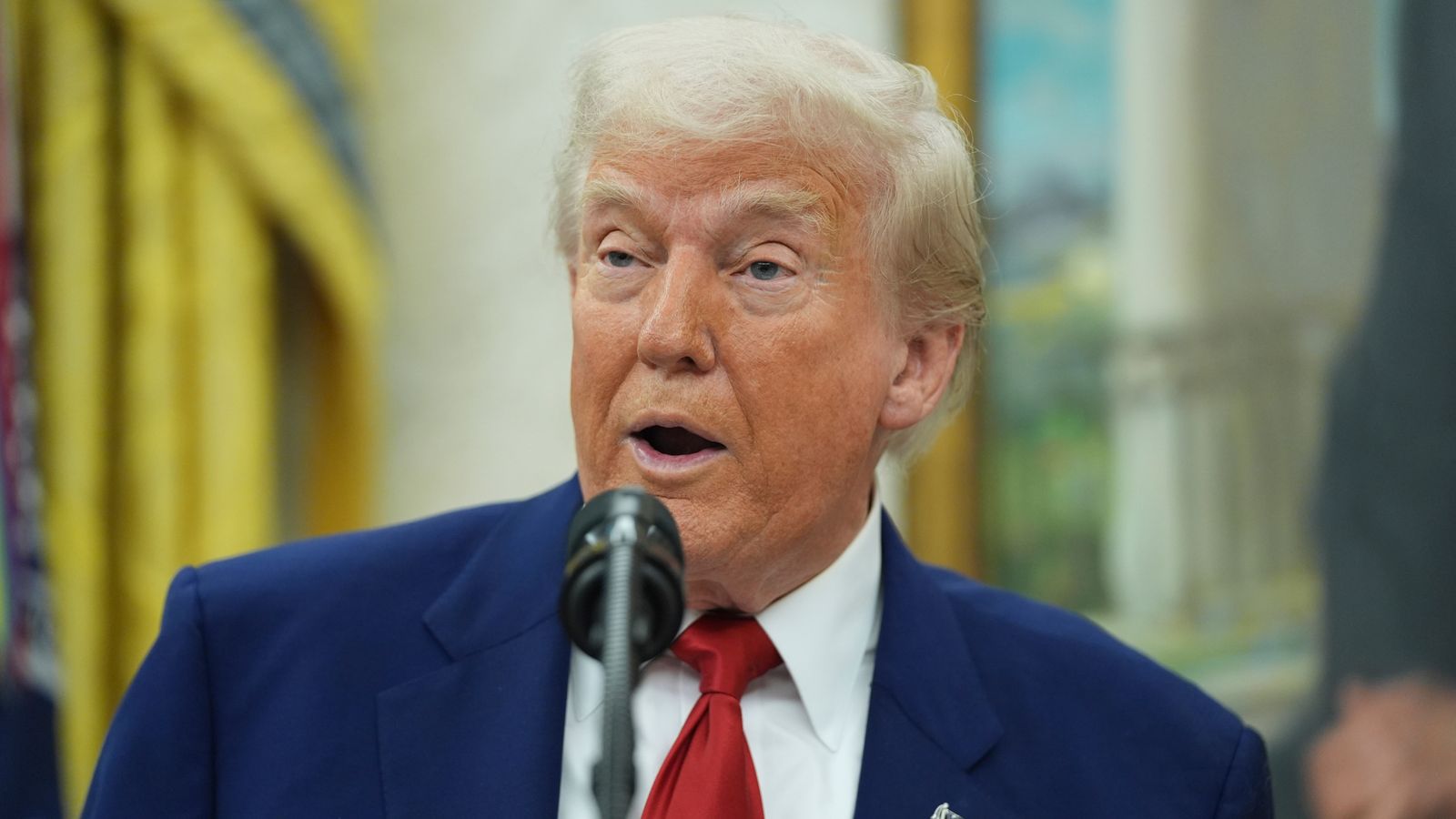
A federal appeals court has temporarily allowed Donald Trump's international tariffs to remain in place while it considers the government's appeal, following a lower court ruling that the tariffs exceeded presidential authority and violated the Constitution by infringing on Congress's power to levy taxes. Trump criticized the initial ruling as a "horrible, country threatening decision," while businesses challenging the tariffs argue they pose a direct threat to their survival; the Treasury Secretary indicated that trade negotiations have not been affected.
A U.S. Federal Appeals Court (CAFC) has granted a temporary stay, allowing President Trump's international tariffs to remain in effect pending a full review of the government's appeal. This decision follows a ruling by the Court of International Trade which found the tariffs unconstitutional, asserting that Congress, not the President, holds the authority to levy such taxes, and that the President exceeded his authority by invoking the 1977 International Emergency Economic Powers Act. President Trump vehemently criticized the lower court's decision, labeling it "country threatening" and an attack on presidential power, expressing hope for a swift reversal by the Supreme Court. The tariffs, which included a 10% levy on UK imports upon their April unveiling on "Liberation Day," previously triggered "aggressive sell-offs" in the stock market. Businesses challenging the tariffs, represented by the Liberty Justice Center, argue they pose a "direct threat" to their survival. Conversely, U.S. Treasury Secretary Scott Bessent indicated that the initial lower court ruling (which had temporarily blocked the tariffs) did not disrupt ongoing trade deal negotiations, citing that countries were engaging "in good faith." The CAFC has set deadlines for responses from the lower trade court and the Trump administration for June 5th and June 9th, respectively, underscoring the ongoing legal uncertainty and its potential market implications, reflected by a 'mixed' sentiment and 'uncertain' overall tone from market signals.
AI-powered research, real-time alerts, and portfolio analytics for institutional investors.
Overall Sentiment
mixed
Sentiment Score
-0.10
Ticker Sentiment
