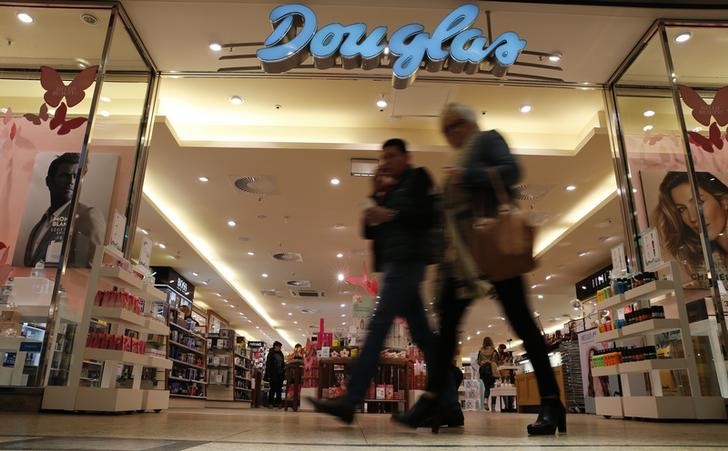
Douglas Group cut its full-year adjusted EBITDA margin outlook to around 16.0% from 16.5% and now expects sales at the low end of its €4.65 billion to €4.80 billion range, citing slowing growth in mature markets and a cautious consumer backdrop. Q2 sales rose 1.1% to €949.7 million, but adjusted EBITDA fell 5.1% to €116.1 million, with the margin compressing to 12.2% from 13.0% a year earlier. The quarter also included a net loss in the high-double-digit to low-triple-digit million euro range due to goodwill impairments and asset write-downs.
This reads less like a one-off miss and more like a repricing of the premium beauty channel from post-pandemic re-acceleration to low-single-digit structural growth. The second-order issue is inventory allocation: when a retailer signals lower margin and slower sales in mature markets, brands typically respond by protecting flagship channels and promotional intensity rises elsewhere, which can pressure category gross margins across European prestige beauty over the next 1-2 quarters. The bigger tell is leverage. Moving toward the top end of the leverage range while EBITDA margins compress creates a feedback loop: higher financing burden limits store refresh, digital investment, and M&A optionality just as the company needs differentiation. That tends to favor larger, better-capitalized omnichannel competitors that can use media spend and loyalty programs to take share without needing immediate margin recovery. The market may also be underestimating impairment risk as a leading indicator rather than a lagging one. Asset write-downs usually appear after management has already exhausted near-term turnaround levers, so the real catalyst is not the current quarter but whether the May update confirms further deterioration in France/DACH and whether consumer softness spreads into the premium basket in Q3. Contrarian view: if the stock is already discounting a normalization to a lower margin regime, the next move may be less about top-line weakness and more about execution on working capital and cash conversion. If management can stabilize inventory and avoid another leverage step-up, the equity can recover on multiple expansion even without a sales inflection; if not, the name remains vulnerable to another 10-15% downside on a modestly weaker Q2 print.
AI-powered research, real-time alerts, and portfolio analytics for institutional investors.
Request DemoOverall Sentiment
mildly negative
Sentiment Score
-0.35
Ticker Sentiment
