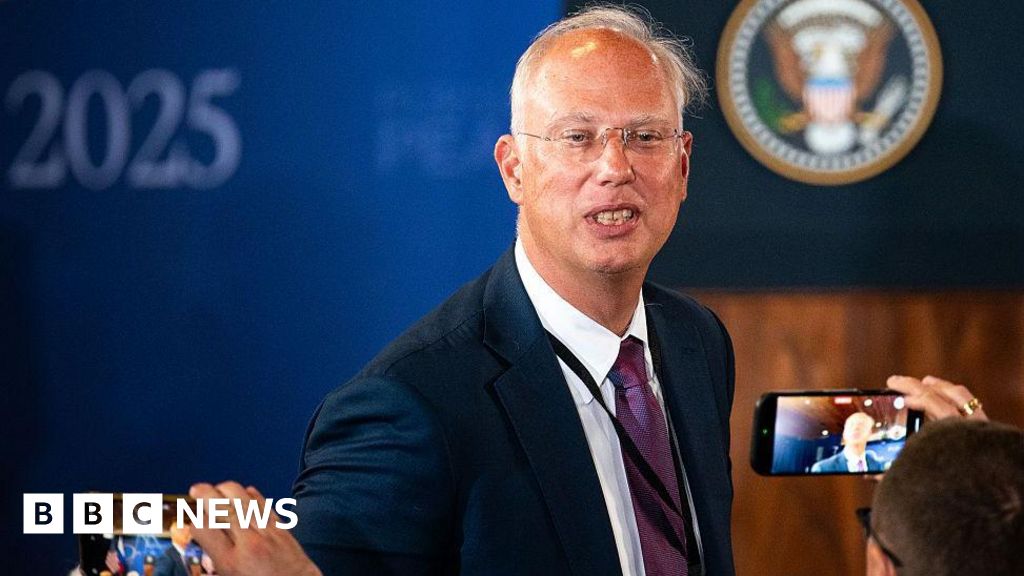
Kirill Dmitriev, the Western‑educated head of the Russian Direct Investment Fund, has surfaced as a private back‑channel to the US via meetings with Trump‑aligned envoy Steve Witkoff that produced a draft peace plan reportedly mirroring Kremlin demands for Ukrainian territorial concessions and military reductions — Kyiv has not accepted the plan and insists on terms that protect its sovereignty. Dmitriev blends commercial and diplomatic roles (he has mediated prisoner releases and joined recent Saudi Arabia talks) and pitches joint energy and mining projects, but he is already sanctioned by the US Treasury and Ukraine and is described by critics as a Putin ally and propagandist, complicating his credibility. For investors, Dmitriev’s prominence signals a potential conduit for rapprochement and carve‑out commercial opportunities if talks advance, but sanctions, political backlash in Ukraine and policy uncertainty make any market or deal implications highly conditional.
Kirill Dmitriev, 50, head of the Russian Direct Investment Fund (RDIF), has surfaced as a private back-channel to the US through repeated contacts with Trump-aligned envoy Steve Witkoff; a draft peace plan produced after their Miami meetings reportedly mirrors Kremlin demands for Ukraine to cede territory and cut its military, which Kyiv has not accepted and says must respect sovereignty. Dmitriev helped secure the release of an American teacher in February 2025 and took part in Saudi Arabia talks on economic relations, underscoring his dual commercial-diplomatic role and his comfort engaging Western interlocutors.
Dmitriev’s credibility is constrained by sanctions and reputational issues: the US Treasury designated RDIF as linked to Putin in 2022 and he has been called a "Russian propagandist" by Treasury Secretary Scott Bessent, while Ukraine has imposed sanctions for alleged crimes; RDIF financed Sputnik V and Dmitriev has repeatedly pitched joint energy, rare-earth and other commercial projects. His standing appears to be rising politically inside Russia but declining in Ukraine, creating asymmetric political risk around any deal.
Market signals show mildly negative sentiment with a modest market-impact score (~0.28), implying this is a geopolitically material development that is conditional rather than immediately market-moving; any commercial upside depends on Kyiv acceptance and de-escalation of sanctions, so investors face high policy and legal risk versus potential long-term opportunity in energy/commodity-linked projects.
AI-powered research, real-time alerts, and portfolio analytics for institutional investors.
Request DemoOverall Sentiment
mildly negative
Sentiment Score
-0.30
