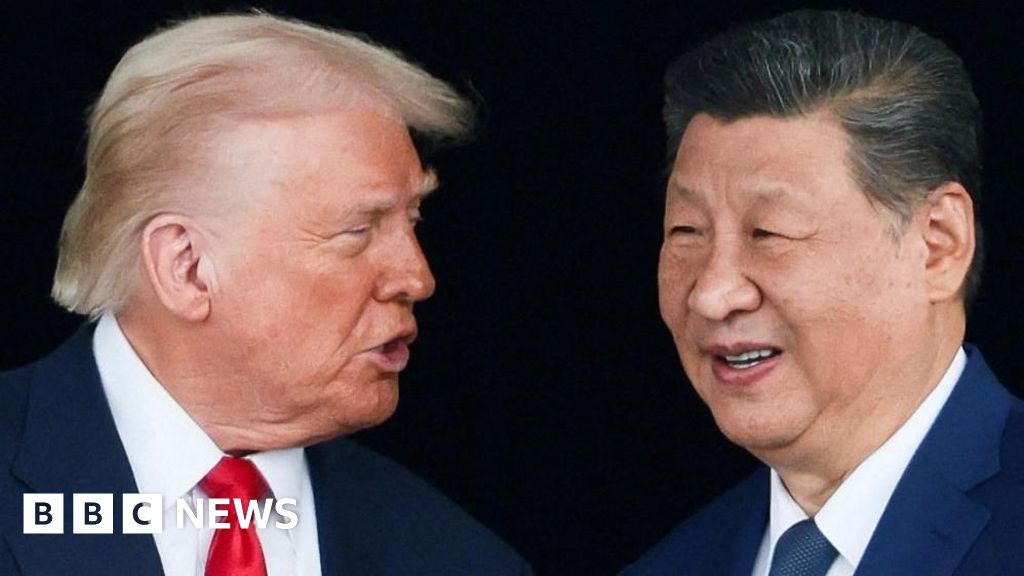
Chinese President Xi Jinping told President Trump to be 'prudent' on US arms sales to Taiwan during a phone call that also covered Russia's war in Ukraine, Iran, and trade; Xi reiterated Taiwan is China's territory and warned against actions that could escalate cross-strait tensions. Beijing is reported to be considering purchases of 20 million tonnes of US soybeans (up from 12 million), while the US approved about $11bn of arms sales to Taiwan in December; the dialogue reduces near-term escalation risk but leaves elevated geopolitical risk that could influence defense stocks, US agricultural exports and energy trade flows.
Market structure: Xi’s call signals a calibrated approach — not de-escalation — which benefits US agricultural exporters (China considering ~20mt vs current 12mt is +66% demand) and energy sellers if purchases of US oil/LNG materialize. Defense contractors (LMT, RTX, NOC) face two-way forces: long-term higher budgets versus near-term political restraint on arms approvals that can delay revenue recognition and compress near-term order flow. Logistic and commodity sectors (ADM, BG) should see tighter export flows and freight demand over months if large shipments are confirmed.
Risk assessment: Tail risk remains a low-probability/high-impact kinetic conflict that would disrupt Taiwan semiconductor supply (TSM, ASML dependency) and spike semiconductors, shipping, and insurance costs; probability of that near-term is <10% but impact severe. Immediate (days) risks: FX moves (CNY/USD +/-2%), risk-off flows to USTs and gold; short-term (weeks–months): soybean and LNG trade flows, shipping rates; long-term (12–36 months): strategic decoupling raising onshore supply chains and defense budgets. Hidden dependency: confirmation of soybean/oil purchases requires trade financing and logistics — lack of formal MOUs is a binary catalyst (watch April visit).
Trade implications: Tactical longs — US soybean exposure (SOYB or ADM) sized 1–3% with a 3‑month target +15–25% if 20mt confirmed, stop -8% if not confirmed within 45 days. Use 6–12 month call spreads on LMT/RTX (size 1–2% each, 5%–10% OTM) as a convex play for sustained defense spending while avoiding near-term order risk. Hedge Taiwan/semiconductor equity exposure by buying 3‑month 10% OTM puts on TSM or trimming SMH by 1–3% ahead of April visit.
Contrarian angles: Consensus expects escalation and already bids defense multiples; the market may underprice a sustained détente where China signals prudence — that would lift commodities and EM credits more than defense equities. Historical parallel: temporary US–China thaw (2018–19) saw agricultural and industrial EM outperform defensives for 2–6 months. Unintended consequence: a large soy purchase could push fertilizer names (MOS, CF) higher and strengthen BRL — monitor Brazilian real vs USD for arb opportunities.
AI-powered research, real-time alerts, and portfolio analytics for institutional investors.
Request DemoOverall Sentiment
neutral
Sentiment Score
-0.10
