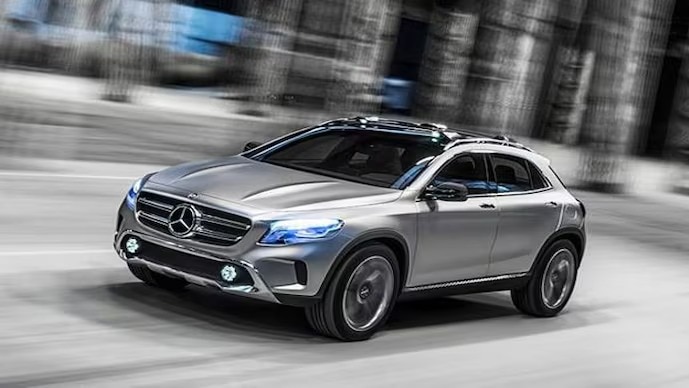
India plans to cut import duties on a limited set of EU-built cars from a peak of 110% to 40% immediately for vehicles with import prices above ~Rs 16.3 lakh (USD 17,739), with a phased reduction to 10% over time as part of a proposed EU-India free trade agreement that could be finalised imminently. The concession would materially improve access to the Indian market for European automakers such as Volkswagen, Mercedes‑Benz and BMW and could spur bilateral trade and investment flows, while signalling a notable liberalisation of India’s protective auto tariff regime.
Market structure: The immediate winners are EU premium OEMs (VW, Mercedes-Benz, BMW) who gain material access to India’s ~3M annual car market by cutting peak import duties from 110% to 40% for cars >Rs16.3L (~$17.7k), with a phased path to 10% over the medium term (monitor for 3–7 year phase). Domestic mass-market OEMs (Tata Motors, Mahindra) face margin pressure in the premium/new-EV segments and potential market-share loss at the top end; dealers and logistics players will see higher import volumes initially while local OEM supply chains face downward pricing pressure.
Risk assessment: Tail risks include India reversing cuts under political pressure, implementing strict localisation rules, or imposing non-tariff barriers — each could wipe 30–60% of expected import upside for EU OEMs. Timeframe decomposition: immediate pricing reaction on FTA announcement (days–weeks), import volumes and dealer inventory shifts (months), and structural market-share shifts/FDI into local assembly (3–7+ years). Hidden dependencies: thresholds (Rs16.3L) mean mass-market remains protected; EU OEMs may pivot to CKD/assembly in India, shifting benefits to suppliers.
Trade implications: Tactical long exposure to EU OEMs (MBGYY, BMWYY, VWAGY) and short/underweight Indian mass-market OEMs (TTM, IN:M&M) is warranted; expect 20–40% upside potential for premium OEMs over 12 months if phase-to-10% confirmed in <5 years. Options: buy 9–12 month call spreads on MBGYY/BMWYY to cap premium and sell nearer-term calls; size trades small (0.5–3% AUM) and hedge FX/India execution risk.
Contrarian angles: Consensus may overestimate scope — the Rs16.3L floor shields most volume cars, so immediate large-scale share loss for Indian OEMs is unlikely; initial market reaction may be overdone in favour of EU OEM equities. Historical parallel: NAFTA-era auto liberalisation led to short-term import surges then rapid local FDI and assembly growth, implying a multi-year shift benefiting suppliers and local JV partners more than pure importers long-term. Monitor for unintended consequence of accelerated local assembly investments that could flip winners from importers to Indian suppliers within 2–4 years.
AI-powered research, real-time alerts, and portfolio analytics for institutional investors.
Request DemoOverall Sentiment
moderately positive
Sentiment Score
0.35
