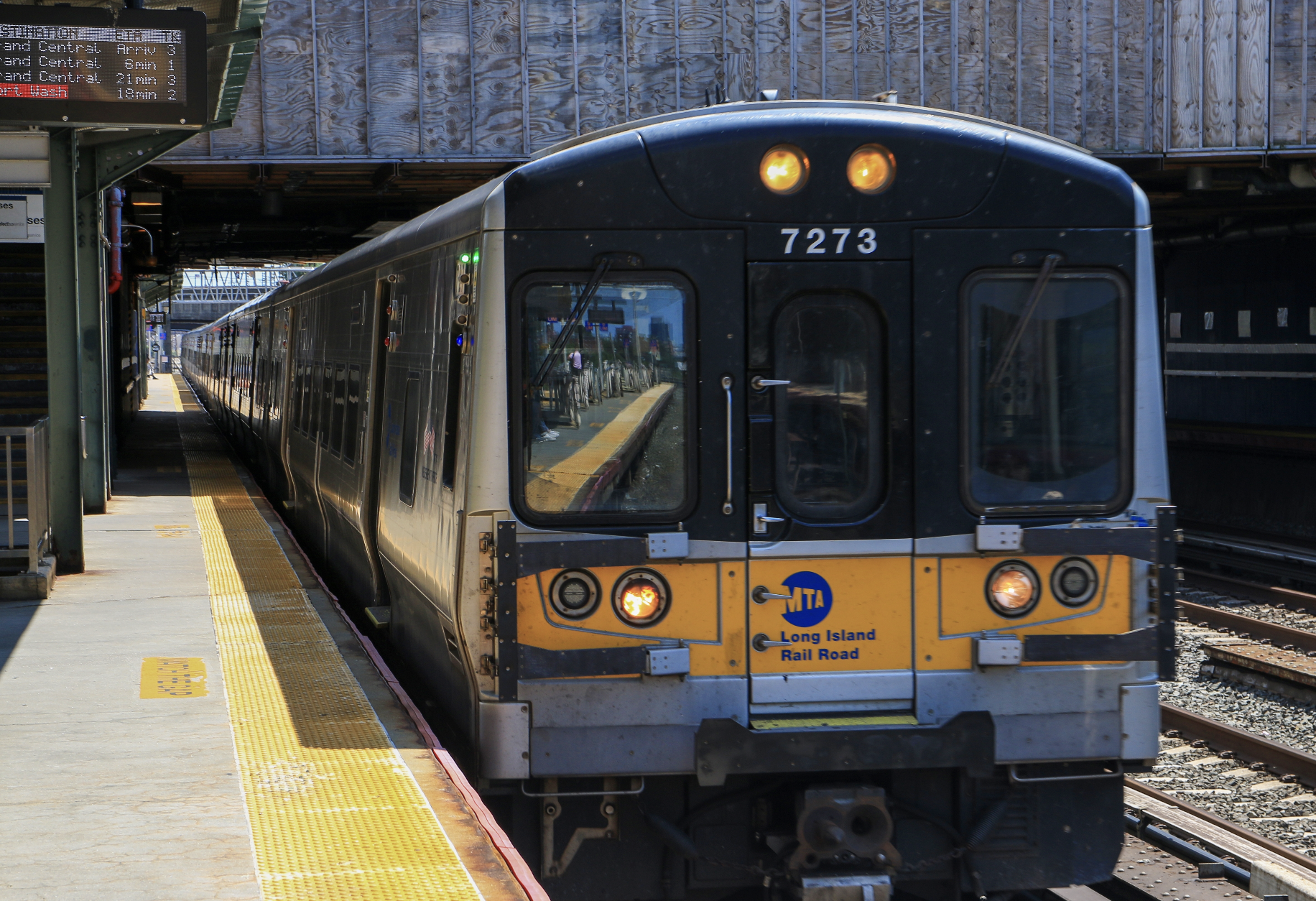
A possible LIRR strike as soon as Saturday could shut down service on a system carrying roughly 270,000 to 300,000 riders per weekday, forcing the MTA to deploy up to 275 shuttle buses as a partial backup. Governor Hochul warned commuters to prepare for work-from-home arrangements because the buses cannot replace full service and prolonged disruption could create severe Long Island traffic gridlock by Monday. The dispute centers on wages, with unions seeking 5% in the final contract year versus the MTA’s 3% offer, and officials say fares could rise as much as 8% next year under the unions’ proposal.
The immediate market impact is less about the railroad itself and more about the short-duration shock to Long Island’s labor market and consumer spend. A full or partial shutdown forces a same-week substitution into work-from-home, which disproportionately hurts lower-margin local services, discretionary retail, and last-mile logistics that depend on commuter foot traffic; the drag shows up in daily revenue, not quarterly averages. The first-order “winner” is not transit capacity but any business with credible remote-work elasticity: office software, collaboration, and broadband names get a small but real usage bump, while suburban parking operators, food service near stations, and ride-hail networks may see volatile but ultimately capacity-constrained demand. The bigger second-order issue is congestion externalities. If even a fraction of the usual ridership shifts to personal vehicles, highway travel times can deteriorate sharply, creating spillovers across Nassau/Suffolk logistics, delivery SLAs, and worker absenteeism into Monday-Tuesday. That kind of disruption tends to be highly nonlinear: a 1-day strike is a nuisance, but a 3-5 day stoppage can force employers to formalize hybrid policies, which reduces the probability of a full snapback in commuter volume even after a deal. In other words, the most important damage may be behavioral rather than mechanical. From a policy lens, this is a credibility test for the MTA and state leadership. The market is likely underpricing the chance that any settlement simply kicks the fiscal can into the next contract cycle, keeping fare-hike and service-cut risk embedded for months. The contrarian view is that the strike headline may be more valuable as leverage than as an intended outcome; if so, the optimal trade is to fade panic in transport-adjacent names and instead position for persistent budget pressure and higher political scrutiny on the agency. Near term, the cleanest expression is to stay away from names with direct Long Island commuter exposure until a deal is confirmed, then look for a relief bounce in local consumer and mobility proxies. If the strike extends beyond Monday, expect the earnings damage to concentrate in businesses with perishable demand and fixed labor costs, where one week of lost volume is hard to recover; that creates a short window for tactical shorts but not a durable structural theme.
AI-powered research, real-time alerts, and portfolio analytics for institutional investors.
Request DemoOverall Sentiment
mildly negative
Sentiment Score
-0.35
Ticker Sentiment
