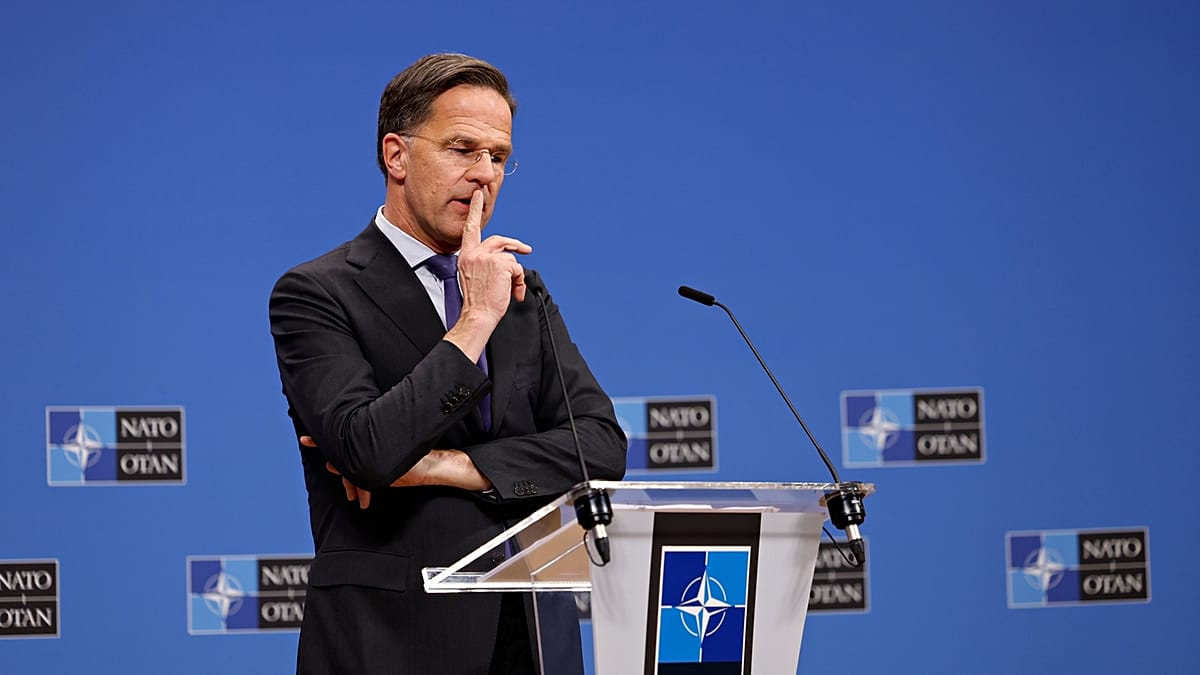
Dutch NATO Secretary General Mark Rutte warned the European Union cannot realistically defend itself without the US, saying Europe would need to spend roughly 10% of GDP (versus current 5% goals) and even build nuclear capabilities at enormous cost if US protection were withdrawn. His comments, made after brokering an Arctic security deal that defused a spat triggered by President Trump’s Greenland episode, drew sharp backlash from French and EU officials advocating strategic autonomy; the European Commission emphasized gradual steps to reduce dependencies including on Russian fossil fuels and critical raw materials. Political friction could elevate defense policy debates and long-term spending plans in Europe, but immediate market implications are limited.
Market structure: Europe-first political rhetoric lifts the trough-to-peak case for European defense primes (Rheinmetall RHM.DE, BAE Systems BAES.L, Thales HO.PA, Airbus AIR.PA) and upstream commodities (copper, nickel, rare earths). Incremental European defence budgets of +0.5–1.5% of GDP over 2–5 years would shift long-term procurement flows, improving pricing power for incumbent EU suppliers and pressuring US exporters on EU tenders.
Risk assessment: Key tail risk is a formal US–EU procurement split or export-control tit-for-tat (low-probability, high-impact) that could disrupt transatlantic supply chains and raise capex by 10–30% for re-shoring. Immediate volatility will center on FX and front-end EU sovereign yields (days–weeks), policy and budget votes matter over 3–12 months, and multi-year defense capex cycles drive corporate revenue through 2026–2030.
Trade implications: Tactical longs include select European defence equities and critical-minerals producers; hedge via short US defense exposure where EU procurement clauses are explicit. Commodities exposure (physical/ETFs or producer equities) to copper, nickel and rare-earths is a 3–12 month reflation trade as procurement steel, electronics and battery demand rises.
Contrarian view: Markets underprice the speed at which EU procurement rules and “Made in Europe” clauses can divert orders — this benefits mid-cap EU suppliers disproportionally. Conversely, overbuild and duplication risk (inefficient domestic programs) can compress margins; position sizes should be staged and contingent on concrete policy moves (Commission strategy, national budget approvals).
AI-powered research, real-time alerts, and portfolio analytics for institutional investors.
Request DemoOverall Sentiment
mildly negative
Sentiment Score
-0.25
