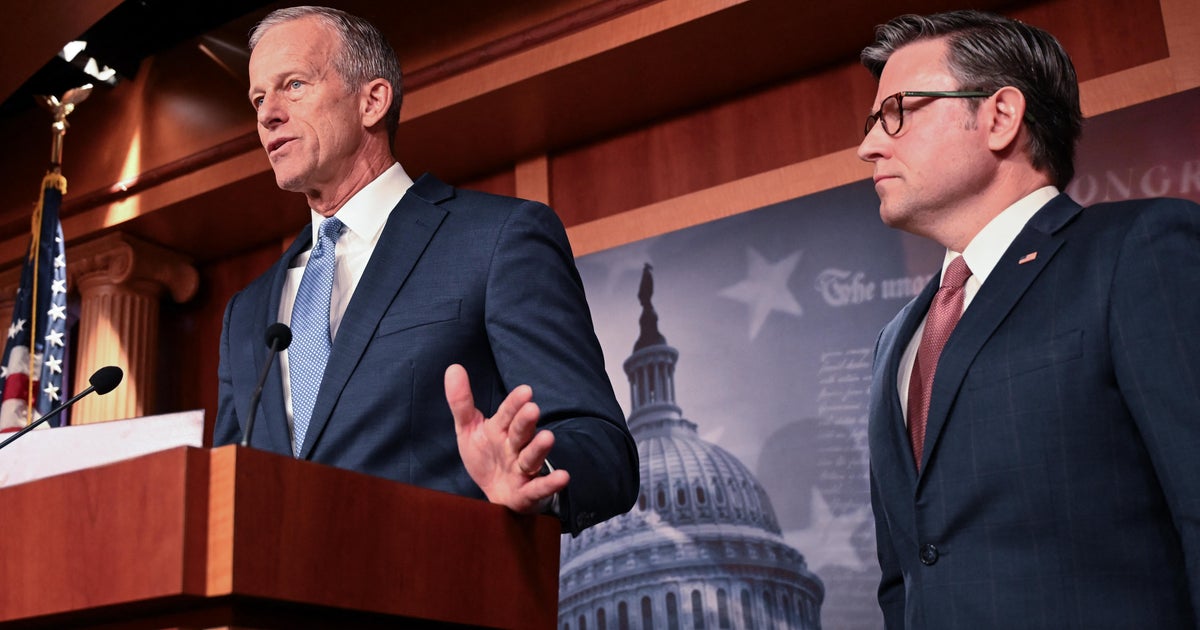
Republicans and President Trump unveiled a plan to end the DHS shutdown by funding most of DHS through an appropriations bill while funding ICE and Border Patrol via budget reconciliation, aiming to have legislation to the president's desk by June 1 and to fund immigration enforcement for three years. Senate leaders signaled a possible vote as soon as Thursday, but significant execution risk remains given opposition from Democrats over ICE reforms and past objections from House conservatives.
Passing a targeted funding carve‑out for immigration enforcement via reconciliation materially reweights near‑term cash flow visibility for firms whose revenue is directly tied to ICE/CBP operations and detention capacity. Private detention operators and border‑technology integrators would see occupancy and contract tailwinds that can lift EBITDA by low‑double digits if a multi‑year appropriation clears, but that upside is contingent on timely appropriations actions and absence of restrictive rider language.
A successful reconciliation route also increases event risk concentration in the coming 7–30 days: pro‑forma Senate/House action and reconciliation committee mechanics create binary outcomes with outsized market moves; conversely, failure shakes confidence in GOP cohesion and could re‑introduce operational disruption costs to airlines and airport vendors. Over a 3–12 month horizon, sustained funding reduces operational variance for airports (lower overtime, fewer cancellations) and should modestly improve airline unit costs and regional airport concession revenue growth.
Key non‑obvious second‑order impacts: (1) insurers and lenders that underwrite private prison exposure see lower credit stress and potential tightening of implied CDS spreads; (2) software/IT integrators (DHS systems modernization contractors) could push backlog growth into FYs 1–3, lifting free cash flow visibility; (3) reputational/regulatory friction persists—investor scrutiny and state/local contract terminations remain a tail that caps multiple expansion. Timing sensitivity is concentrated around the next 7–30 days for the legislative binary and 3–36 months for contract realization and legal/regulatory risk to play out.
AI-powered research, real-time alerts, and portfolio analytics for institutional investors.
Request DemoOverall Sentiment
neutral
Sentiment Score
0.00
