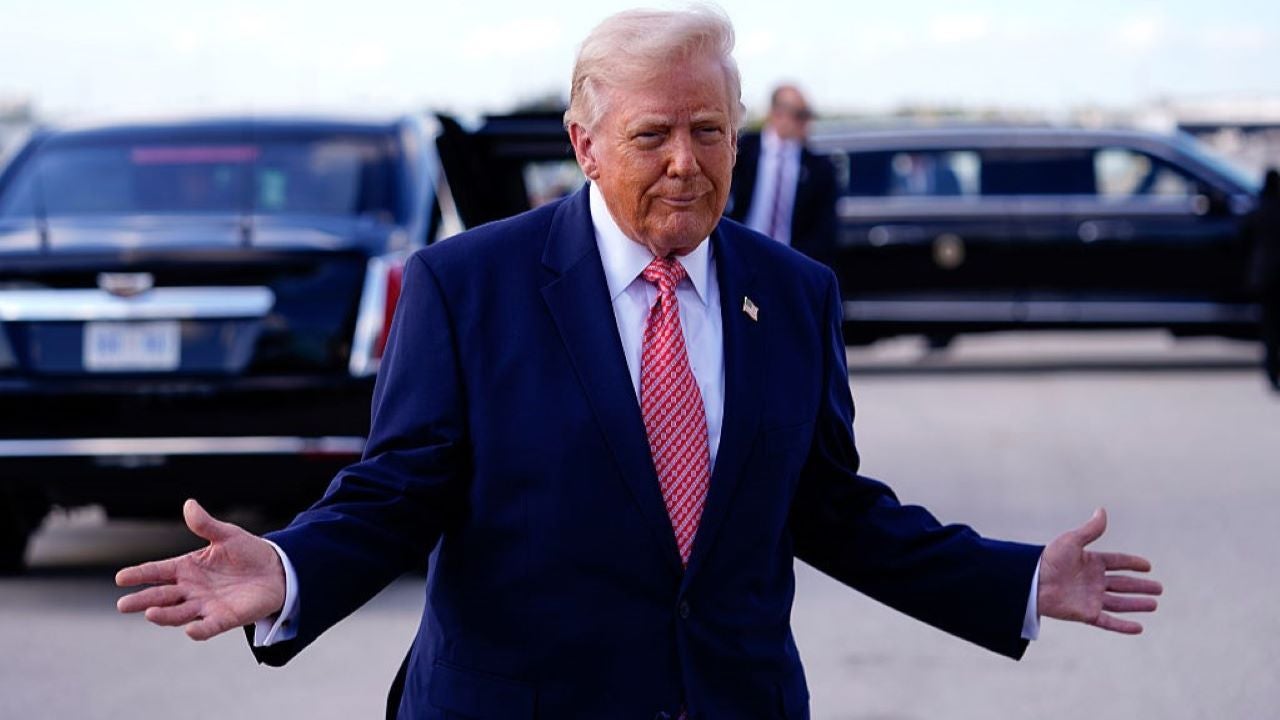
U.S. forces located and evacuated the downed F-15E weapons systems officer, a successful rescue that the administration is highlighting; simultaneously President Trump has issued a 48-hour ultimatum for Iran to reopen the Strait of Hormuz and threatened strikes on Iranian energy infrastructure if it does not comply. The White House also proposed roughly $1.5 trillion in total defense resources for FY2027, and Trump confirmed arms were sent to anti-regime protesters in Iran. The rescue reduces immediate escalation risk, but the ultimatum and threats materially elevate oil/energy supply and geopolitical risk, increasing potential market volatility.
The operational success implied by high-risk, deep-penetration missions raises the market’s probability that policymakers will accelerate munition production, ISR platforms, and special operations support contracts. Expect reallocation of procurement dollars within 6-24 months toward guided munitions, small-satellite ISR, and survivability upgrades; a conservative rule-of-thumb is that every $10B of incremental program funding disproportionately benefits the top-5 primes by ~1–2% of incremental revenue in year 1 and 3–6% by year 2 as sole-source awards cascade.
Chokepoint friction — even short-lived — acts like a tax on hydrocarbon flows: shipping war-risk premiums can spike in days, translating into immediate basis dislocations (tanker/time-charter rates up 30–100% in stressed windows) and a $3–12/bbl effective shock to benchmark crude delivered costs in the first 1–4 weeks. That dynamic favors large integrated producers with global logistics (pricing power) and owner-operators of tankers while pressuring energy-intensive transport and leisure sectors whose margins are elastic to fuel moves.
The asymmetric playbook of arming proxy groups and targeted legal/sanctions actions increases tail-risk of miscalculation; a kinetic escalation targeting export infrastructure would push shock scenarios into $15–30+/bbl territory and broaden inflationary impulse within 30–90 days. Key reversal catalysts that would quickly unwind risk premia are: a credible multilateral deconfliction mechanism for Gulf traffic, major insurance market reopening for war-risk coverage, or a public, verifiable deal on chokepoint access — any of which could normalize spreads within 1–6 weeks.
AI-powered research, real-time alerts, and portfolio analytics for institutional investors.
Request DemoOverall Sentiment
mixed
Sentiment Score
-0.05
