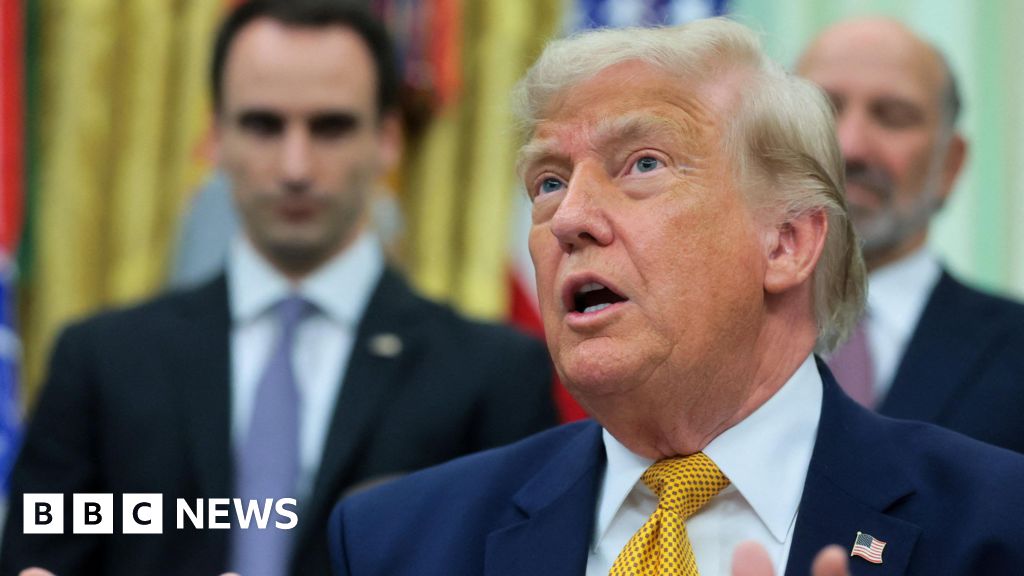
Donald Trump publicly weighed in on Andy Burnham’s likely premiership, calling him an "extremely liberal" politician who probably would not open the North Sea to further oil and gas drilling. The piece highlights a potential policy divergence on North Sea energy approvals, including the Jackdaw and Rosebank fields, but it is primarily political commentary rather than immediate market-moving news. Implications are most relevant for UK energy policy, oil and gas producers, and renewable-transition debates.
The market read-through is less about rhetoric than policy optionality: a more pro-drilling UK regime would likely steepen the value gap between upstream cash generators and the domestic renewables stack. Any credible path to approving large North Sea projects improves medium-cycle supply visibility, but the real second-order effect is on capex allocation — capital that would have been forced into wind/grid/storage may stay trapped in hydrocarbons longer, delaying the earnings inflection for UK-facing clean-energy contractors. That is a negative for names exposed to policy-led offshore buildout, but only if investors believe the rhetoric converts into permitting and fiscal support rather than political theater. The bigger near-term catalyst is not new barrels, but the signal to risk assets that energy policy could become more volatile after a leadership transition. That tends to compress multiples for asset-heavy infrastructure plays whose thesis depends on regulatory continuity, while supporting refiners, OFS, and integrated producers with free-cash-flow resilience under a wider commodity range. In the UK specifically, offshore service and engineering providers with North Sea concentration should outperform if approval timelines shorten; however, if the new government punts decisions for 6-12 months, these names can give back gains quickly because the market will have front-run the optionality. The contrarian angle is that the market may be overestimating how much a single political reset changes supply. North Sea decline is geologically and capital-intensively constrained, so even favorable policy likely adds only incremental volumes over 2-4 years, not enough to materially move global balances. That means the trade is more about relative winners across the capex chain than a broad bullish commodity call; if anything, the most durable edge is in names that monetize policy uncertainty through maintenance, decommissioning, and brownfield optimization rather than greenfield growth.
AI-powered research, real-time alerts, and portfolio analytics for institutional investors.
Overall Sentiment
neutral
Sentiment Score
-0.10
Ticker Sentiment
