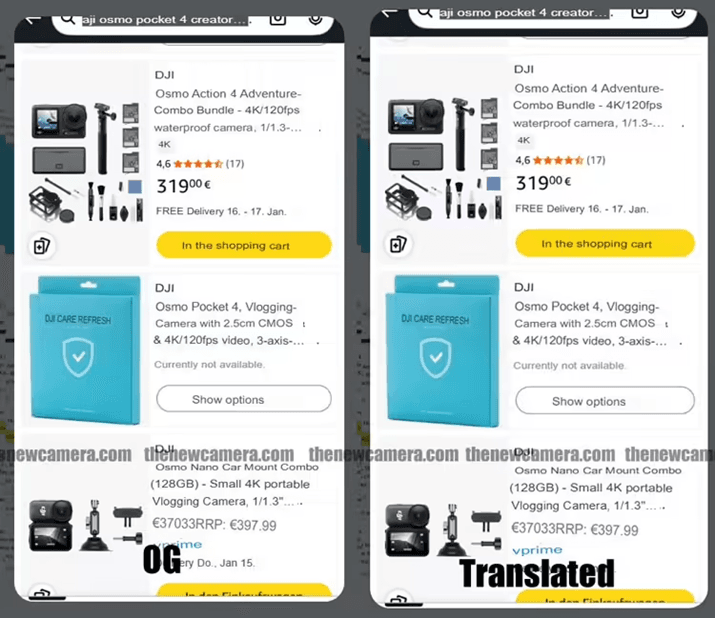
Leaked specifications and a launch timeline for DJI's Osmo Pocket 4 have appeared, outlining the next-generation compact gimbal camera and an expected release window. The report signals product-cycle timing and potential incremental hardware improvements that may influence consumer demand and competitive positioning, but it contains no financial metrics and is unlikely to materially affect DJI's near-term market valuation.
Market structure: DJI Pocket 4 leakage primarily benefits DJI (private) by extending its grip on consumer compact-cine/gimbal niches and lifts demand for imaging-component suppliers and large online retailers. Primary losers: standalone action-camera pure-plays (GoPro GOPR) and small accessory OEMs that rely on durable pricing; expect a 5–15% share reallocation in the vlog/action-camera subsegment over 6–12 months if specs/price are competitive.
Risk assessment: Key tail risks include renewed regulatory pressure (US export/CIFIUS-style actions) against Chinese OEMs, which could nullify product advantage within 30–90 days, and supply-chain shocks (sensor or SoC shortages) that delay launch 1–3 quarters. Immediate (days) effect is limited to sentiment; short-term (weeks–months) is promotional/retailer stocking; long-term (3–12 months) is market-share and margin compression for smaller incumbents.
Trade implications: Expect elevated idiosyncratic volatility around official launch (0–60 days); use short-dated options to express views. Relative-value trade: short GOPR exposure vs. long diversified component suppliers (e.g., SNE) to capture downstream share loss and upstream component demand. Cross-asset: minimal bond/FX impact, but transient spikes in equity volatility for small-cap consumer tech names.
Contrarian angles: Consensus underestimates that DJI’s continued product cadence can expand total addressable market (more casual vloggers upgrading), which would lift component suppliers while still hurting pure hardware incumbents — not a zero-sum outcome. Conversely, the market may over-penalize GOPR before specs/pricing are public; historical parallels: smartphone encroachment into point-and-shoots took 12–24 months to fully reprice stocks, implying timing risk for shorts.
AI-powered research, real-time alerts, and portfolio analytics for institutional investors.
Overall Sentiment
neutral
Sentiment Score
0.05
