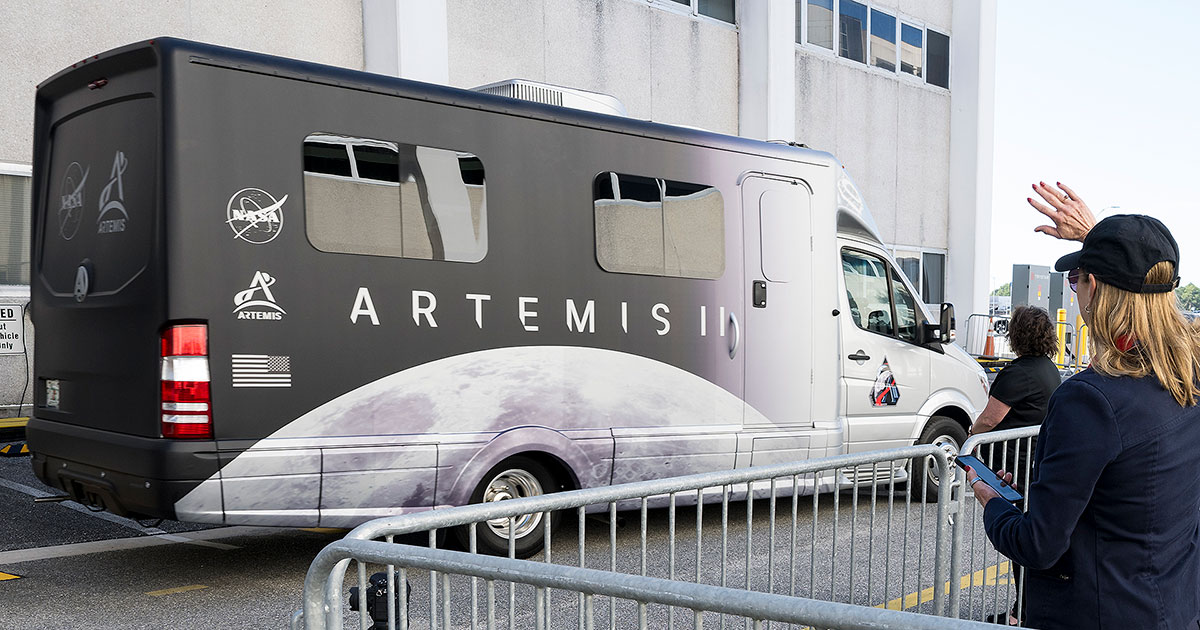
NASA has leased and rewrapped Boeing's Airstream 'Astrovan II' (roughly 25 ft / 8 m) to serve as the crew transport vehicle for Artemis II and used it in a Dec. 20, 2025 countdown rehearsal; the Artemis II launch window is slated between early February and April 2026. NASA will retain three Canoo electric CTVs delivered in July 2023 as backups after Canoo's bankruptcy, while Boeing continues work to return its Starliner to flight following thruster issues on the June 2024 Crew Flight Test; these operational updates are notable for program logistics but are unlikely to materially move markets.
Market Structure: The Astrovan II lease is a small but visible win for Boeing (BA) and legacy aerospace primes (Lockheed Martin LMT indirectly), reinforcing NASA’s preference for incumbent suppliers after Canoo’s bankruptcy. Direct commercial upside is minimal (low tens of millions at most), but the PR and operational endorsement compress reputational risk versus EV startups; RV manufacturer Thor Industries (THO) also gets brand visibility. Marginal shifts in program share favor firms with proven flight ops and integration capacity rather than nimble EV entrants.
Risk Assessment: Short-term (days–weeks) effects are limited to sentiment; medium-term (months to Apr 2026 Artemis II window) execution risk around Starliner/Artemis milestones can move shares ±10–20%. Tail risks include a high-profile Boeing/Starliner operational failure or regulatory clampdown that could trigger multi-quarter contract reviews and >25% downside for BA. Hidden dependency: NASA’s procurement risk aversion could reallocate future CTV and support contracts away from EV/new-entrants, concentrating revenue in incumbents.
Trade Implications: Favor defined-risk exposure to BA and LMT around the Feb–Apr 2026 Artemis II window: small directional positions and call spreads to capture upside from milestone-driven sentiment while capping downside. Rotate modest exposure from speculative EV microcaps into THO (Airstream beneficiary) and select aerospace ETFs (ITA) to capture program spillovers. Use tail hedges (puts) sized to limit portfolio drawdown if a regulatory shock hits Boeing.
Contrarian Angles: Consensus may underweight incumbents’ near-term PR runway; the market often overreacts to Starliner anomalies so structured bullish trades (call spreads) can extract asymmetric payoff without full exposure. Historical parallel: post-Apollo NASA contractor consolidations rewarded reliable integrators for years; unintended consequence — crowding risk into a few primes increases correlation with defense/budget cycles.
AI-powered research, real-time alerts, and portfolio analytics for institutional investors.
Request DemoOverall Sentiment
neutral
Sentiment Score
0.00
Ticker Sentiment
