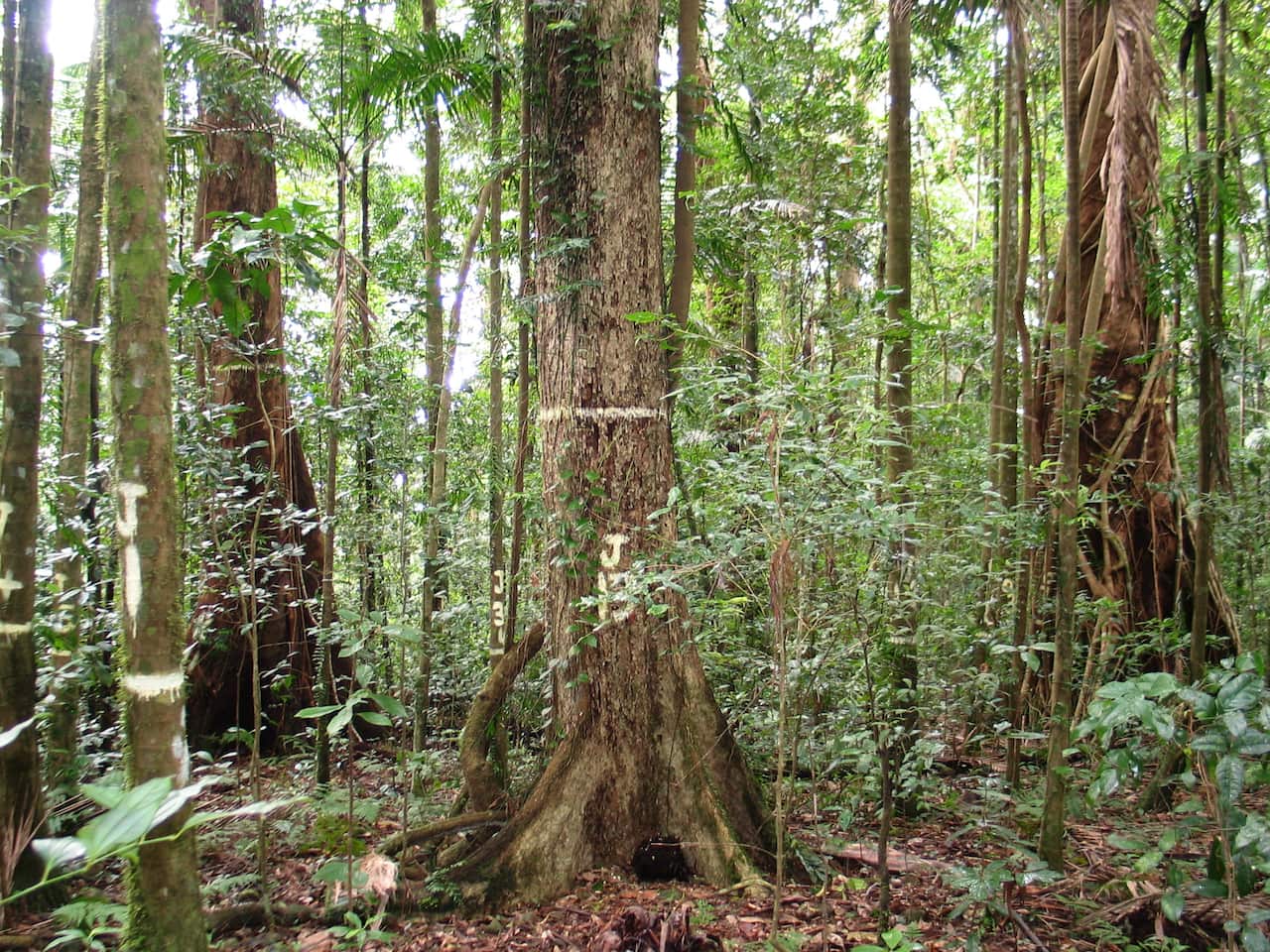
A landmark study reveals that Queensland's tropical rainforests have transitioned from carbon sinks to net carbon sources, now releasing more carbon than they absorb, primarily due to increased tree mortality driven by climate change impacts such as extreme weather events and rising temperatures. This critical shift, based on nearly five decades of data, significantly jeopardizes Australia's ability to meet its Paris Agreement emissions reduction targets, as current climate models assume these forests act as carbon absorbers. Experts warn this necessitates a re-evaluation of national climate strategies and could foreshadow similar challenges for other tropical forest regions globally, impacting broader environmental, social, and governance (ESG) considerations for institutional investors.
Queensland's tropical rainforests have transitioned from net carbon sinks to sources, now releasing more carbon than they absorb, according to a landmark study spanning 49 years and 11,000 trees. This critical reversal, observed around 2000, is primarily driven by increased tree mortality linked to severe climate change impacts, including the 1998 El Niño drought, 2006 Cyclone Larry, rising temperature extremes, and declining water availability. Notably, this shift occurred with minimal human interference, distinguishing it from issues in regions like the Amazon.
This development significantly jeopardizes Australia's ability to meet its Paris Agreement commitments, specifically the target of cutting emissions by 62-70% by 2035 from 2005 levels. Professor David Karoly warns that current emissions reduction targets "could all be wrong" and "not sufficient," as they were based on assumptions of natural carbon absorption by land vegetation, including these rainforests. The findings necessitate a re-evaluation of national climate strategies.
Furthermore, the study serves as an early warning for other tropical forest regions globally, such as South America, India, and Southeast Asia, which could face similar sink-to-source transitions. This underscores the escalating impact of anthropogenic climate change on otherwise intact ecosystems, hindering their capacity to mitigate global warming. While forest emissions are smaller than those from fossil fuels, the systemic shift highlights a critical failure in natural carbon sequestration.
AI-powered research, real-time alerts, and portfolio analytics for institutional investors.
Request DemoOverall Sentiment
strongly negative
Sentiment Score
-0.70
