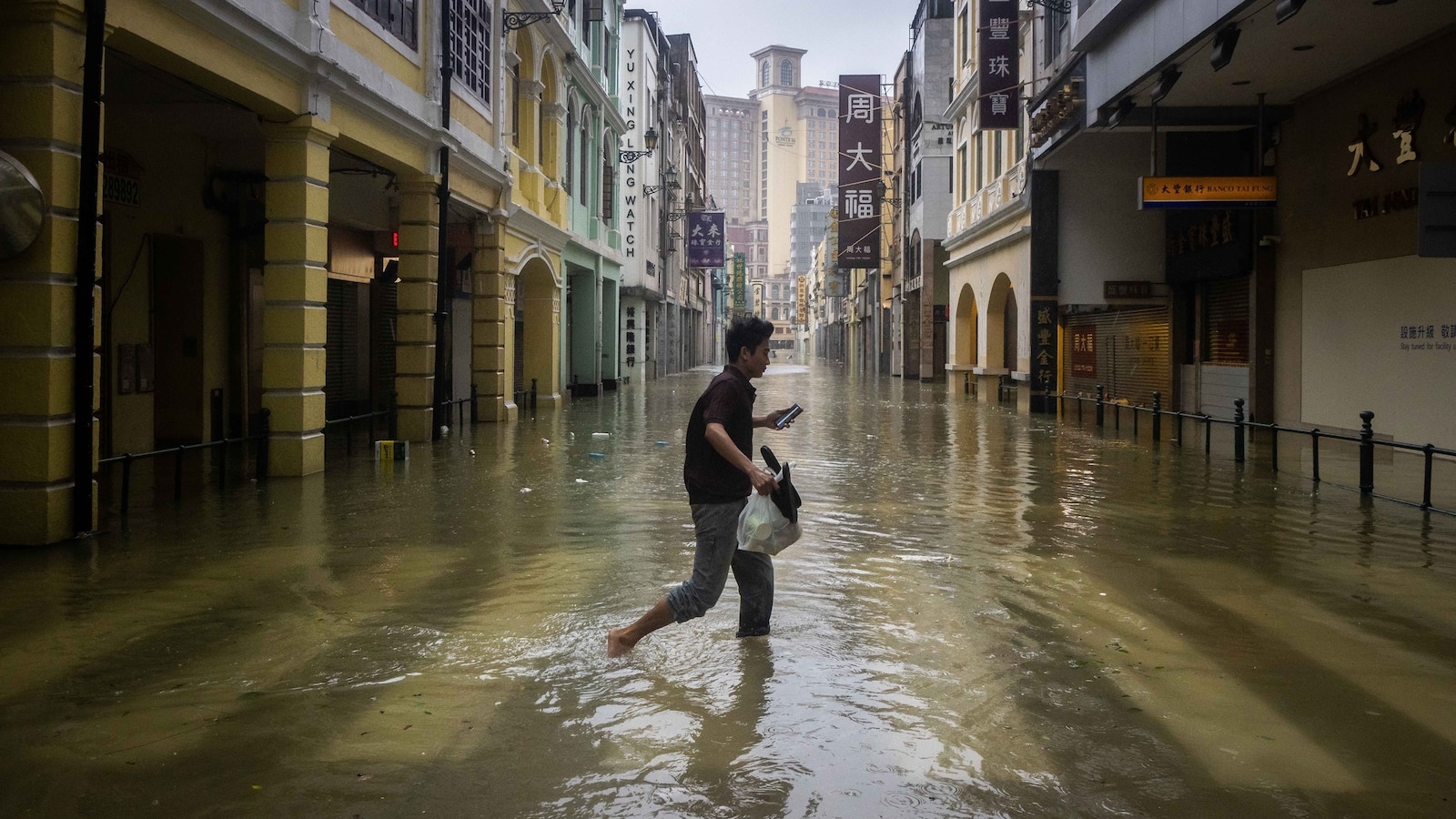
Typhoon Ragasa is making landfall near Guangdong, China, necessitating the evacuation of approximately two million people and causing significant disruption, including coastal flooding and Hong Kong issuing its highest-level warning before the storm passed. The powerful storm, which previously caused 15 fatalities in Taiwan, maintains sustained winds of 120 mph with gusts up to 130 mph, indicating potential for widespread infrastructure damage and economic impact as it is forecast to churn through China, Vietnam, and Laos.
Typhoon Ragasa is presenting a significant, near-term economic risk to Southern China's key manufacturing and shipping hubs. The storm's intensity, with sustained winds of 120 mph, and its landfall trajectory near Guangdong province have necessitated a large-scale evacuation of two million people, signaling a high potential for widespread infrastructure damage and business disruption. The issuance of Hong Kong's highest-level warning and subsequent flooding, even as the storm passed the city, underscores the operational paralysis affecting this critical financial center. The storm's path across Southern China and near the borders of Vietnam and Laos suggests a broader regional impact on supply chains, logistics, and agricultural production. The strongly negative sentiment and moderate-to-high market impact score of 0.6 reflect investor concerns over immediate economic losses, potential insurance claims, and delays in manufacturing and port activity across the Pearl River Delta.
AI-powered research, real-time alerts, and portfolio analytics for institutional investors.
Request DemoOverall Sentiment
strongly negative
Sentiment Score
-0.70
