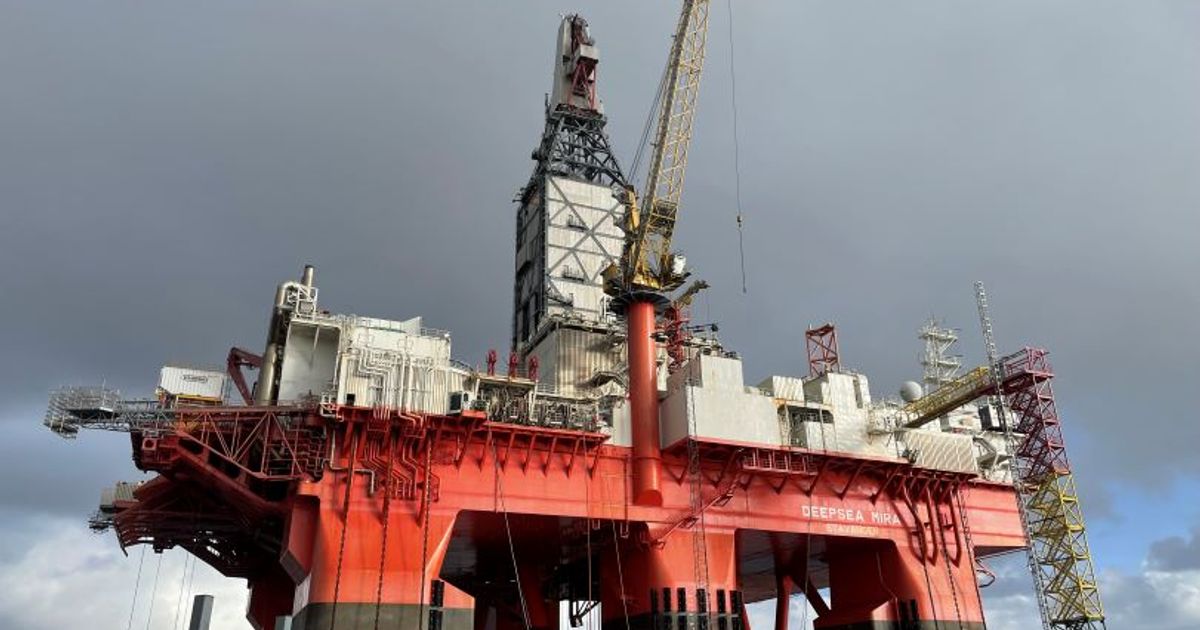
Meren completed the transformative Prime consolidation in 2025, doubling its reserves and production base and returning roughly $100m to shareholders (base dividends) plus repurchasing 5.9m shares for ~$8m. The company produced 30,800 boepd (WI) and 35,100 boepd (entitlement), generated EBITDAX of $440.7m and cash from operations before working capital of $261.8m versus cash capex of $100.2m, finished the year with $174.7m cash and $330m debt (net debt $155.3m, net debt/EBITDAX 0.4x) after reducing its RBL by $420m. Results were tempered by a $105.3m non‑cash impairment at Agbami leading to a $31.6m net loss and lower 1P/2P NPV(10) and reserves, but management plans 2026 drilling restarts at Akpo/Egina, Agbami life‑extension and advancement of the Namibia Venus FID (first oil targeted 2030), plus a gas sales agreement amendment expected to improve future gas revenue.
Market structure: Meren’s Prime consolidation and debt paydown meaningfully improve scale and credit profile—net debt/EBITDAX 0.4x with $138m RBL headroom—positioning MER.TO to capture nearshore Nigeria infill upside (30–35k boepd baseline) while returning cash via dividends/buybacks. Service contractors, rig owners and local suppliers gain if Akpo/Egina drilling restarts in 2026; smaller explorers without scale or RBL flexibility are vulnerable to capital stress. Commodity impact is modest: incremental offshore volumes (low tens of kbpd) won’t move Brent, but improved gas indexing and retroactive recoveries materially de-risk cash flows, tightening credit spreads for MER and lowering CDS/bond yields for similar-rated peers.
Risk assessment: Tail risks include failed FPSO life-extension at Agbami, adverse fiscal renegotiation in Namibia (Venus FID slip from 2026 to 2028+), Nigeria regulatory reversals, or a >25% oil price shock that re-triggers impairments. Short-term (days–months) risk centers on execution of gas pricing amendment payments and rig mobilization signals; medium-term (6–18 months) risks are JV funding and FPSO/rig availability; long-term risks are project FID/fiscal terms for Venus (first oil target 2030). Hidden dependency: realized value hinges on JV partner cash contributions and RBL covenants tied to reserve valuations.
Trade implications: Tactical long MER.TO exposure is attractive ahead of confirmed drill activity and gas cash recoveries—use size-limited positioning and option structures to cap downside. Pair trades favor MER.TO long vs select smaller African upstream shorts (e.g., Seplat SEPL.L) to express scale/credit differential. Options: implement 6–12 month call spreads to capture upside from H2 2026 drilling catalyst while limiting capital; sell covered calls to monetize carry if holding stock.
Contrarian angles: The market may underprice the retroactive gas-recovery cash flow (back to 2020) — a realized payment would be an immediate, earnings-accretive catalyst. Conversely, Venus upside is widely touted but contingent on fiscal terms and carries dilution risk via carried-interest exposure; treat any valuation uplift as binary. Historical parallels: other post-consolidation midcaps that delevered post-acquisition (2016–2019) outperformed only when execution (rig arrivals, FPSO life-extensions) met timelines; delays produced 20–40% drawdowns.
AI-powered research, real-time alerts, and portfolio analytics for institutional investors.
Request DemoOverall Sentiment
mixed
Sentiment Score
0.12
Ticker Sentiment
