






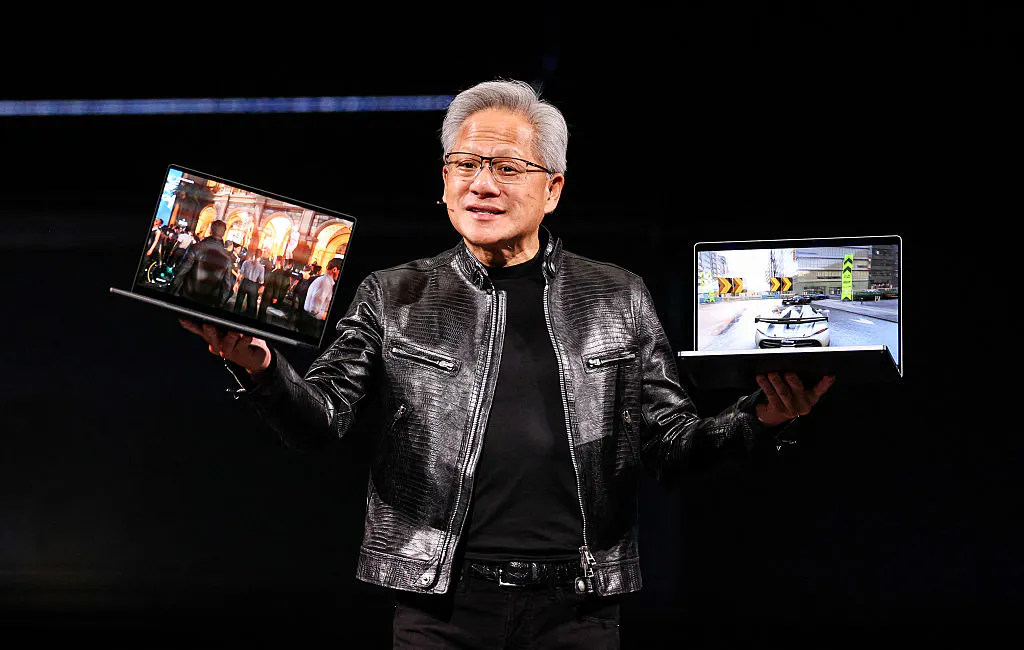
Software stocks rallied sharply, with the S&P 500 Software & Services sector up 6.4% on Friday, its best one-day move since the post-tariff bounce in 2025. The move was driven by strong earnings from names like Okta, Snowflake, and MongoDB, plus Jensen Huang’s comments at Computex that it is an "incredible time" to be a software company amid the AI buildout. Nvidia also unveiled RTX Spark, a new superchip developed with Microsoft to power AI-first Windows PCs, lifting Microsoft another 2.7% in early Monday trading and boosting leaders like ServiceNow, Asana, Salesforce, and Atlassian.
The key second-order read-through is not just that software got a relief rally, but that the market is beginning to separate "AI-capex takers" from "AI-usage beneficiaries." If agents increase tool calls, workflow depth, and seat-level automation, the near-term monetization wedge should accrue to platform software with high attach rates and usage-based expansion — especially names that sit inside daily operational workflows rather than discretionary point solutions. That favors infrastructure/workflow leaders over horizontal app vendors, while also implying the next leg of relative strength should be driven by revenue re-acceleration and margin durability, not just multiple expansion.
The more interesting implication is on Windows and endpoint economics. A new wave of "agent-first" PCs could extend the replacement cycle and shift hardware buying from price-sensitive consumer demand toward productivity-tied enterprise refreshes, which is a better mix for DELL and HPQ than the market usually credits. At the same time, Microsoft’s ecosystem advantage strengthens if the PC becomes the on-ramp for local or hybrid agent workloads, creating a subtle but important distribution moat versus pure-cloud and browser-native competitors.
The risk is that this move is being front-run by a narrative before the earnings revisions show up. If agent adoption remains experimental, software outperformance could fade within 2-6 weeks once investors realize the first beneficiaries are compute vendors and cloud platforms, not necessarily application-layer ARR growth. Conversely, if one or two large SaaS prints confirm net retention stabilization and improved billings into the next quarter, the sector could rerate for months rather than days.
The contrarian miss: the market may be underestimating how much of this is a relative-value squeeze rather than a fundamental inflection. Names with the most crowded underownership and highest short interest should keep working regardless of fundamentals in the near term, but that creates a fragile setup if macro rates back up or AI enthusiasm rotates back into semis. The cleanest expression is to own the software leaders with measurable operating leverage, not the most slogan-friendly AI beneficiaries.
AI-powered research, real-time alerts, and portfolio analytics for institutional investors.
Request TrialOverall Sentiment
strongly positive
Sentiment Score
0.72
Ticker Sentiment
