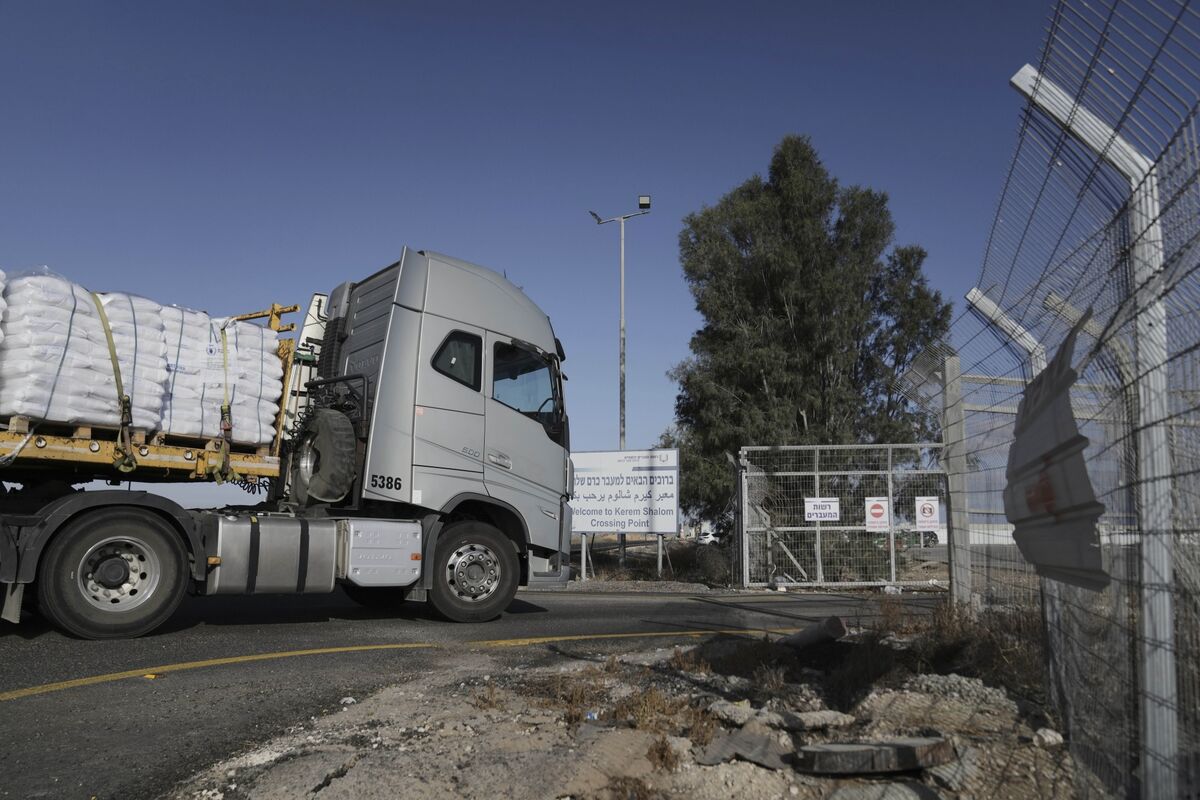
Aid trucks have entered the Gaza Strip for the first time in 80 days after Israeli Prime Minister Benjamin Netanyahu ordered the resumption of deliveries, reversing a blockade imposed on March 2nd. The decision follows warnings of widespread malnutrition and potential famine affecting Gaza's 2.2 million residents, with the prior cutoff intended to pressure Hamas for hostage release.
The resumption of aid deliveries to the Gaza Strip, following an 80-day blockade initiated by Israel on March 2nd, marks a notable development in the ongoing conflict. This decision by Israeli Prime Minister Benjamin Netanyahu, prompted by severe warnings of malnutrition and potential famine among Gaza's 2.2 million residents, signifies a response to acute humanitarian concerns and potentially international pressure. While the article does not detail specific market-moving entities, the event carries a positive sentiment (score 0.3) and a moderate market impact score (0.4), suggesting a cautiously optimistic market interpretation. This development primarily impacts the geopolitical landscape and humanitarian aid logistics, potentially influencing regional stability assessments rather than directly triggering significant movements in broad equity or commodity markets, unless it presages a more substantial de-escalation. The themes of "Geopolitics & War," "Trade Policy & Supply Chain," and "Transportation & Logistics" are underscored by this event, highlighting the interconnectedness of humanitarian crises with broader economic and political considerations.
AI-powered research, real-time alerts, and portfolio analytics for institutional investors.
Request DemoOverall Sentiment
Positive
Sentiment Score
0.30
