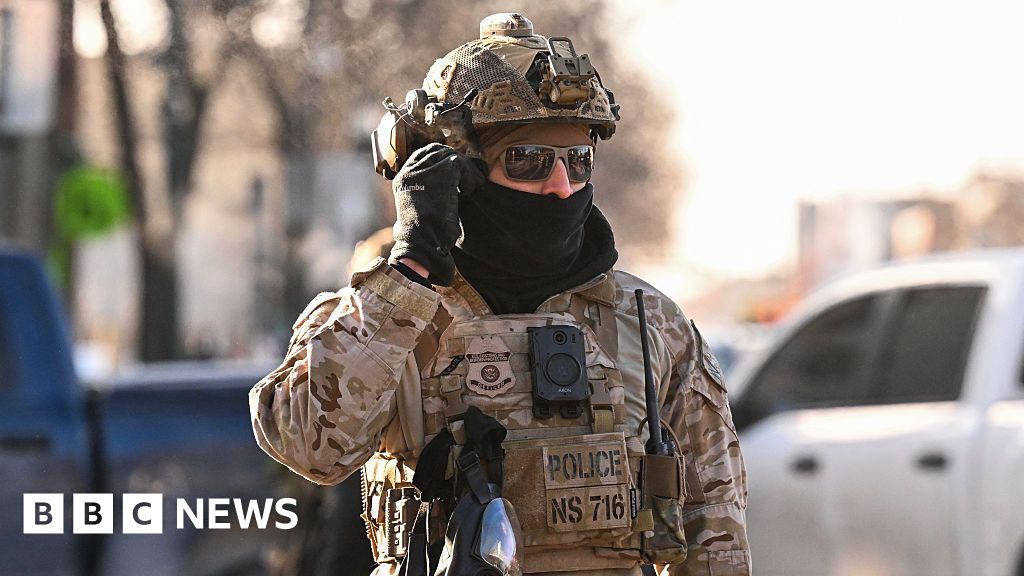
U.S. Immigration and Customs Enforcement's Homeland Security Investigations will support the U.S. Department of State's Diplomatic Security Service and Italian hosts to vet and mitigate transnational criminal risks at the Milan-Cortina Winter Olympics, while asserting it will not conduct immigration enforcement outside the United States. The announcement provoked strong political backlash in Italy after recent fatal federal shootings in Minneapolis and reported threats to journalists, with Italian officials insisting ICE will not operate on national territory; the episode raises diplomatic and political friction but is unlikely to move markets materially.
Market structure: The story creates micro demand for security services around the Milan‑Cortina Olympics (Feb 6 start) while imposing reputational and operational costs on travel & leisure incumbents in Italy. Winners: defense/security contractors (LMT, RTX, NOC) and specialist private security/contractor vendors who can capture 0.5–2% incremental revenue in Q1–Q2; losers: Europe‑centric travel & hospitality operators (RCL, CCL, MAR, AZM) vulnerable to booking downgrades or protest disruptions leading to 1–5% short‑term revenue hit. Pricing power shifts are localized — premium for vetted US security capability vs. local political resistance constrains scale and duration of revenue gains.
Risk assessment: Tail risks include violent protests or diplomatic standoff that widen Italy/Bund 10y spreads >50–75bps within 30–90 days, or cascading travel cancellations reducing Italian tourism receipts by >5% for Feb–Mar. Immediate risk (days): event‑day disruptions raising local volatility; short term (weeks/months): reputational backlashes and politicized procurement; long term (quarters): precedent for more US federal involvement in overseas events if demand for private security rises. Hidden dependencies: insurance claims, IOC contractual clauses, and host‑nation political will — any of which can terminate contracts quickly.
Trade implications: Tactical long exposure to large defense primes (1–2% portfolio, equally split LMT/RTX/NOC) into Feb 1 to capture Q1 revenue; hedge with 1–3 month put protection on travel names (buy Mar expiry put spreads on RCL/CCL sized 0.5–1% notional) to monetize event volatility. FX/bond play: buy EUR downside protection (1% portfolio in Mar EURUSD puts, strike ~2.5% below spot) and reduce direct BTP duration by 25% while buying 2y USTs as a hedge if Italy/Bund spread breaches 50bps. Entry window: initiate 7–14 days before Games, unwind by Mar 15 unless new political escalations occur.
Contrarian angles: Consensus treats this as a PR story; markets underprice the asymmetric tail where domestic political backlash forces cancellation of US teams’ private security, cutting expected defense services — that would compress expected upside to LMT/RTX/NOC by >75% relative to base case. Historical parallels: 2012/2016 Olympics saw localized security spend spikes that faded after event — expect mean reversion within 6–10 weeks post‑Games. Unintended consequence: elevated insurance claims or IOC fines could hit insurers and local operators (consider small tactical shorts in European regional insurers if such filings emerge).
AI-powered research, real-time alerts, and portfolio analytics for institutional investors.
Request DemoOverall Sentiment
moderately negative
Sentiment Score
-0.30
