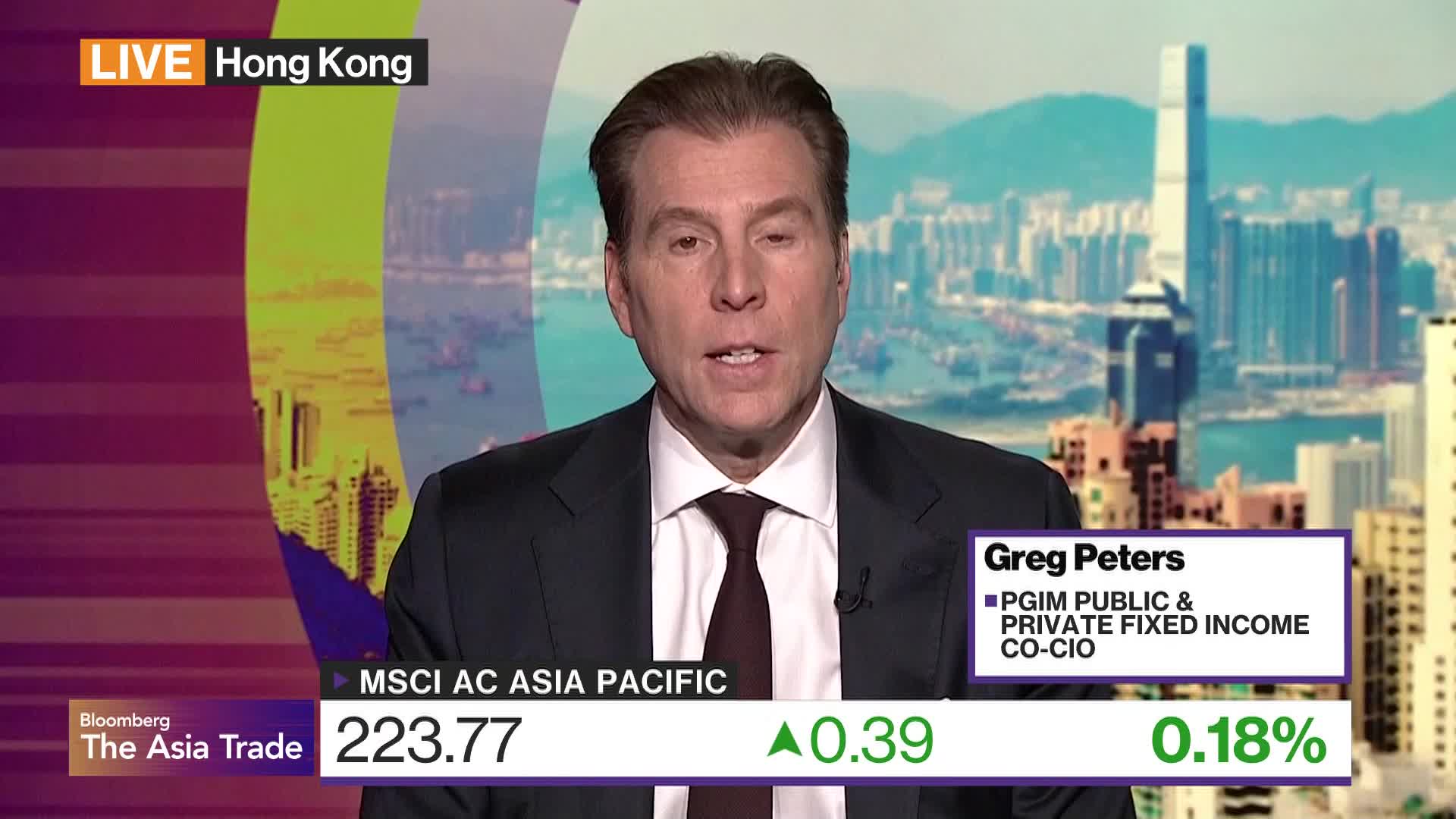
Softening US labour-market data has reinforced expectations for an imminent Fed rate cut, but PGIM's Greg Peters warns that stubborn inflation into 2026 and concerns about Fed independence (including discussion of Kevin Hassett) are driving term premium higher. The market dynamic shows front-end and belly Treasuries moving lower while the back end trades higher year-over-year, signaling a fragile bond market and rising risk premia that could complicate policy and investor positioning.
Market structure: The market is bifurcating — front-end yields have priced imminent Fed cuts while term premium is rising in the belly and long-end as investors fear sticky inflation and political risk to Fed independence. Winners: short-duration cash/floating (SHV, SCHO) and inflation hedges (TIP, GLD); losers: long-duration nominal Treasuries and long-duration corporates (TLT, LQD) if long-end yields drift higher by 50–100bp into 2026. Expect increased dispersion across sovereign curves and wider swap spreads as demand for duration hedges outstrips safe-haven buying.
Risk assessment: Tail risk includes a political shock that forces rapid loss of Fed credibility and a >100bp spike in 10s-30s yields within weeks, or conversely, unexpectedly fast disinflation producing a big front-end rally. Near term (days–weeks) is dominated by Fed-nominee headlines and monthly CPI prints; medium (3–12 months) is about 2026 inflation trajectory; long term (>12 months) depends on fiscal issuance and foreign demand. Hidden dependencies: Treasury issuance cadence, foreign reserve flows (China), and repo market plumbing could amplify moves.
Trade implications: Tactical plays should own real-yield protection and front-end convexity: 2–3% allocation to TIP + 1–2% in SHV/SCHO, paired with a 1–2% short TLT position (or pay-fixed steepener 2s30s) to express rising long-term term premium. Use options to limit tail exposure: buy 3–6 month TLT put spreads 3–6% OTM and 6–12 month TIP call spreads to hedge sticky inflation. Rotate equities away from long-duration growth into cyclicals/financials (XLF) if yields move sustainably higher.
Contrarian angle: The market may be overpricing a permanent break in Fed independence; if a nominee lacks committee support, long-end yields can snap back lower 20–40bp on reversal of political risk. A disciplined re-entry rule (buy IEF if 10y yield falls >30bp from a political-driven spike within 10 trading days) captures this mean-reversion. Historical parallels: 2018 and 2022 showed politicized Fed headlines create short-lived long-end dislocations that reverse once committee dynamics and data reassert control.
AI-powered research, real-time alerts, and portfolio analytics for institutional investors.
Request DemoOverall Sentiment
moderately negative
Sentiment Score
-0.45
Ticker Sentiment
