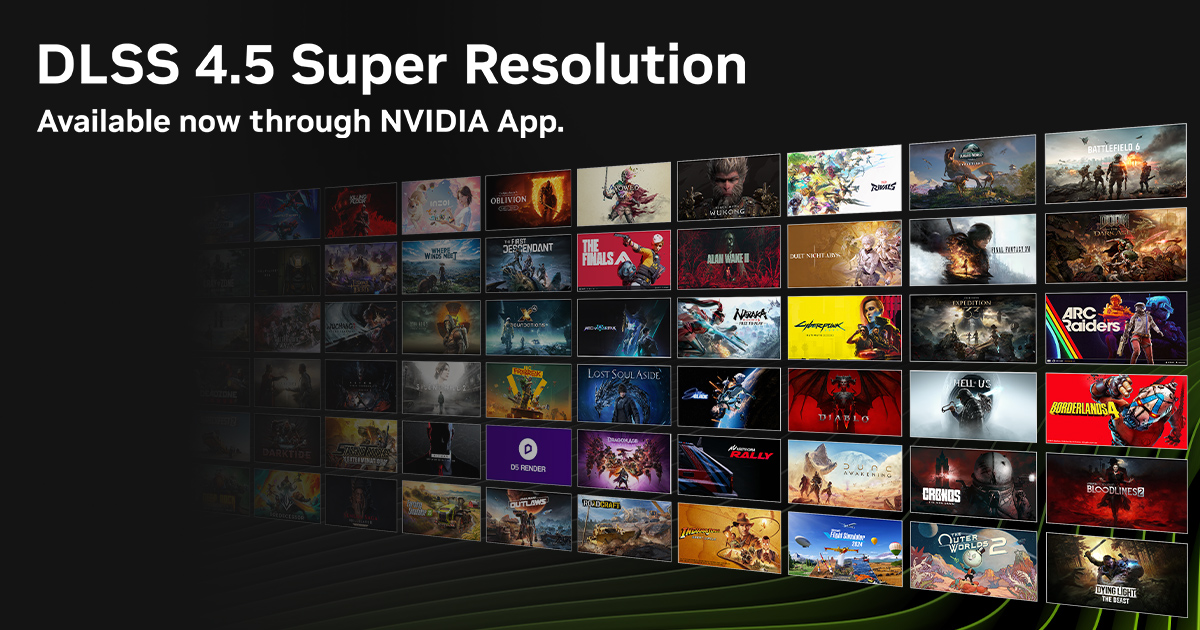
NVIDIA has rolled out DLSS 4.5 Super Resolution — a second‑generation transformer-based upscaling model — via the NVIDIA app to all users, extending support to over 400 games and apps and complementing DLSS 4 with Multi Frame Generation now in 250+ titles. The update introduces Model M and Model L optimized for Performance and Ultra Performance modes (with Model K retained for older RTX 20/30 GPUs lacking FP8), highlights new RTX integrations showcased at CES and day‑one support in titles such as StarRupture and LET IT DIE: INFERNO, and should boost the competitiveness and perceived value of NVIDIA’s RTX ecosystem even though it contains no direct near‑term financial metrics.
Market structure: NVIDIA (NVDA) is the clear direct beneficiary — DLSS 4.5 Super Resolution raises perceived GPU differentiation, improving pricing power for RTX 50-series and increasing attach rates for RTX-enabled games. Winners also include lithography and HBM suppliers (ASML, MU) and game publishers whose titles ship RTX features; marginal losers are incumbents with weaker AI inference (INTC, older AMD GPUs) and the used-GPU market that could see slower turnover. The feature rollout across 400+ apps signals higher elastic demand for high-end GPUs; conservatively expect a 3–9% uplift in sell-through and a potential 5–12% ASP tailwind over the next 6–12 months if adoption continues.
Risk assessment: Tail risks include antitrust/regulatory scrutiny of vertical bundling (low probability, high impact), major model defects or poor developer integration causing reputational damage, and foundry/supply constraints that could throttle shipments. Immediate market impact is likely muted (days), short-term catalysts are quarterly game releases and holiday buying (weeks–months), while long-term implications (quarters–years) are secular — faster PC upgrade cycles and higher GPU ASPs if DLSS becomes de facto. Hidden dependencies: developer adoption rate, engine-level integration, and console/streaming parity; a slow developer ramp would materially blunt hardware uplift.
Trade implications: Primary trade is long NVDA exposure to capture product-led pricing and share gains; prefer concentrated but risk-managed exposure via options to limit downside. Relative-value: long NVDA vs short INTC (or short AMD modestly) to isolate GPU/AI moat capture; options tactic — buy 3–6 month call spreads roughly 10–15% OTM (sell 25–35% OTM) to leverage adoption into holiday demand. Rotate into suppliers (ASML, MU) for a 6–12 month horizon; trim winners after 20–30% rallies or after two sequential earnings beats.
Contrarian angles: The market may under-appreciate the incremental hardware upgrade cycle driven by software features — adoption could compound over 12–18 months rather than a single spike — but the flip side is that older RTX 20/30 users lacking FP8 may delay upgrades, capping near-term lift. Historical parallel: DLSS 2.0 produced measurable but gradual revenue flow over 12–24 months; unintended consequences include developer lock-in and potential regulatory attention if NVIDIA’s software creates de facto standards that limit competition.
AI-powered research, real-time alerts, and portfolio analytics for institutional investors.
Request DemoOverall Sentiment
moderately positive
Sentiment Score
0.45
Ticker Sentiment
