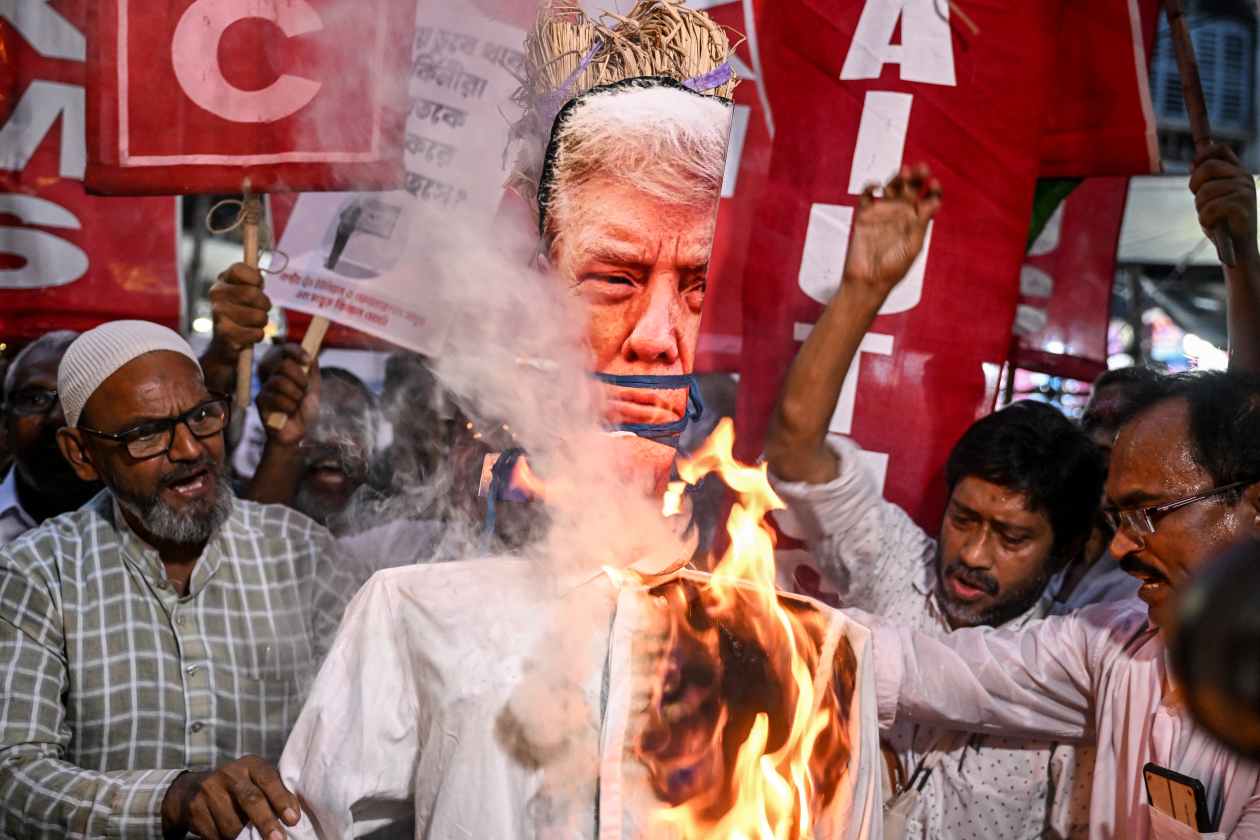
U.S. President Donald Trump's 50% tariffs on Indian products, including clothes, jewelry, shrimp, textiles, gems, and furniture, took effect Wednesday. These tariffs target India over its purchases of Russian oil. Although India is not a primary U.S. trade partner like China or the EU, these increased levies are expected to be felt in certain affected industries.
The United States has implemented a significant 50% tariff on a range of Indian products, a move explicitly linked to geopolitical factors, namely India's purchases of Russian oil. This action, which represents a doubling of existing import taxes, directly impacts U.S. importers of clothing, jewelry, shrimp, textiles, gems, and furniture. While India's overall trade volume with the U.S. is less than that of partners like China or the EU, the magnitude of the tariff is substantial enough to cause significant cost pressures and supply chain disruptions for companies reliant on these specific Indian goods. The development introduces a new layer of geopolitical risk into trade policy, indicating that supply chains with Indian exposure are vulnerable to sudden shifts based on international relations.
AI-powered research, real-time alerts, and portfolio analytics for institutional investors.
Request DemoOverall Sentiment
strongly negative
Sentiment Score
-0.65
