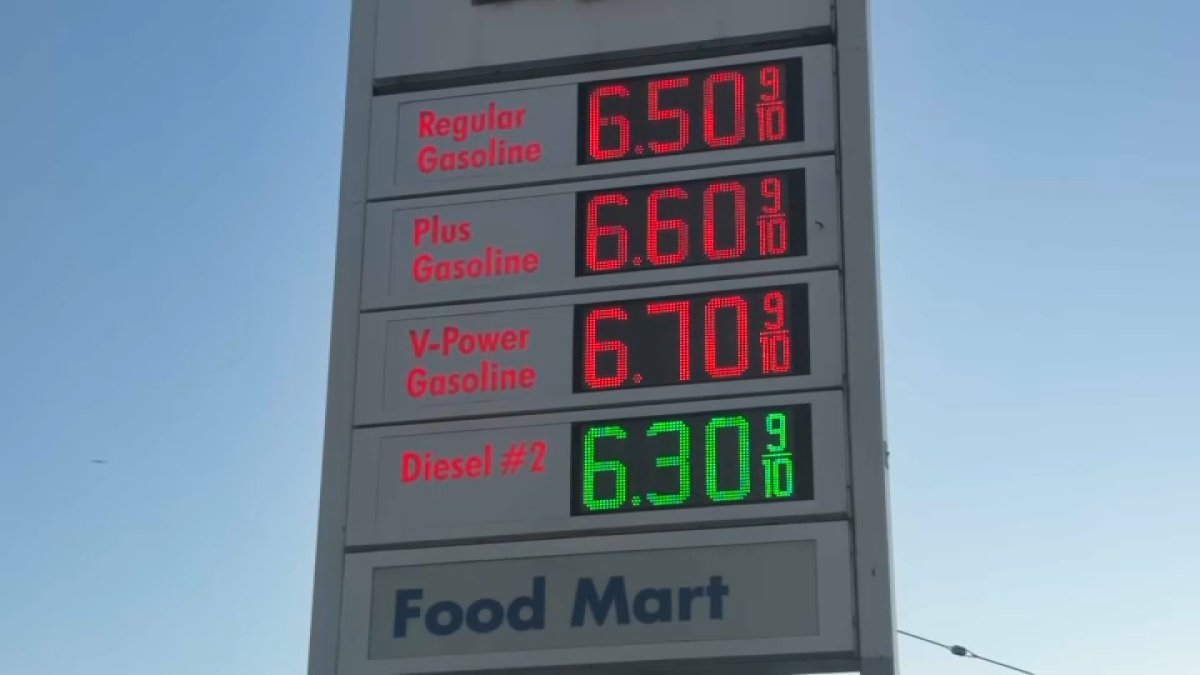
Average U.S. gas price is now above $4/gal while California averages near $6/gal, a roughly $2/gal premium. UC Berkeley’s Severin Borenstein attributes about half (~$1/gal) of the gap to higher taxes, fees and California's special blend, and calls the remainder a 'mystery gasoline surcharge' that totals over $60 billion since 2015. Limited refining capacity and recent/impending refinery closures (Torrance 2015, a large LA refinery last year, Valero Benicia closing this month) plus war-related risk to a key oil shipping lane (Iran) create upside risk for regional and sector fuel prices.
The unexplained downstream premium implies concentrated pricing power and frictions in the West Coast distribution chain rather than a pure crude/refining shortage. With California gasoline demand on the order of ~14 billion gallons/year, each $0.50 of persistent downstream margin transfers roughly $7bn/year from consumers to terminal operators, branded marketers and local retailers — a non‑trivial cash flow pool that can survive short-lived crude moves because the bottleneck is logistical/regulatory, not crude availability.
Mechanically, the premium is amplified by high switching costs: unique blend specs, constrained rack-to-retail arbitrage, and thin third‑party storage capacity. That creates slow mean reversion — spreads will likely oscillate violently around structural higher levels until either new storage/terminal capacity, a regulatory correction, or material import competition arrives; expect realized west‑coast crack volatility to stay elevated for months, not days.
Two clear catalyst paths can rapidly compress the premium: (1) a targeted regulatory intervention or enforcement action against alleged downstream price coordination (timeline: 30–90 days) and (2) rapid incremental supply capacity (refinery restart, import approvals, or new terminal leases) which could take 3–18 months. The opposite risk — further refinery attrition or geopolitical shocks to waterborne crude — would entrench the premium and make downstream players recurring cash generators for multiple years.
AI-powered research, real-time alerts, and portfolio analytics for institutional investors.
Overall Sentiment
mildly negative
Sentiment Score
-0.35
