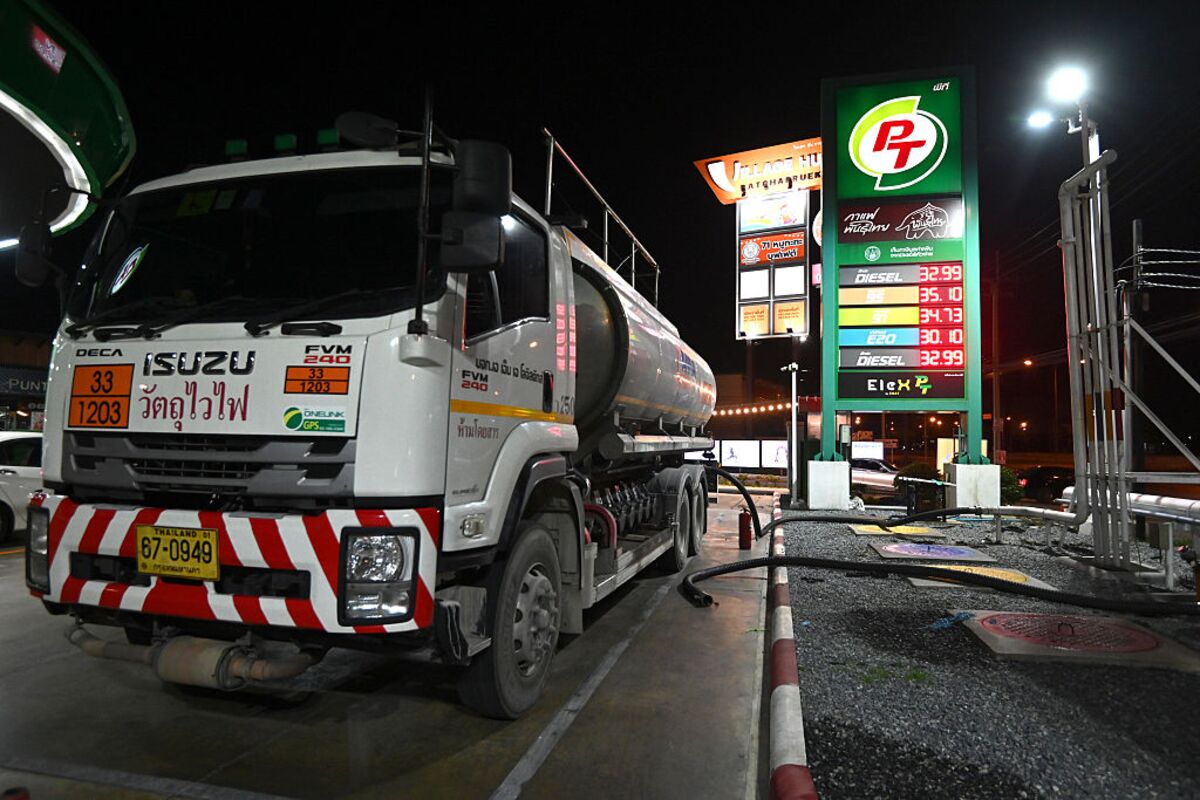
Five weeks into the Third Gulf War, global oil supply is materially short and benchmark prices are trading around $100/barrel (vs prior crisis peaks of $130–$150). Temporary measures — pipelines bypassing the Strait of Hormuz and strategic reserve releases — have cushioned the market, but continued US–Israel–Iran conflict would likely force significant reductions in oil consumption (demand destruction), posing broad downside risks to growth and market stability.
A persistent geopolitically driven supply shock is shifting the market from price volatility to demand reallocation; historically, every incremental $10/bbl tends to shave roughly 0.2–0.4 mb/d of global oil demand over a 6–12 month window through lower industrial activity and reduced discretionary travel. That transmission is non-linear — transport and tourism contract first, then industry, meaning the headline commodity move understates where the macro pain shows up (airlines, container shipping, tourism-centric EMs).
Winners are those with rapid cash conversion from higher spot realizations and flexible balance sheets: small-to-mid US E&Ps and tanker owners capture outsized marginal economics and freight premia respectively. Losers are high-fixed-cost, fuel-intensive operators (airlines, long-haul trucking contractors) and EM importers that have limited pass-through ability; a second-order effect is a rise in freight and insurance rates from rerouting around chokepoints, which boosts owners of large tanker/NGC fleets and assets tied to shipping capacity.
Catalysts operate on distinct time horizons: days-to-weeks — episodic supply shocks from blockades, strikes or maritime incidents; months — cumulative demand destruction via elevated fuel prices and macro slowdown; 6–18 months — structural reallocation of capex toward supply resilience and acceleration of fuel-saving/EV adoption. Reversals are straightforward: credible diplomatic thaw, coordinated SPR releases large enough to offset marginal barrels, or a sharp Chinese demand contraction — any could compress risk premia quickly.
Execution needs active convexity management: volatility is the product, not the signal. Positioning should favor cash-flow resilient producers and optionality (short-dated puts or call spreads) rather than outright long-dated directional exposure; hedges tied to airline jet-fuel cracks and shipping-rate spikes materially improve payoff symmetry if escalation intensifies or reverses unexpectedly.
AI-powered research, real-time alerts, and portfolio analytics for institutional investors.
Request DemoOverall Sentiment
moderately negative
Sentiment Score
-0.55
