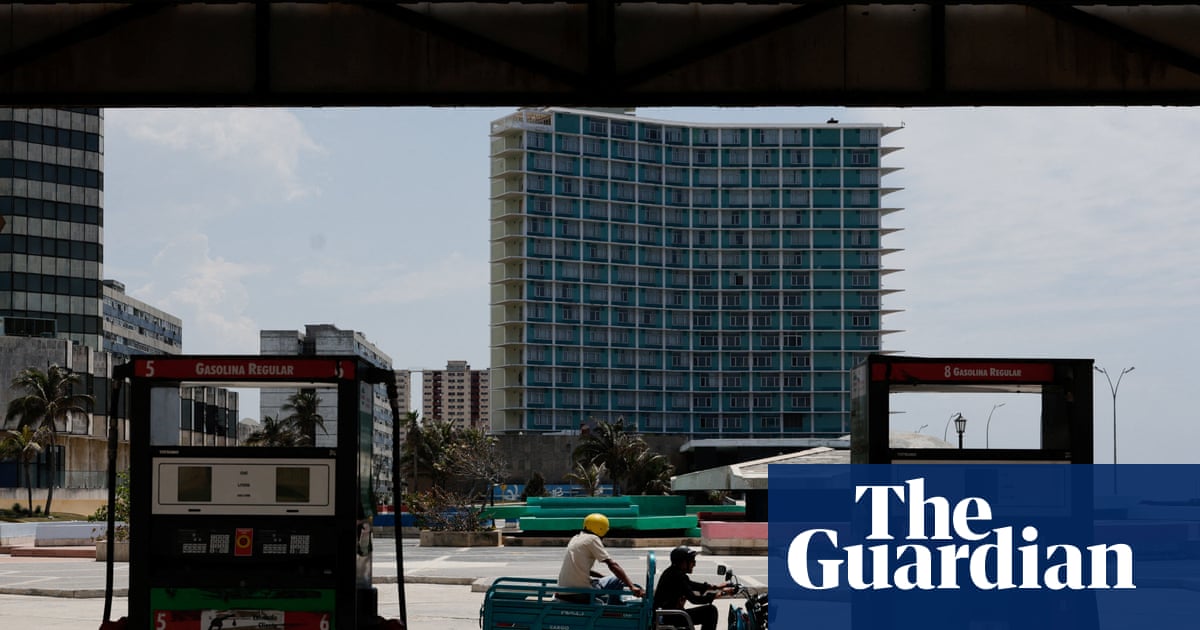
Cuba has run out of diesel and fuel oil, with the energy minister saying the national grid is in a "critical" state and blackouts in Havana are reaching up to 22 hours a day. The shortages are being worsened by the US fuel blockade, which has already cut off shipments from Mexico and Venezuela and left Cuba relying on domestic crude, natural gas and intermittent solar output. The crisis is deepening humanitarian and infrastructure strain across the island and could have broader geopolitical implications.
The immediate market signal is not “Cuba risk” in isolation; it is a live stress test for politically constrained fuel trade routes. When a country is forced to run on residual domestic liquids and intermittent imports, the second-order effect is a disproportionate draw on regional shipping, storage optionality, and emergency logistics capacity—especially for suppliers willing to tolerate sanctions ambiguity. That creates a narrow but real beneficiary set: niche tanker owners, traders with sanctioned-market expertise, and any upstream producer with flexible, non-Western offtake channels. The bigger macro read is that the shortage is self-reinforcing. Power instability reduces the effectiveness of renewable additions, which means every incremental barrel has more system value than the market would imply under normal grid conditions. In the near term, that increases the probability of ad hoc diplomatic carve-outs or informal workarounds; over a 1-3 month horizon, the key catalyst is whether the political cost of the humanitarian crisis outweighs the enforcement benefit of the blockade. Consensus may be overestimating the durability of the constraint. Fuel embargoes often look strongest at the point of acute scarcity, but they tend to break when enforcement raises collateral costs for shipping, insurers, and intermediary states. If this drags on for another 4-8 weeks, the marginal path is not necessarily more blackouts—it is more opportunistic supply from nonaligned counterparties at steep discounts, which would compress any “supply squeeze” premium and reward the most agile middlemen rather than headline crude producers. For risk, the main tail event is policy reversal or selective exemption, which could arrive quickly and unwind any scarcity premium in days. The more durable trade is not directional oil, but a relative-value expression on the infrastructure and logistics bottlenecks that get paid when distressed barrels move through sanctioned channels.
AI-powered research, real-time alerts, and portfolio analytics for institutional investors.
Request DemoOverall Sentiment
extremely negative
Sentiment Score
-0.85
