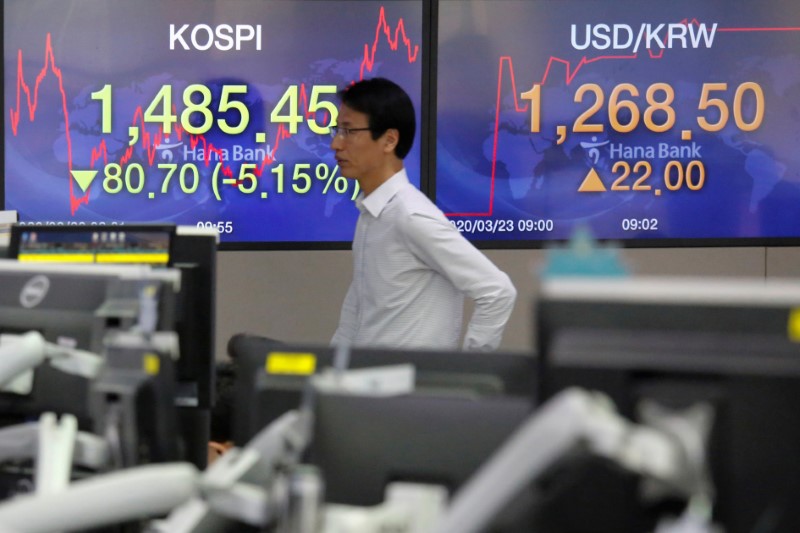
KB Securities expects a 15%-23% correction in the KOSPI and recommends accumulating below 5,300pt rather than shifting to a bearish view. The firm highlights that markets typically trace W-shaped recoveries after >15% weekly drops and therefore avoided a 50-day moving-average strategy during the sell-off. Geopolitical risk around Iran — including potential U.S. strikes on energy infrastructure — is the central near-term market driver, though KB does not see a systemic breakdown and views a full U.S.-Iran reconciliation as unlikely (a limited ceasefire remains possible).
Volatility is likely to remain the dominant return driver over the next 2–8 weeks as position-squaring, dealer gamma hedging and headline-driven flow interact; that makes trend-following through single moving‑average triggers an unreliable entry signal and increases the value of time‑limited, asymmetric exposures. Expect implied vol term structure to steepen (front-month > 3‑month) and put skew to widen—market-makers will charge up for tails, so hedges bought in the front end will pay disproportionately during short, sharp risk jumps.
Geopolitical risk raises the odds of commodity and insurance shocks more than sustained corporate earnings revision cycles, which favors assets with immediate cash‑flow sensitivity to energy/transport costs and insurance/resilience value. Conversely, export-oriented EM equities face a twofold hit: higher equity risk premia plus currency-driven earnings translation losses; this suggests tactical underweight in cyclical exporters even if long‑term secular stories (like AI hardware) remain intact.
AI names that already have strong secular narratives (SMCI, APP) are attractive to own tactically via financed option structures rather than outright equity exposure because dealer flows will amplify both directions—buying long-dated, partially funded call spreads captures upside while limiting gamma bleed during headline whipsaws. Finally, a near-term diplomatic de‑escalation catalyst can erase a large chunk of risk premia inside 2–6 weeks, so position sizing should assume a >30% chance of rapid mean reversion and plan exits accordingly.
AI-powered research, real-time alerts, and portfolio analytics for institutional investors.
Overall Sentiment
mildly negative
Sentiment Score
-0.25
Ticker Sentiment
