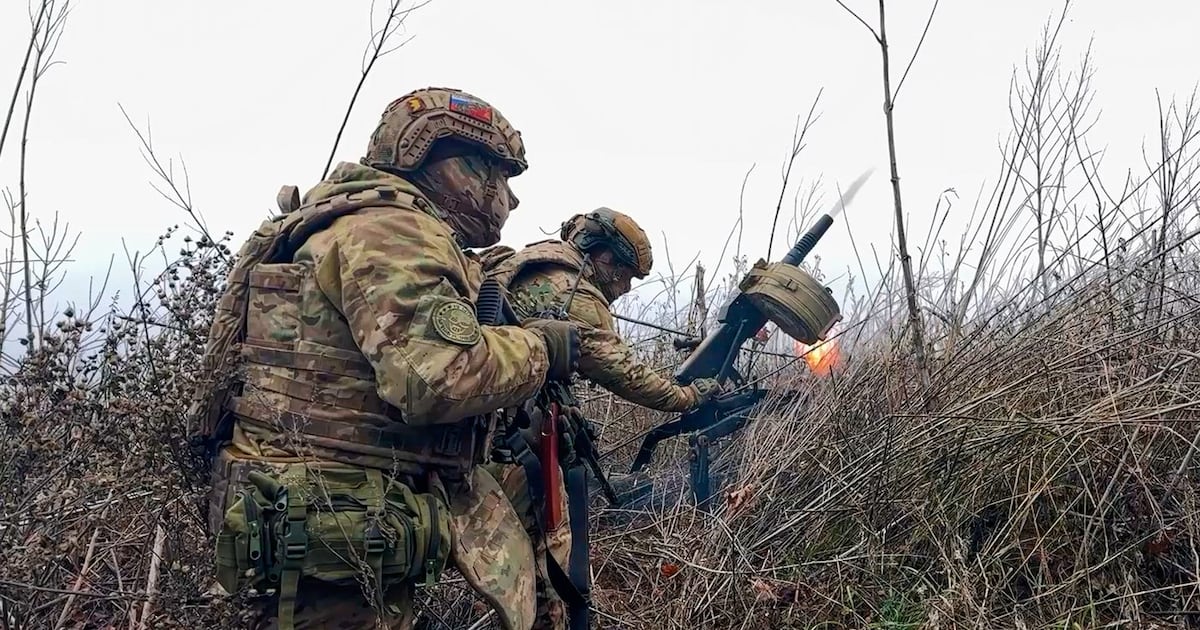
Reuters reports that Russians covertly trained by China have returned to fight in Ukraine, signaling a potentially wider geopolitical escalation. The development is negative for regional security and could heighten risk premiums across defense, energy, and broader European markets. The article is primarily geopolitical, with implications for the war's trajectory rather than direct corporate fundamentals.
This is more than an isolated battlefield anecdote; it signals a widening transfer of tactical know-how across an anti-Western security network. The second-order effect is that Ukraine is forced to defend against a potentially more adaptive opponent over months, not days, which raises the expected intensity of drone, sabotage, and small-unit operations even if front lines do not move materially. That tends to favor vendors with recurring revenue in ISR, counter-UAS, electronic warfare, and hardened communications rather than classic munitions names alone.
The bigger implication for defense equities is that procurement urgency should broaden from headline artillery and missiles into layered battlefield survivability. If this training pipeline is real and repeatable, European buyers may accelerate spending on border security, sensors, and integration software because the marginal threat is not just volume but competence. That is usually a better setup for higher-multiple defense IT and networked sensor platforms than for low-margin prime contractors exposed to slower budget cycles.
Near term, the market may underprice the tail risk of escalation because the headline is easy to dismiss as tactical noise. Over 3-12 months, however, any evidence of cross-border capability transfer increases the probability of retaliatory covert actions, broader sanctions enforcement, and additional Western aid packages, which can re-rate the whole defense chain. The main contrarian point: the more sophisticated the support network becomes, the harder it is for either side to achieve decisive gains, which can keep the conflict grinding without a clean catalyst for a broad risk-off selloff.
For macro, this is mildly inflationary through defense spending and European energy-security capex, but not enough on its own to move rates. The tradable effect is more about relative winners inside defense and less about a broad index shock. Watch for confirmation in procurement language from NATO countries and any uptick in drone/EW-related budget approvals over the next 1-2 quarters.
AI-powered research, real-time alerts, and portfolio analytics for institutional investors.
Request DemoOverall Sentiment
strongly negative
Sentiment Score
-0.60
