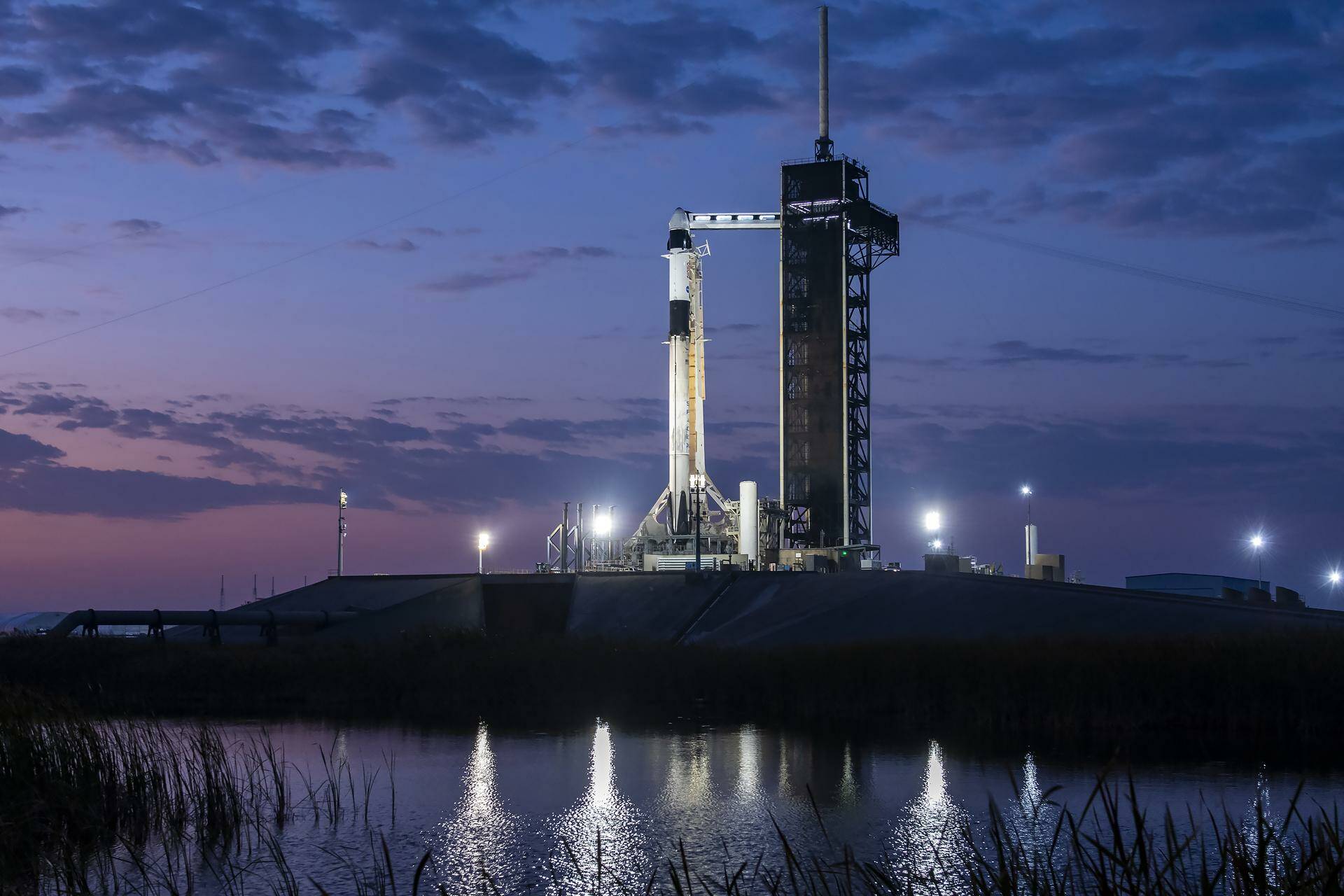
The FAA cleared SpaceX to resume Falcon 9 launches after a SpaceX-led mishap investigation found a second-stage engine failed to ignite before a planned deorbit burn due to a gas bubble in the transfer tube, and accepted technical and organizational corrective measures. SpaceX returned to flight on Feb. 7 with a 25-satellite Starlink launch from Vandenberg that enabled an upcoming Crew-12 mission, while CEO Elon Musk publicly pushed an aggressive plan to build a self-growing Moon city within a decade even as Starship has yet to achieve orbit and NASA has signalled schedule concerns and reopened parts of the lunar lander competition.
Market structure: The FAA clearance to resume Falcon 9 ops restores near-term launch supply and Starlink cadence, benefiting satellite component suppliers and launch-insurance underwriters; expect Northrop Grumman (NOC), Lockheed (LMT) and RTX (RTX) to gain incremental procurement optionality as primes capture follow-on NASA/DoD work. Commercial GEO and broadband incumbents (VSAT, IRDM) face pricing pressure if Starlink accelerates mass LEO capacity; estimate 10–30% long-term ARPU compression risk in consumer broadband segments over 2–5 years.
Risk assessment: Tail risks include a catastrophic Starship orbital failure or FAA-imposed stricter oversight that materially reduces launch cadence; probability medium (20–30%) over 12 months with >40% revenue impact to launch-dependent small caps. Short-term (days–weeks) volatility will be driven by FAA statements and next Starship/Starlink launch windows; medium-term (3–12 months) by NASA procurement decisions and insurance premiums; long-term (>1 year) by capital intensity of lunar ambitions and potential dilution or government funding shifts.
Trade implications: Prefer defense primes and space infrastructure names for downside protection and stable cash flow (NOC, LMT, RTX) while shorting exposed commercial broadband/satellite incumbents (VSAT, IRDM) that face substitution risk; use pairs to neutralize market beta. Optionally buy 6–12 month calls on MAXR (MAXR) for EO/data demand upside and 6–9 month puts on VSAT to express disruption; size at 1–3% NAV each and set 10–15% stop-loss thresholds.
Contrarian angles: The market overweights Musk’s headline moon-city talk vs. engineering and funding reality—revenue impact is multi-year and contingent on Starship orbital success; the efficient trade is not a pure SpaceX long but exposure to contractors who win re-allocated government spend. Historical parallel: post-mishap recoveries (Falcon 9 2015) produced sharp rebounds in suppliers within 3–9 months; regulatory tightening, however, would increase barriers-to-entry and thus consolidate winners among large primes.
AI-powered research, real-time alerts, and portfolio analytics for institutional investors.
Request DemoOverall Sentiment
mixed
Sentiment Score
0.05
